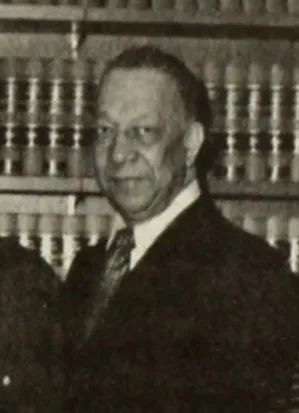
In Re Schenck Tours, Inc.
District Court, E.D. New York · 1987-07-15
This case involved an appeal in a bankruptcy proceeding where AYL Realty Corp. sought to be released from its contract to buy real property from debtor Schenck Tours, Inc. The bankruptcy court had denied AYL's motion, ruled the contract terminated with AYL in default, and allowed Schenck to keep the $255,000 deposit. The district court reviewed the record and legal arguments, then affirmed the bankruptcy court's order in full. The affirmance rested on agreement with the lower court's detailed analysis without adding new reasoning. Each party was ordered to bear its own costs.
business & regulatoryproperty
United States v. Mattiace Industries, Inc.
District Court, E.D. New York · 1987-05-15 · cited 10×
The United States sued Mattiace Industries and other defendants under CERCLA to recover costs for cleaning up a hazardous chemical spill in Hicksville, New York, to impose fines and penalties for noncompliance with EPA orders, and to obtain injunctive relief. After Mattiace filed for Chapter 11 bankruptcy, it moved to stay portions of the action under the Bankruptcy Code's automatic stay provision, but a magistrate denied the motion. The district court affirmed, holding that the CERCLA claims fell within the statutory exception for actions by a governmental unit to enforce its police or regulatory powers, so the automatic stay did not apply. The court relied on the text of 11 U.S.C. § 362(b)(4) and supporting case law interpreting the exception to cover response-cost recovery actions.
environmentbusiness & regulatoryfederal power
Physicians Formula Cosmetics, Inc. v. West Cabot Cosmetics, Inc.
District Court, E.D. New York · 1987-04-20 · cited 2×
This trademark infringement case involves competing claims by Physicians Formula Cosmetics, Inc. and West Cabot Cosmetics, Inc. over the use of similar marks—PHYSICIANS FORMULA and PHYSICIANS & SURGEONS—on cosmetics, skin care products, and soaps. Plaintiff sought summary judgment on its federal and state trademark and unfair competition claims, arguing prior rights and likelihood of consumer confusion from defendant's expansion into non-soap products; defendant counterclaimed and moved for a preliminary injunction to block plaintiff's updated trade dress. The court granted plaintiff's summary judgment motion and denied defendant's injunction request. The decision rested on undisputed facts showing plaintiff's valid, distinctive mark with priority in the cosmetics field, peaceful coexistence of the marks until recent expansions, and a likelihood of confusion under the Polaroid factors due to the marks' similarity and overlapping goods. Summary judgment was appropriate because the only disputed issue was the legal application of those factors to the facts.
business & regulatoryprocedure
Family Showtime Theatres of Bay Parkway, Inc. v. Toys "R" Us-Nytex, Inc. (In Re Family Showtime Theatres, Inc.)
District Court, E.D. New York · 1987-02-24 · cited 4×
The case concerned a commercial sublease between Family Showtime, which operated a Chuck E. Cheese franchise, and Toys "R" Us as sublessor. Family Showtime failed to install two required elevators, prompting Toys "R" Us to issue a notice of default and then a formal termination of the lease under its terms. After Family Showtime filed for Chapter 11 bankruptcy protection, it sought to assume the lease, but the bankruptcy court held that the lease had terminated before the filing and thus could not be assumed or rejected, requiring surrender of the premises. The district court affirmed, finding that the lease created a conditional limitation allowing termination upon uncured default and that post-termination conduct, such as accepting rent under a stipulation, did not revive the lease.
business & regulatorypropertyprocedure
State of NY v. Shore Realty Corp.
District Court, E.D. New York · 1986-10-10 · cited 15×
The case involved the State of New York suing Shore Realty Corp. and its president under CERCLA and state law to compel cleanup of a hazardous waste site and recover response costs, after Shore purchased the contaminated property with knowledge of the hazards from prior illegal operations. Shore impleaded numerous past owners, operators, and waste generators as third-party defendants for contribution under CERCLA and state law, along with a §1983 civil rights claim against state environmental commissioners. The court denied motions to dismiss the CERCLA contribution claims and state law claims against the third-party defendants, finding them adequately pled and not barred by sovereign immunity or other defenses, but granted dismissal of the §1983 claims against the commissioners for failure to state a claim.
environmentcivil rights
Washington v. LeFevre
District Court, E.D. New York · 1986-07-08 · cited 3×
In Washington v. LeFevre, petitioner Richard Washington sought federal habeas corpus relief under 28 U.S.C. § 2254 after his New York state conviction for multiple counts of robbery and related crimes, claiming a due process violation because the trial court allegedly refused to allow evidence of a third party's confession to the offense. The U.S. District Court dismissed the petition, holding that the claim was procedurally barred under Wainwright v. Sykes because Washington had failed to make a contemporaneous objection at trial as required by New York law, and the state's highest court had expressly found waiver on that ground. The court reasoned that Washington could not show cause for the default, as the record indicated counsel made a deliberate tactical choice not to offer the evidence after interviewing the confessor, nor could he demonstrate actual prejudice. The decision emphasized that federal habeas review does not reach claims defaulted under adequate and independent state procedural rules absent the required showing of cause and prejudice.
criminal lawprocedurefederal power
Brown v. District Court, Nassau County
District Court, E.D. New York · 1986-06-26 · cited 4×
Phillip Brown was convicted in New York state court on drug and loitering charges and initially sentenced to nine months in prison. After affirmance on appeal, the case was remanded because the sentencing judge had not specified a term for each count, and the judge then imposed a longer aggregate sentence. Brown petitioned for habeas relief under 28 U.S.C. § 2254, claiming the increase was vindictive in violation of North Carolina v. Pearce and that the Appellate Term should have remanded for resentencing before a different judge rather than reducing the sentence itself. The district court denied the petition, concluding that Pearce addresses only vindictiveness by sentencing judges, does not mandate a new sentencing hearing before an impartial judge, and permits appellate courts to cure the error by modifying the sentence.
criminal lawprocedure
Barracano v. Lord
District Court, E.D. New York · 1985-10-24 · cited 4×
In this case, petitioner Sonia Barracano sought federal habeas corpus relief under 28 U.S.C. § 2254 after pleading guilty in New York state court to grand larceny and forgery charges, alleging that the state had violated a plea agreement by requiring her to serve time in state prison rather than allowing her state sentence to run fully concurrently with a federal sentence in federal custody, and that the state was improperly holding 45 days of her time. The U.S. District Court dismissed the petition. The court reasoned that a state prisoner must exhaust available state remedies before seeking federal habeas relief, that this requirement serves interests of comity between federal and state courts and cannot be waived by the state prosecutor, and that no exceptional circumstances justified overlooking the failure to exhaust here, as the petitioner had not appealed the state trial court's denial of her motion to vacate the conviction and had not presented all claims to the state courts.
criminal lawprocedurefederal power
Philips Business Systems, Inc. v. Executive Business Systems, Inc.
District Court, E.D. New York · 1983-09-15 · cited 3×
The case involved antitrust claims by Philips Business Systems, Inc. (PBSI) against its former exclusive distributors, alleging that the distributors had induced and received discriminatory pricing advantages in violation of the Robinson-Patman Act and the Clayton Act. PBSI had previously been ordered by federal courts, under state franchise laws, to maintain the distributors' preferential pricing and terms after PBSI attempted to equalize prices across its sales channels. The court granted the distributors' motions to dismiss the complaints under Federal Rule of Civil Procedure 12(b)(6), holding that the distributors could not be liable for inducing or receiving prices that they had been judicially compelled to obtain. The core reasoning was that the prior injunctions under the New Jersey and Connecticut Franchise Acts removed any basis for finding a knowing inducement of unlawful discrimination.
business & regulatoryprocedure
Byrd v. Long Island Lighting Co.
District Court, E.D. New York · 1983-07-15 · cited 5×
Plaintiff Reverend Herbert Byrd, a Black man hired by LILCO in 1969 under a special program, sued the company and his union Local 1049 under 42 U.S.C. § 1981, Title VII, New York Executive Law § 296, and the Labor Management Relations Act, alleging that he faced discriminatory seniority rules, testing requirements for promotions to mechanic positions, and unfair union representation regarding complaints about overtime and job status. Defendants moved for summary judgment under Fed. R. Civ. P. 56(c), arguing no genuine issues of material fact existed, while the union also sought leave to amend its answer. The court outlined the summary judgment standard, requiring doubts and inferences to be resolved against the movants and in favor of the plaintiff, then reviewed the factual background of LILCO's JOBS program, collective bargaining agreements with two types of seniority, promotion bidding processes, and testing options that were discontinued in 1979. It addressed legal issues including the bona fide seniority system defense under Title VII § 703(h) and referenced prior EEOC charges filed by the plaintiff.
civil rightslabor & employment
Givoh Associates v. American Druggists Insurance
District Court, E.D. New York · 1983-05-05 · cited 7×
This case arose from a dispute over contractors' performance bonds for two Brooklyn building rehabilitation projects financed by HUD-endorsed loans, where the project owners sued the sureties after the contractors allegedly defaulted and the sureties refused to complete the work. The sureties had removed the case to federal court because HUD was a third-party defendant. The court granted HUD's motion to dismiss the claims against it. The core reasoning was that removal had been proper under 28 U.S.C. § 1442(a) due to the federal agency's involvement, but once the federal defendant was dismissed the court retained discretion to remand, which it exercised because minimal judicial resources had been committed and the remaining issues primarily involved interpretation of New York lien law and state contract matters.
business & regulatorypropertyprocedurefederal power
Dundon v. United States
District Court, E.D. New York · 1983-03-18 · cited 43×
This case was a Federal Tort Claims Act action for medical malpractice and wrongful death alleging that VA hospitals misdiagnosed the decedent's brain tumor as psychiatric illness, administered electroconvulsive therapy without neurological evaluation over several years, and caused fatal complications during later surgery. The United States moved for summary judgment on grounds that the claims were time-barred under 28 U.S.C. § 2401 and that the surgical negligence allegation had not been properly presented in the administrative claim. The court denied the motion in full, finding genuine issues of material fact regarding claim accrual, applying the continuous treatment doctrine to determine that the limitations period did not begin until the tumor discovery in 1975, and holding that the surgery claim was sufficiently related to the timely administrative filing.
torts & liabilityprocedurehealthcare
Carlos v. Philips Business Systems, Inc.
District Court, E.D. New York · 1983-02-16 · cited 36×
The case involved plaintiff Carlos, an exclusive distributor of Norelco dictation products in New Jersey, Connecticut, and Ohio under agreements with defendant Philips Business Systems, Inc. (PBSI), who sued to block PBSI's attempted termination or alteration of the distributorship after PBSI sought to end the relationship. The court granted Carlos's application for a preliminary injunction enjoining cancellation or amendment of the July 1, 1978 distributor agreement and requiring PBSI to continue treating Carlos as a distributor pending final resolution, while denying PBSI's motion to vacate a prior temporary restraining order and denying Carlos's motion to hold PBSI in contempt. The decision rested on findings that Carlos's operations qualified as a franchise under the laws of the states where he conducted business, which impose restrictions on termination without good cause, that the parties' choice of New York law incorporated those states' conflicts principles giving them primary interest in the outcome, and that Carlos demonstrated the requisite likelihood of success and irreparable harm for injunctive relief. The court also issued directives for PBSI to issue corrected invoices and comply with prior terms but declined to impose contempt sanctions at that stage.
business & regulatory
Textron, Inc. v. Teleoperator Systems Corp.
District Court, E.D. New York · 1983-01-10 · cited 4×
The case involved a dispute between Textron Inc.'s Bridgeport Machines Division and TeleOperator Systems Corp. along with its president Carl Flatau over rights to industrial robot designs and prototypes developed through their collaboration that began in 1980, including issues of contract formation, ownership of manipulator technology, and use of pre-existing designs. The court granted preliminary injunctive relief to the plaintiff after a hearing, concluding that the parties had formed a binding agreement via a letter of intent, purchase orders, and their conduct. The core reasoning was that the documents and actions showed mutual intent for Bridgeport to own the fruits of the commissioned design work, supported by its $800,000 investment, and that defendants could not retain rights to the developed technology simply because foundational elements predated the relationship.
business & regulatoryproperty
O'ROURKE v. Eastern Air Lines, Inc.
District Court, E.D. New York · 1982-12-14 · cited 5×
The case arose from the 1975 crash of Eastern Airlines Flight 66 at JFK Airport, in which the plaintiff, as administrator, sought wrongful death damages from the airline for a passenger's death. After the court had ruled that Eastern could invoke the Warsaw Convention and Montreal Agreement's $75,000 per-passenger liability limit, the plaintiff moved for an additional award of prejudgment interest. The court held that the $75,000 cap is an absolute ceiling that cannot be exceeded by interest, reasoning that the treaty's text, history, and purpose establish a fixed limit to protect the aviation industry, that its silence on interest does not permit sums beyond the cap, and that the treaty as supreme federal law preempts any contrary state statutes.
torts & liabilityprocedure
Susino v. Hellenic Lines Ltd.
District Court, E.D. New York · 1982-12-07 · cited 2×
The case involved a longshoreman, Guiseppe Susino, who was injured in 1977 while working aboard a vessel owned by Hellenic Lines Ltd., his employer in its dual role as shipowner and stevedore. After receiving a final compensation award in May 1978 under the Longshoremen’s and Harbor Workers’ Compensation Act (LHWCA), Susino filed a personal injury suit against Hellenic in November 1979, more than six months later. Hellenic moved to dismiss or for summary judgment, arguing that 33 U.S.C. § 933(b) barred the action by automatically assigning the claim to the employer after the six-month period. The court denied the motions, holding that an actual conflict of interest—where the employer would effectively be suing itself—prevented the assignment from extinguishing the longshoreman’s right to sue, relying on the Supreme Court’s precedent in Czaplicki v. The Hoegh Silvercloud despite subsequent LHWCA amendments.
labor & employmenttorts & liabilityprocedure
Executive Business Systems, Inc. v. Philips Business Systems, Inc.
District Court, E.D. New York · 1982-01-14 · cited 3×
The case concerned Executive Business Systems' motion to hold Philips Business Systems in contempt for violating a July 1981 preliminary injunction that barred termination or alteration of their exclusive distributor agreement for Norelco office products in eight northern New Jersey counties, which had been issued under the New Jersey Franchise Practices Act to prevent irreparable harm. Plaintiff alleged four violations, including unauthorized contacts with listed customers, shortened payment terms without discounts, refusal to accept returns, and referring to plaintiff as a dealer rather than distributor. After a hearing, the court found PBSI in contempt of three violations, ordered full compliance with the injunction, and required payment of $49,100 to cover half the plaintiff's business losses from July to August 1981 plus one-third of its legal fees.
business & regulatoryprocedure
BOARD OF ED., EAST MEADOW UNION FREE SCH. v. Bell
District Court, E.D. New York · 1982-01-14
This case involved two school districts and local taxpayers suing the U.S. Secretary of Education to block reductions in Impact Aid funding under 20 U.S.C. § 236 et seq., which compensates districts for educating children connected to federal property. The plaintiffs alleged an implied contract with the federal government and a Fifth Amendment due process violation from the funding cuts enacted via a 1981 continuing resolution. The court granted the Secretary's motion to dismiss in part, holding that the contract claim fell outside its subject-matter jurisdiction under the Tucker Act and related statutes, but denied dismissal of the due process claim because the factual record was undeveloped and the claim could not be ruled out at the pleading stage.
federal powercivil rightsprocedure
Georgakis v. Eastern Air Lines, Inc.
District Court, E.D. New York · 1981-04-21 · cited 7×
In this case, plaintiff Grigorios Georgakis sued Eastern Air Lines for personal injuries from the 1975 crash of Flight 66 at JFK Airport. Eastern raised an affirmative defense seeking to limit its liability to $75,000 under the Warsaw Convention/Montreal Agreement, claiming the travel was international because Georgakis, a Greek seaman, was ultimately heading home to Greece. Georgakis moved for summary judgment on that defense. The court granted the motion, following its prior identical ruling in Stratis v. Eastern Air Lines, because the only ticket issued to Georgakis covered purely domestic flights from Baton Rouge to New York, no international ticket was delivered, and the passenger's ultimate intent or undelivered Olympic Airways documents did not convert the journey into international travel under the Convention. The decision relied on the contract of carriage as shown by the actual ticket and applied collateral estoppel based on the Stratis record.
torts & liabilityprocedure
Calabretta Ex Rel. Calabretta v. National Airlines, Inc.
District Court, E.D. New York · 1981-02-12 · cited 5×
This case involves a passenger's claim for personal injuries after she allegedly lost hearing in her left ear due to improper cabin pressure control during the descent of a National Airlines flight in 1974; she sued National for negligence and later added Boeing as a defendant, alleging defective design or inadequate warnings regarding the aircraft's pressurization system. The defendants moved for summary judgment, arguing lack of evidence to support liability, while Boeing also sought dismissal on statute of limitations grounds because it received notice after the limitations period expired. The court denied both summary judgment motions, reasoning that the doctrine of res ipsa loquitur could allow a jury to infer negligence from the circumstances, creating genuine issues of material fact under New York law. It also denied the motion to dismiss, holding that Boeing received timely notice under federal procedural rules allowing for service of process, and that Boeing suffered no prejudice from its delayed joinder.
proceduretorts & liability