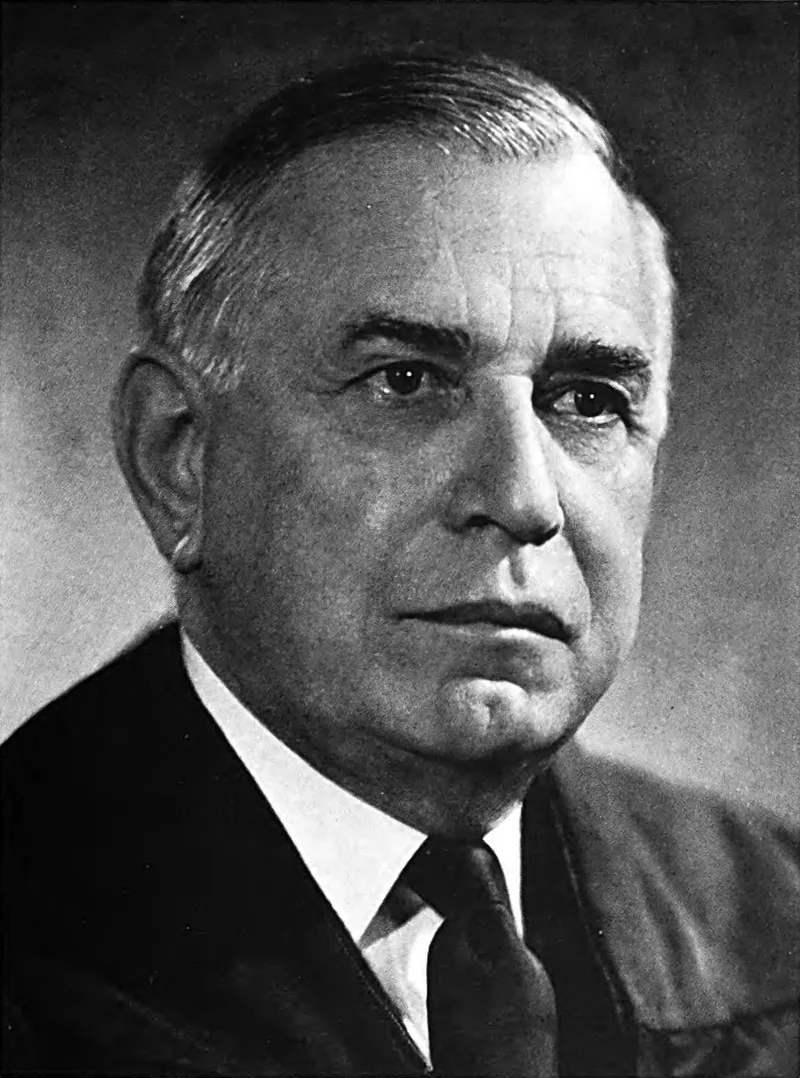
Judicial data via CourtListener (Free Law Project). Social links via Wikidata.
People v. Burke
California Supreme Court · 1964-07-30 · cited 127×
The case concerned whether items found during a warrantless search of the trunk of defendant Roy Charles Burke's car, including an X-ray negative linked to a doctor's office burglary, were admissible at his criminal trial. Police arrested Burke and his companion on suspicion of burglary after observing them in a commercial building early in the morning, searched the car's interior at the scene, impounded the vehicle, and later opened the trunk at the police lot where they discovered the evidence. The California Supreme Court reversed the conviction, ruling that the trunk search was unlawful because it was too remote in time and place from the arrest to qualify as a search incident to a lawful arrest and no other exception to the warrant requirement applied. The court distinguished the search of the car's interior, which was permissible, and noted that vehicle impoundment statutes authorized towing but not the subsequent search.
criminal lawprocedure
Hulse v. Juillard Fancy Foods Co.
California Supreme Court · 1964-07-28 · cited 16×
The case involved a dispute between an importer and a food distributor over a partly written, partly oral contract granting the distributor exclusive rights to sell mint syrup in four states, with an oral promise to use best efforts and a written guarantee provision. The trial court ruled for the defendant on the meaning of the guarantee clause after admitting extrinsic evidence, finding it referred to empty containers rather than full cases of syrup, and also found no breach of the best efforts obligation. The appellate court affirmed, holding that the ambiguous language in the writing permitted parol evidence to determine the parties' intent and that the record supported both the interpretation and the conclusion that substantial distribution efforts had been made. The judgment was modified only to award the defendant’s conceded cost for the containers. The topics are business and regulatory and procedure.
business & regulatoryprocedure
In Re Henderson
California Supreme Court · 1964-07-09 · cited 19×
Vincent Henderson was convicted in municipal court of lewd or dissolute conduct in public under Penal Code section 647(a) and sought to appeal while indigent, without counsel or a free reporter's transcript. The court granted relief by directing reinstatement of the appeal, provision of a free transcript, and assignment of counsel on appeal. It reasoned that although free transcripts are not automatic for misdemeanor appeals, they must be provided to indigent defendants when necessary for adequate review, and the lack of an in forma pauperis affidavit did not bar relief under the circumstances; further, under Douglas v. California, appointed counsel is required on a first appeal as of right given the conviction's serious consequences such as registration requirements and employment restrictions.
criminal lawprocedurecivil rights
Nofziger v. Holman
California Supreme Court · 1964-07-09 · cited 18×
The case involved a dispute over the interpretation of an employment contract between plaintiffs Nofziger and Rossi and defendant Holman, who was hired as a foreman to supervise house construction. The contract entitled Holman to one-fourth of the net profit from the sale of each home built under his supervision, but it did not explicitly address how losses on some homes should factor into the calculation. After 20 of the 63 homes sold at a loss, the parties disagreed on whether Holman's share was limited to profits from the 43 profitable homes or calculated from the net results of the entire project. The trial court excluded extrinsic evidence of the parties' intent and ruled that Holman was entitled to one-fourth of the profits from each profitable home without deducting losses. The appellate court reversed, holding that the contract language was ambiguous and that extrinsic evidence should have been admitted to determine the true intent of the parties.
business & regulatorylabor & employment
People v. Varnum
California Supreme Court · 1964-06-18 · cited 10×
The case involved Thomas Varnum, who was convicted by a jury of first-degree murder, kidnaping for robbery with bodily harm, robbery, and assault with intent to rob, and sentenced to death for the murder and kidnaping based on evidence including his confessions and details of the robbery and killing of a service station attendant. Varnum appealed, arguing inadequate representation by counsel at trial and errors during the penalty phase. The California Supreme Court affirmed the convictions, finding the record did not support claims of ineffective assistance and that guilt was clearly established, but reversed the death sentence. The court held that the prosecutor made improper arguments to the jury about the Governor's pardon power and parole eligibility, which substantially deviated from standards set in prior cases like People v. Morse and constituted prejudicial error in the penalty trial.
criminal lawprocedure
Kinnear v. City & County of San Francisco
California Supreme Court · 1964-05-28 · cited 47×
The case involved a deputy sheriff in San Francisco who filed a declaration of candidacy for the elected office of Sheriff, resulting in the automatic forfeiture of his civil service position under section 5 of the city charter, which provided that any appointive officer or employee who becomes a candidate for any public office forfeits their position. The trial court ruled the charter provision unconstitutional, ordered reinstatement, and awarded damages for lost compensation. On appeal, the California Supreme Court affirmed, holding that the provision unconstitutionally abridged a fundamental right by broadly restricting candidacy for all public offices—partisan or nonpartisan, local or otherwise—without a showing of compelling need, and that it could not be narrowed by severance. The court also rejected defenses of laches or estoppel and upheld the damages award as a valid money judgment against the city.
electionscivil rightslabor & employment