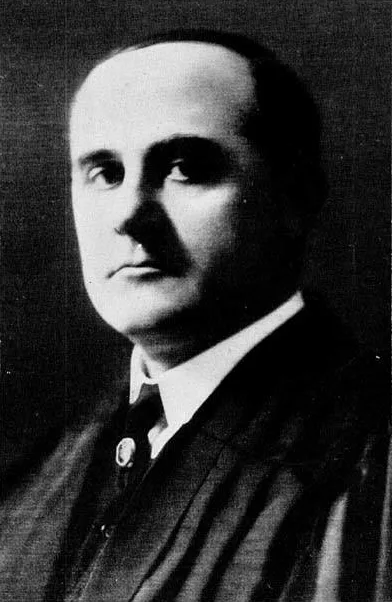
Clark v. Truitt
Illinois Supreme Court · 1899-12-18 · cited 4×
The case involved a dispute over a contract allowing the appellant to purchase a one-half interest in the Pontiac Sentinel newspaper plant and business, thereby becoming a partner in its management and operations, including editorial decisions. The circuit court had decreed specific performance to enforce the partnership, but the appellate court reversed. The Illinois Supreme Court affirmed, holding that equity courts generally will not compel specific performance of partnership agreements that require personal skill, judgment, and ongoing services, as this would force judicial management of the business. The court further reasoned that because the partnership was at will with no fixed duration, it could be dissolved immediately, rendering any decree futile. The appellant was left to pursue damages through an action at law for breach of contract instead.
business & regulatoryprocedure
Morton v. Nelson
Illinois Supreme Court · 1893-01-19 · cited 12×
The case involved complainants Morton and Vogel seeking a decree to enforce a verbal agreement with defendant Nelson for equal one-third ownership interests in a purchased property and building, along with a request to dissolve an alleged partnership, appoint a receiver, and sell the property. The court affirmed the Circuit Court's decree for Nelson, ruling that the Statute of Frauds barred relief because the contract for sale of land was not in writing and had been properly pleaded in the answer. The opinion found no partnership existed, as the transaction was a single venture where Nelson alone provided all funds and bore the risks, with no evidence of shared losses or contributions from the complainants. The court further held that Morton and Vogel had abandoned the arrangement, leaving Nelson free to complete the project independently.
propertyprocedure
Robinson v. Roos
Illinois Supreme Court · 1891-10-31 · cited 1×
This case involved a bill in equity filed by former business partners (appellees Boos and Henshaw) seeking to subject real property known as the Maywood property, held by Julia A. Robinson, to satisfy a partnership debt owed to the estate of a deceased partner, C.Y. Robinson. The property had been purchased by Charles H. Robinson using funds that the surviving partners had placed with him to pay the estate's claim after the firm's dissolution. The probate court had already decreed that the appellees pay a portion of the debt to the estate administrator, which they did. The court held that Charles Robinson acted as a trustee of the funds, which were misused to acquire the property later transferred to his wife, and that the appellees, having paid as sureties, were entitled under equitable subrogation principles to follow the funds into the property. The judgment of the Appellate Court was affirmed.
business & regulatoryproperty
Snell v. Deland
Illinois Supreme Court · 1891-03-30 · cited 6×
This case involved co-owners of two farms in DeWitt County who brought a bill in equity for partition of the lands and an accounting of rents, profits, and materials taken from the properties. The circuit court found the parties owned the lands as tenants in common, ordered partition (selling one tract that could not be divided), settled some rent accounts by agreement, and referred the matter to a master for further accounting; the master determined the Snells owed DeLand $1320, and the court entered a decree accordingly after overruling exceptions. The Supreme Court affirmed, holding that the evidence supported the master's credits for payments and rents, that no liability arose for alleged misappropriation of materials, that untimely objections were waived, and that the accounts were properly balanced under the parties' partnership-like arrangement.
propertyprocedure
Rosenkrans v. Barker.
Illinois Supreme Court · 1885-11-14 · cited 22×
The case involved a civil action by A.E. Barker against O.L. Rosenkrans and J.H. Weber for malicious prosecution and false imprisonment arising from Barker's arrest on a writ of ne exeat over an unpaid business debt from a jewelry transaction. A jury awarded Barker $2,000 in damages, which the Appellate Court affirmed. The Illinois Supreme Court reversed the judgment as to Rosenkrans, holding that he bore no liability because he had no prior knowledge of the proceedings, did not ratify or approve them upon learning of them, and the writ was not pursued in the ordinary course of any partnership business or for his benefit. The court further found error in jury instructions that allowed punitive damages against Rosenkrans and permitted evidence of the plaintiff's bad reputation to rebut lack of probable cause and mitigate damages.
torts & liabilityprocedure