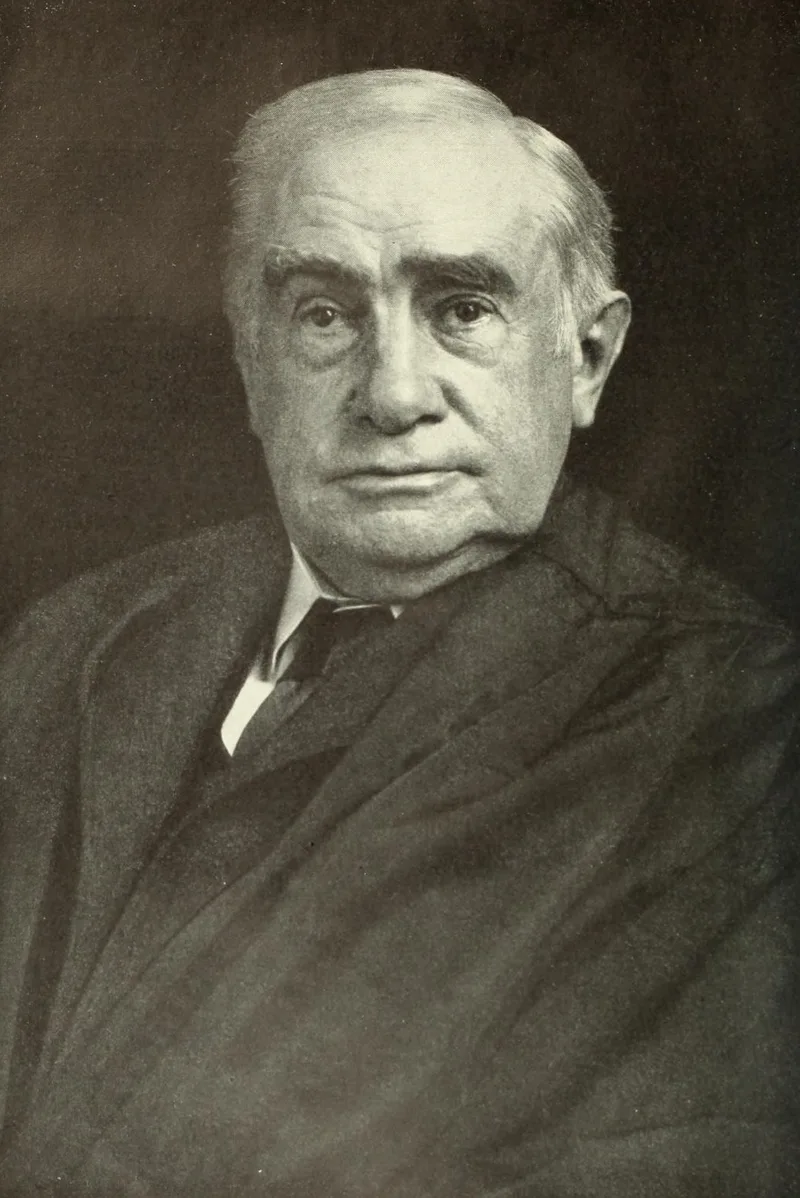
McDonald v. Dewey
Supreme Court of the United States · 1906-05-28 · cited 38×
The case involved the liability of former shareholders of a national bank under the double liability provisions of the National Banking Act after they transferred their stock. The Supreme Court held that an original stockholder is relieved of liability upon a good-faith transfer of shares, provided the bank was solvent at the time and the transferor did not know or have reason to know of impending insolvency or collude to substitute an irresponsible party. The core reasoning was that transfers of stock should generally be facilitated unless bad faith is evident, as the Act shifts responsibility to the transferee upon a valid out-and-out sale, and the transfer is presumed valid absent evidence of evasion. The Court distinguished this from scenarios of known insolvency or colorable transfers and rejected applying stricter state law interpretations, such as those from Ohio.
business & regulatory
United States v. Cornell Steamboat Co.
Supreme Court of the United States · 1906-05-14 · cited 61×
The case involved a steamboat company's claim for salvage services that saved a cargo of sugar from fire in New York harbor, thereby preserving $6,000 in customs duties that the government had collected and might otherwise have been required to refund under Revised Statutes sections 2984 and 3689. The Supreme Court affirmed that the claim was properly brought in personam against the United States under the Tucker Act, which grants jurisdiction over claims for unliquidated damages not sounding in tort that would be cognizable in admiralty if the government were suable. The core reasoning was that salvage liability arises from the benefit conferred on the owner of the saved property, as established in precedents such as The Davis, and that the Act was intended to provide direct recourse against the government for such claims even absent an express contract.
federal powerprocedurepropertytorts & liability
First Nat. Bank of Baltimore v. Staake
Supreme Court of the United States · 1906-04-30 · cited 78×
This case concerned competing claims to real property that had been attached by creditors of an insolvent debtor (Baird) shortly before he was placed in bankruptcy, where the property had been sold to the Roanoke Furnace Company but the deed was not recorded until after the attachments. The Supreme Court held that, under section 67f of the Bankruptcy Act, the attachments were not dissolved outright but instead preserved for the benefit of the bankrupt's entire estate, allowing the trustee to enforce the liens for all creditors rather than permitting the attaching creditors to retain a preferential interest. The core reasoning was that the statute distinguishes between situations in which property passes free of liens to the trustee and those in which attaching creditors have obtained a lien on property that would otherwise belong to a third party; in the latter, Congress intended the lien value to be distributed pro rata among all creditors to prevent preferences and promote equality. The Court rejected arguments that the liens could only benefit the bankrupt's estate if the property would have passed to the trustee upon annulment, noting that the second clause of the section specifically addresses liens on property transferred by unrecorded deeds.
business & regulatorypropertyprocedure
Houston & Texas Central Railroad v. Mayes
Supreme Court of the United States · 1906-04-02 · cited 70×
The case concerned the constitutionality of Texas statutes requiring railroads to supply a specified number of freight cars within set deadlines upon written request and deposit of partial freight charges, with a $25 daily penalty per car for noncompliance, except in cases of strikes or public calamity. The statutes were applied by Texas courts to a shipment destined for Oklahoma, prompting the railroad to argue that they improperly regulated interstate commerce. The Supreme Court held that the laws could not constitutionally be applied to interstate shipments. The core reasoning was that the statutes imposed an absolute duty to furnish cars on a fixed schedule without adequate exceptions for uncontrollable events such as traffic congestion, wrecks, or weather, thereby creating an unreasonable burden on interstate commerce that exceeded permissible state police power and intruded on Congress's exclusive authority.
business & regulatoryfederal power
De La Rama v. De La Rama
Supreme Court of the United States · 1906-04-02 · cited 62×
This case concerned a wife's claim for alimony or pension in a divorce proceeding from the Philippine Islands, raising the threshold issue of whether the U.S. Supreme Court had appellate jurisdiction over such matters from the islands' courts. The Court held that its review of Philippine appeals, governed by the 1902 statute allowing review where the amount in controversy exceeds $25,000, extends to both facts and law, unlike the more limited review of U.S. territorial court decisions under the 1874 act. It further concluded that the lack of formal findings of fact by the lower courts did not bar full examination of the record. The Supreme Court reversed the Philippine Supreme Court's dismissal of the petition and remanded for further proceedings consistent with its jurisdictional analysis.
family lawfederal powerprocedure
Keen v. Keen
Supreme Court of the United States · 1906-04-02 · cited 3×
The case concerned a dispute over inheritance rights to land in Missouri, specifically whether a common-law marriage had existed between Eli Keen and Phoebe, a former slave, which would affect the legitimacy of their descendants and the distribution of Eli's estate. The lower court concluded that no such marriage existed and that Eli died without heirs capable of inheriting, allowing the plaintiff to recover half the property as his wife. On appeal to the U.S. Supreme Court, the defendant raised claims under the Fourteenth Amendment regarding due process and equal protection, but these were not properly presented in the pleadings or earlier proceedings. The Court held that no federal question had been timely raised and that the determination of common-law marriage was a matter of state law, leading to dismissal of the writ of error for lack of jurisdiction.
family lawproperty
A. Leschen & Sons Rope Co. v. Broderick & Bascom Rope Co.
Supreme Court of the United States · 1906-03-19 · cited 73×
The case concerned whether a federally registered trademark for a "distinctively colored streak" applied to or woven into wire rope was valid under the trademark act of 1881, which limited registration to marks used in foreign or Indian-tribe commerce. Both parties were Missouri citizens, so federal jurisdiction depended on the existence of a valid registered mark. The Supreme Court affirmed the lower courts' rulings that the registration was invalid because its description was too indefinite and broad, potentially covering any color applied in any manner and failing to give other manufacturers clear notice of what they could lawfully do. The Court noted that a more narrowly described mark, such as a single red strand, might have been sustainable, but the actual registration could not stand, and no separate fraud claim was before the Court.
business & regulatoryfederal power
Hale v. Henkel
Supreme Court of the United States · 1906-03-12 · cited 1270×
In Hale v. Henkel, a witness subpoenaed before a federal grand jury investigating possible antitrust violations by corporations refused both to answer questions and to produce corporate documents under a subpoena duces tecum, claiming lack of a formal pending charge, self-incrimination under the Fifth Amendment, and an unreasonable search under the Fourth Amendment. The Supreme Court held that grand juries may initiate investigations without a specific written charge against a named person, that a witness must generally answer unless a real risk of self-incrimination is shown, and that an overly broad subpoena for documents is invalid under the Fourth Amendment. The core reasoning rested on the historical role of grand juries to inquire into possible crimes on their own knowledge or initiative, the limited scope of the Fifth Amendment privilege, and the requirement that constitutional protections against unreasonable seizures be applied to prevent overly expansive document demands.
criminal lawprocedurecivil rights
McAlister v. Henkel
Supreme Court of the United States · 1906-03-12 · cited 40×
This case concerned a corporate officer's refusal to answer questions or produce specific documents, including three agreements involving the American Tobacco Company, in connection with a federal investigation under the Sherman Act into alleged antitrust violations by tobacco companies. The court held that the officer could not invoke the Fifth Amendment privilege against self-incrimination on behalf of the corporation and affirmed the order compelling his testimony and document production. The reasoning was that the privilege is personal to the individual witness rather than the entity, and prior precedents uniformly establish that corporate officers may not assert the corporation's rights to avoid producing records. Unlike the related Hale v. Henkel matter, the subpoena here identified the particular writings sought with dates and parties, removing that objection.
criminal lawbusiness & regulatoryprocedure
Hibernia Savings & Loan Society v. San Francisco
Supreme Court of the United States · 1906-01-29 · cited 36×
The case concerned whether checks or warrants issued by the United States Treasury for immediate payment of interest on government bonds were exempt from state taxation under Rev. Stat. §3701, which shields stocks, bonds, and other federal obligations from state or local taxes. The Court held that the checks were not exempt and could be taxed by San Francisco. It reasoned that the exemption protects federal borrowing power by preventing taxes that impair the value of government obligations, but does not extend to instruments meant solely as immediate substitutes for cash, since taxing them equates to taxing the underlying funds rather than hindering government credit or operations. The decision drew on precedents distinguishing long-term debt instruments from demand checks and noted Congress's later statute permitting state taxation of certain federal notes payable on demand.
taxesfederal power
San Antonio Traction Co. v. Altgelt
Supreme Court of the United States · 1906-01-22 · cited 26×
The case concerned the San Antonio Traction Company's challenge to a 1903 Texas statute requiring street railway operators to sell half-fare tickets to qualifying students, which the company argued impaired contractual rights granted in its 1874 charter and related city ordinances. The court decided that the law was valid and did not violate any contract, affirming the lower court's ruling. The core reasoning was that the original company had gone through foreclosure and sale, and the Traction Company had absorbed another entity and accepted new privileges after the 1876 Texas Constitution took effect; that constitution made all such franchises subject to legislative control rather than irrevocable, and no showing was made that the reduced fares were confiscatory.
business & regulatory
Kolze v. Hoadley
Supreme Court of the United States · 1906-01-02 · cited 23×
The case concerned whether a federal circuit court had jurisdiction over a suit by an assignee to foreclose trust deeds securing promissory notes, where the original mortgages had been assigned and a release deed had allegedly been fraudulently executed. The Supreme Court held that the federal court lacked jurisdiction because the suit was one to recover the contents of a chose in action by an assignee, which could not have been brought by the assignors. Under the Judiciary Act of 1789 (as amended in 1888), such suits require that the assignor could have prosecuted the action in federal court if no assignment had occurred; here, both potential assignors (Stade and Smith) were citizens of Illinois, the same state as the defendants. The Court reasoned that the core object of the bill remained foreclosure of the mortgages, with the challenge to the fraudulent release serving only as an incidental step, making precedents like Blacklock v. Small controlling and requiring dismissal.
procedureproperty
Russian-American Packing Co. v. United States
Supreme Court of the United States · 1905-12-18 · cited 30×
The case concerned a company's claim to title or compensation for land and improvements on an Alaskan island, which it had occupied starting in 1889 for salmon packing operations. The company argued that the 1884 Alaska civil government act and the 1891 land purchase provisions for trade and manufacturing recognized its rights, but the court held that the company was a trespasser with no vested rights under those statutes. The 1884 act protected only those already in possession and explicitly withheld general land laws, while the 1891 act's sections 12 and 13 were limited by section 14's reservations for public purposes and native rights; a presidential proclamation reserving the island for a fish-culture station therefore terminated any inchoate claims. The court affirmed the dismissal of the petition, emphasizing that payment and final approval were required for vested rights against the United States.
propertyfederal power
Alexander v. Crollott
Supreme Court of the United States · 1905-12-18 · cited 24×
This case concerned a request for a writ of prohibition to halt a justice court proceeding in a forcible entry and detainer action, where the petitioner claimed ownership of the property and argued that the justice lacked jurisdiction to decide ownership questions. The Supreme Court affirmed the lower court's denial of the writ. The Court explained that a writ of prohibition issues only when no other remedy is available, and here the New Mexico code provided for an appeal to the district court in all forcible entry and detainer cases. It further noted that the availability of an appeal is not defeated even if the underlying judgment is void or a bond is required.
propertyprocedure
Manigault v. Springs
Supreme Court of the United States · 1905-12-04 · cited 336×
The case concerned a dispute over a 1898 contract in which the defendants agreed to remove a dam on Kinloch Creek in South Carolina and keep the creek open and unobstructed, and a 1903 state statute authorizing the dam's construction or retention. The plaintiff, owner of a rice plantation and millsite whose value depended on access via the creek, alleged that the statute impaired the contract, violated state constitutional provisions treating navigable waters as public highways, and deprived him of property without due process. The Supreme Court affirmed the lower court's dismissal, holding that states retain authority to authorize dams across interior navigable streams to improve lands and promote public health and welfare absent conflicting federal legislation, that constitutional clauses declaring such waters free highways do not strip this power, and that any resulting damage to the plaintiff was incidental and compensable under the statute rather than grounds for equitable relief. The Court further rejected claims that the statute was an invalid special law or failed to meet procedural notice requirements, as those were not constitutional mandates binding on the legislature.
propertyfederal power
Union Refrigerator Transit Co. v. Kentucky
Supreme Court of the United States · 1905-11-13 · cited 319×
The case concerned whether Kentucky could tax the tangible personal property of a Kentucky corporation when that property was permanently located and operated in other states. The Supreme Court held that the tax violated the Due Process Clause of the Fourteenth Amendment. The core reasoning was that a state's power to tax rests on its ability to provide protection or benefits to the property, and when the property lies wholly outside the state's jurisdiction and receives no such benefit, the tax exceeds the legislature's authority and constitutes a taking without due process.
taxesproperty
Board of Trade v. Hammond Elevator Co.
Supreme Court of the United States · 1905-05-29 · cited 79×
The case involved a suit by the Board of Trade against the Hammond Elevator Company, a Delaware corporation with its principal place of business in Indiana, where the company challenged whether service of process on its correspondents in Illinois was sufficient to establish jurisdiction in federal court. The Circuit Court had dismissed the case for lack of jurisdiction, finding that the individuals served were not officers or proper agents of the company. The Supreme Court held that the appeal was properly before it because the issue concerned the federal court's jurisdiction over the defendant through service of process. It reversed the dismissal, reasoning that the correspondents in Illinois were acting as agents of the elevator company by receiving orders, margins, and handling transactions on its behalf, thereby constituting 'doing business' in the state that allowed valid service.
procedure
Hyde v. Shine
Supreme Court of the United States · 1905-05-29 · cited 194×
The case concerned whether a defendant arrested in California could be removed to the District of Columbia for trial on federal conspiracy charges under Rev. Stat. Sec. 1014. The Supreme Court affirmed the removal and the jurisdiction of the D.C. court, holding that the statute applied without regard to distance and that the indictment sufficiently alleged the conspiracy was formed in D.C. The Court reasoned that an overt act is required to complete the offense under Rev. Stat. Sec. 5440 but that the place of trial is proper where the conspiracy was entered into, following its recent decision in Benson v. Henkel; it also rejected arguments that the new D.C. code or the location of overt acts barred jurisdiction.
criminal lawprocedure
Dunbar v. Green
Supreme Court of the United States · 1905-05-01 · cited 2×
This case involved an ejectment action over land in Wyandotte County, Kansas, originally patented to Susan Whitefeather, a Shawnee Indian, with her son George Washington as heir; plaintiffs claimed title through a guardian's deed executed by Jonathan Gore that the Kansas Supreme Court assumed was void due to jurisdictional defects and timing issues. The U.S. Supreme Court reversed the Kansas Supreme Court, which had ruled for the plaintiffs based on Washington's laches. The Court held that ejectment is an action at law where plaintiffs must recover on the strength of their own title rather than defendants' weaknesses or delay, and that laches is not a valid offensive tool here since defendants had maintained possession of the vacant land and shown the deed's invalidity; any equitable claims in the cross-petition did not convert the core proceeding from ejectment.
propertyprocedurecivil rights
Benson v. Henkel
Supreme Court of the United States · 1905-04-17 · cited 101×
In Benson v. Henkel, the defendant faced an indictment under Rev. Stat. sec. 5451 for bribing a federal Land Office clerk in the District of Columbia to reveal contents of reports from an investigation into the unlawful acquisition of public lands in California, and the case concerned whether he could be removed from New York to D.C. for trial under Rev. Stat. sec. 1014. The Supreme Court affirmed the removal order. The Court held that an indictment framed in the language of the bribery statute was sufficient to establish probable cause for removal, as technical challenges to its legal sufficiency or application to future reports were properly left for determination by the court in which it was returned rather than the extradition commissioner.
criminal lawprocedure