Judicial data via CourtListener (Free Law Project). Social links via Wikidata.
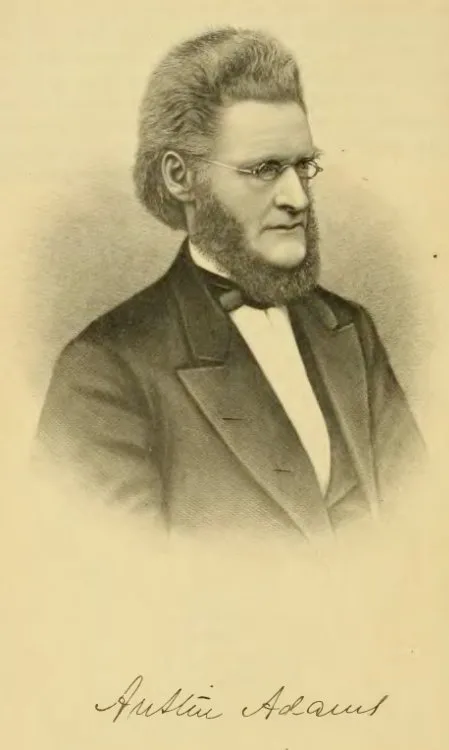
Gwynn v. Duffield
Supreme Court of Iowa · 1885-09-23 · cited 15×
This case involves a negligence claim by plaintiff Gwynn against defendants H.P. Duffield and S.B. Duffield, partners in an apothecary business. Gwynn ordered extract of dandelion from S.B. Duffield, who mistakenly prepared belladonna instead; Gwynn then took a dose himself from a jar on the counter after an exchange with S.B. Duffield, who denied giving permission or sanctioning the act. The trial court gave jury instructions on contributory negligence, the liability of the non-acting partner for acts outside firm business, and the distinction between a trespasser and one acting on the defendant's knowledge. On appeal, the Iowa Supreme Court reversed, holding that the instructions improperly shifted or obscured the burden of proof on contributory negligence, that the firm was not liable for the partner's consent to a gift outside the business, and that a trespasser could not recover for ordinary negligence.
torts & liabilitybusiness & regulatoryprocedure
Jackson v. Traer
Supreme Court of Iowa · 1884-10-09 · cited 29×
This case involves a judgment creditor of the Burlington, Cedar Rapids & Minnesota Railway Co. seeking to enforce liability against defendants Traer and George Greene as stockholders under Iowa Code sections 1082 and 1084 for the unpaid balance on their stock. The lower court found the defendants were stockholders with 80 percent of their stock unpaid and entered judgment for the plaintiff after crediting a partial payment; this court, on rehearing, affirmed that result. The court reasoned that evidence established the defendants' ownership of the stock at the time the action was filed, that the stock had been issued as fully paid when only 20 percent was actually paid, and that the unpaid portion constitutes a trust fund available to corporate creditors under the statute regardless of claims that the stock was worthless or that prior transfers or releases affected liability.
business & regulatory
Frank & Darrow v. Blake
Supreme Court of Iowa · 1882-06-14 · cited 13×
The case concerned a promissory note executed by the defendant and allegedly procured by fraud in connection with an agency arrangement for the American Hog Cholera Cure Company; the note was transferred before maturity for value to the plaintiffs, a partnership, via an intermediary. The trial court instructed the jury that the plaintiffs could recover if they were bona fide purchasers without knowledge of the fraud, but the jury found for the defendant. On appeal, the court affirmed, holding that a partnership claiming bona fide purchaser status must prove that all its members lacked knowledge of the fraud at the time of purchase, as the ignorance of the single purchasing partner does not establish the partnership's good faith and the burden rests on the transferee to show lack of notice. The court reasoned that a contrary rule could allow a partnership to shield itself by using an uninformed partner to make the purchase.
business & regulatoryprocedure
Dodge v. City of Council Bluffs
Supreme Court of Iowa · 1881-12-19 · cited 18×
The case concerned whether the City of Council Bluffs could contract with a foreign corporation, the American Construction Company, to build and operate water-works and grant it the power to condemn private property for that purpose under a city ordinance. The court held that the city possessed this authority and that the ordinance was valid, affirming the district court's judgment. The reasoning centered on the corporation's articles of incorporation, which permitted broad operations without geographic restriction to New York, and on Iowa Code Section 474, which expressly allows cities to confer condemnation powers on corporations without distinguishing between domestic and foreign entities. Objections based on interstate comity, potential use of general city revenues for water rentals, and incomplete publication of the ordinance were rejected as insufficient to invalidate the ordinance or support injunctive relief.
business & regulatoryproperty
Kaiser v. Lawrence Savings Bank
Supreme Court of Iowa · 1881-04-23 · cited 14×
The case Kaiser v. Lawrence Savings Bank concerned whether individuals who attempted to form a savings bank under Kansas general incorporation laws but filed defective articles of association could claim exemption from personal liability for the bank's debts to a creditor. The court held that the bank never became a corporation because the articles were not properly subscribed or acknowledged by five or more persons as required by statute, and the later certificate required before commencing business could not cure the defect or substitute for incorporation. The core reasoning was that strict compliance with statutory prerequisites for incorporation under a general law is necessary to avoid individual liability, and mere operation as a supposed corporation with the public or the plaintiff does not provide exemption, as illustrated by precedents requiring material steps like filing to be completed for corporate existence.
business & regulatory



