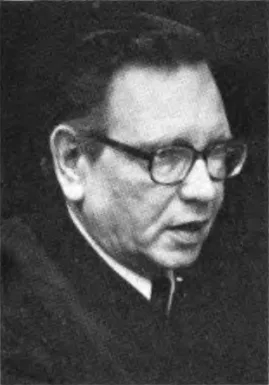
The case involved defendant Ford, who forged a credit card sales slip to obtain cash from a gas station and was charged with uttering and publishing under the general forgery statute rather than the more specific credit card misuse statute. The Michigan Supreme Court addressed whether the credit card protection statutes precluded prosecution under the uttering and publishing law, which carries a higher maximum penalty, and whether the prosecutor abused discretion in selecting the general charge. The Court held that the credit card statutes contain no exclusivity provision and do not bar the general charge, and that charging under the uttering and publishing statute was proper on the facts presented. It reversed the Court of Appeals decision setting aside the conviction and reinstated the guilty plea and consecutive sentence.
The case concerned whether Detroit Edison's fuel cost adjustment clause (FCAC), adopted in 1974, functioned as a mechanism to recover actual past fuel costs or as an estimate of current fuel costs based on prior experience when the Michigan Public Service Commission revised the clause in 1975. The Michigan Supreme Court affirmed the Commission's ruling that the FCAC was a fixed-rate tariff using past data to estimate current billing-month costs, not a cost-of-service tariff for dollar-for-dollar past-cost recovery. The court relied on three features of the clause: the adjustment was applied to current-month usage rather than the prior month's usage, departing or new customers faced no special charges or credits for prior periods, and the clause took effect immediately in March 1974 based on January data without creating unauthorized retroactive ratemaking. Because the original FCAC already accounted for December 1974 and January 1975 costs in those months' billings, the court found no collection gap resulted from the 1975 revision.
The case involved a class action for inverse condemnation brought by owners of 42 parcels in Detroit's Elmwood Park urban renewal area, who alleged a de facto taking of their property by the city's actions without just compensation or formal proceedings. The properties had been acquired by the city through tax foreclosure after the alleged taking but before any condemnation suits. The trial court and Court of Appeals applied a three-year statute of limitations for injuries to property and dismissed most claims as untimely. The Supreme Court held that the three-year statute does not apply to inverse condemnation actions and that equitable principles preclude the city from asserting any statute of limitations defense, given its intent to condemn the parcels and the fact that the cause of action accrued simultaneously for similarly situated properties.
In People v. Langworthy and People v. Lundy, the Michigan Supreme Court addressed consolidated appeals from defendants convicted of first-degree criminal sexual conduct and second-degree murder after trial courts rejected their attempts to use voluntary intoxication as a defense. Both defendants argued that these offenses should be reclassified as specific-intent crimes to allow the intoxication defense, which Michigan law recognizes only for crimes requiring proof of a particular mental state beyond the intent to commit the physical act. The court reviewed the common-law origins of the exculpatory rule for intoxication and its limitation to specific-intent offenses, concluding that the elements of the charged crimes involve only general intent and therefore do not permit the defense. The convictions were affirmed on that basis.
This consolidated appeal from the Michigan Supreme Court involved four cases in which workers injured on the job sued the companies where they had been placed to work, raising the question whether the exclusive remedy provision of the Worker's Disability Compensation Act barred their tort claims. Three cases arose from labor-broker arrangements in which temporary employees supplied by staffing agencies were injured while operating equipment at the customer companies; the fourth involved an injury to a hockey league official allegedly caused by a player on a member team. The court reviewed the employment relationships under prior precedents applying control and other factors to identify the statutory employer, then determined whether that employer status triggered immunity from suit. Lower court rulings granting or denying summary judgment on the exclusive-remedy defense were examined to clarify which entity bore responsibility for workers' compensation coverage and the corresponding tort immunity.
The case involved Alvin Carter, charged with aiding and abetting extortion and conspiracy to commit extortion after an employee at a utility office was threatened into surrendering money. The Michigan Supreme Court examined whether a defendant could be convicted of both aiding and abetting the substantive offense and conspiracy to commit that same offense. The court held that dual convictions were permissible under the facts because the crimes involve distinct elements and proofs, with conspiracy addressing the planning stage and aiding and abetting addressing commission of the crime. Additional claims regarding suggestive identification procedures, failure to produce a witness, and admission of evidence about prior misconduct were rejected as meritless. The court therefore affirmed the convictions for extortion under an aiding and abetting theory and for conspiracy to commit extortion.