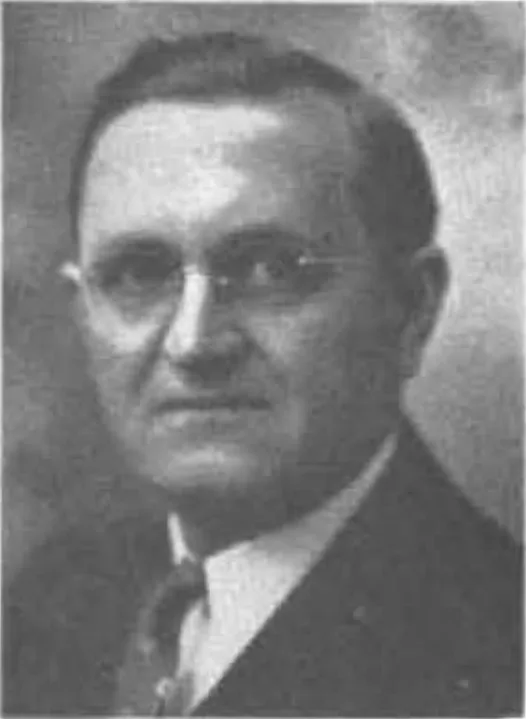
The case involved a police officer seeking workers' compensation benefits after suffering a coronary thrombosis, which he attributed to extreme physical exertion and excitement while moving a damaged vehicle at an accident scene. The court considered whether this event qualified as an accidental injury under the workers' compensation act and whether the city employer had adequate notice despite the absence of written notice within 90 days. The court affirmed the compensation award, ruling that a coronary thrombosis resulting from such exertion and excitement meets the statutory definition of an accidental injury and that actual knowledge by police officials constituted knowledge by the city. The decision relied on prior precedent treating the causation question as one of fact for the commission and principles of imputed knowledge to the employer through its supervising officers.
The case concerned a dispute over a building permit issued by the city engineer of Mankato allowing a dairy company to construct a private garage in a residential zoning district for storing its business delivery trucks. Plaintiff Lowry sought an injunction to revoke the permit and halt construction, arguing that the garage violated the city's 1932 zoning ordinance, which divides the city into business and residence districts and restricts uses in the latter. The Minnesota Supreme Court held that the ordinance permits a private garage in a residence district only when it qualifies as an accessory building subordinate to a main residential use on the premises, a construction necessary to reconcile the ordinance's definitions and fulfill its purpose of excluding non-residential business activities. The court further ruled that the permit was void because the issuing official lacked authority to vary the ordinance's requirements, allowing enforcement of the zoning restrictions despite partial construction. Accordingly, the trial court's denial of relief was reversed with directions to issue the injunction.
The case concerned whether the city of Hudson, Wisconsin, a foreign municipality, could claim a tax exemption under the Minnesota Constitution for personal property taxes assessed on the portion of an interstate toll bridge it owned and operated that was located in Washington County, Minnesota. The state had obtained a judgment for the 1947 taxes on that portion of the bridge, and the city appealed, arguing the property qualified as public property used exclusively for a public purpose. The court affirmed the judgment, holding that the city was not entitled to the exemption. It reasoned that a state constitution governs only within its own boundaries and that a municipality from another state loses its public or sovereign character when owning property across state lines, making its ownership equivalent to that of a private corporation for tax purposes in Minnesota; the exemption thus applies only to property of Minnesota and its subdivisions.
The case involved an employee who sued his former employer for breach of an oral three-year employment contract after being discharged, seeking recovery on a quantum meruit basis once the contract was deemed unenforceable under the statute of frauds; the employer defended in part by asserting a release signed by the employee in exchange for $200. The trial court directed a verdict for the defendant, but the Minnesota Supreme Court reversed and ordered a new trial. It held that a repudiated oral contract cannot limit recovery in quantum meruit, that evidence of coercive threats (including lawsuits and financial ruin) combined with pressure from the employee's supervisor could support a finding of duress invalidating the release, and that tendering back only the $200 consideration was sufficient to rescind the release without restoring additional sums received afterward.
In Chevalier v. Rogers, the plaintiff sued for personal injuries and property damage from an automobile collision allegedly caused by the defendant's negligence, while the defendant asserted contributory negligence as a defense and filed a counterclaim for damages based on the plaintiff's negligence. The jury returned a verdict stating only that both parties were negligent, without determining proximate cause or awarding damages to either side. The trial court denied the plaintiff's motion for a new trial, and the appellate court affirmed, holding that the verdict must be construed as failing to prove proximate cause on either claim given the burden of proof, so neither party could recover. The court reasoned that this outcome held whether the negligence of both was viewed as non-proximate or as jointly causative, distinguishing the case from precedents with clearer general verdicts for one party.
The case involved a tenant's personal injury lawsuit against her landlord after she fell down unlit stairs in her apartment building, alleging negligence based on the landlord's unfulfilled promise to repair the lighting. The lease included a broad clause exempting the lessor from liability for personal injuries sustained by the lessee, and it had been signed by the plaintiff's sister as agent for the plaintiff and another principal. The court affirmed a directed verdict for the defendant, holding that the exemption clause applied generally to personal injuries without limitation to specific causes like fire or water damage, as the modifying language pertained only to property loss. The court further reasoned that the plaintiff, as an unnamed principal, was bound by the lease terms as if she were the named lessee, since the agent acted on her behalf.