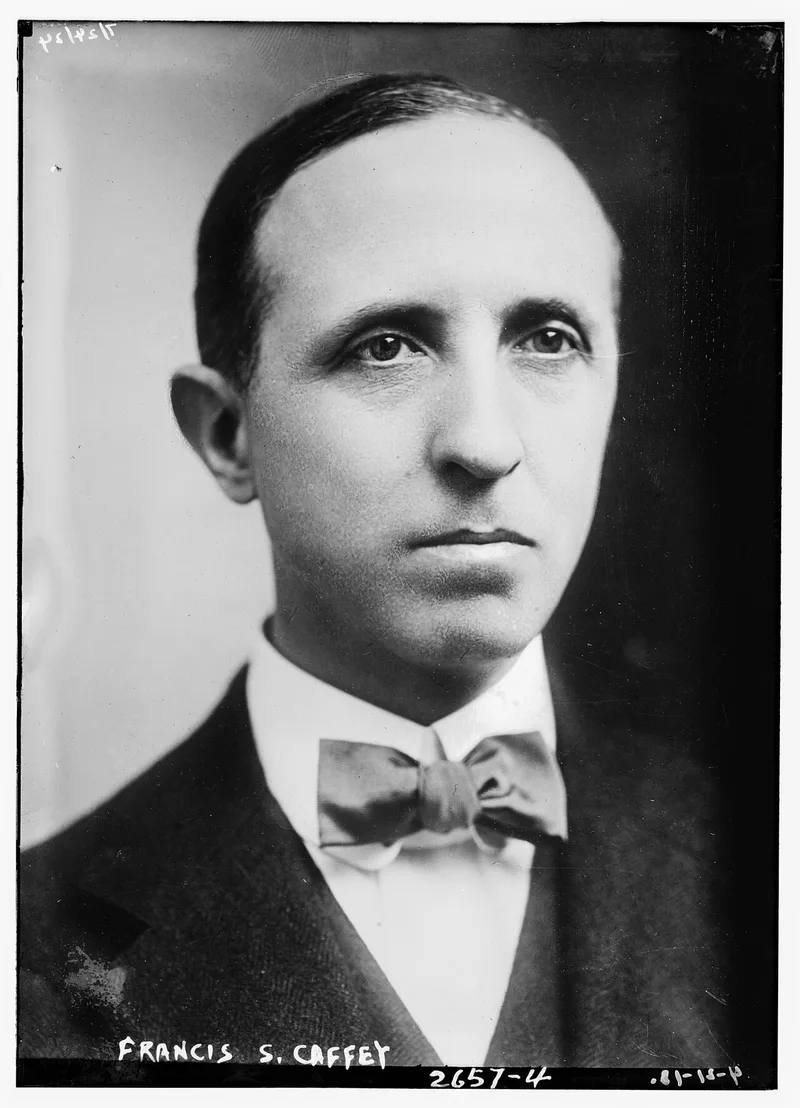
Kilpatrick v. Texas & P. Ry. Co.
District Court, S.D. New York · 1947-07-16 · cited 13×
The case involved two actions against the Texas & Pacific Railway Company, where the defendant moved to dismiss for lack of jurisdiction, claiming it was not doing business in the Southern District of New York when the suits were filed in 1946. The court examined evidence showing that after a 1944 decision finding the company amenable to suit due to ticket sales, bill of lading issuance, and complaint handling, the defendant had curtailed its New York office activities to pure solicitation of freight and passenger business, with no authority to issue tickets or original bills of lading, settle claims, or make contracts. All substantive operations, including claim resolutions and corporate functions, occurred in Texas, and the New York office employed only eight people focused on solicitation. The court granted the motions to dismiss, concluding the limited activities did not constitute doing business in the district, and denied the plaintiffs' requests for depositions on the jurisdiction issue as the submitted affidavits were sufficient and uncontroverted.
procedure
United States v. Josephson
District Court, S.D. New York · 1947-06-13 · cited 4×
The case involved a defendant indicted under 2 U.S.C. § 192 for willfully refusing, after being subpoenaed, to be sworn or testify before a House subcommittee of the Committee on Un-American Activities. The defendant moved to dismiss the indictment, arguing that no specific questions had been asked, that the certification procedure in § 194 had not been followed, that the committee’s authorizing resolution was unconstitutionally vague, and that it violated the First, Fifth, and Sixth Amendments. The court rejected each ground, holding that refusal to be sworn constitutes a refusal to answer under the statute, that a grand jury may indict without the § 194 procedure, and that challenges to the committee’s scope or constitutionality were not properly raised on a motion to dismiss an indictment that does not yet allege particular questions. The court therefore denied the motion to dismiss and the request for a bill of particulars.
criminal lawfederal powerprocedure
Acker v. Schulte
District Court, S.D. New York · 1947-05-26 · cited 10×
This case involved two lawsuits brought by plaintiffs Acker and Schmolka against defendants including Schulte, Park & Tilford, Inc., and Ira Haupt & Company, alleging violations of Sections 9(e) and 10(b) of the Securities Exchange Act of 1934 and related SEC rules through stock price manipulation and misleading statements about an impending dividend in Park & Tilford common stock, which caused the plaintiffs to purchase shares at artificially inflated prices and suffer losses when the price later fell. The defendants filed motions seeking orders requiring the plaintiffs to post substantial security for costs and attorneys' fees under Section 9(e), primarily arguing that the actions lacked good faith. The court denied all motions, holding that security is not warranted absent a clear showing of bad faith or lack of merit in the claims, that the defendants' concerns about litigation expenses did not meet this standard, and that any assessment of costs or fees under the statute occurs only after trial.
business & regulatoryprocedure
Bowles v. Ell-Carr Co.
District Court, S.D. New York · 1947-03-19 · cited 6×
This case involved a motion by the plaintiff's attorneys to substitute Philip B. Fleming, Administrator of the Office of Temporary Controls, as the plaintiff in place of Paul A. Porter, the former Price Administrator of the Office of Price Administration, following Porter's departure from office on December 12, 1946. The court granted the substitution, finding it timely under Rule 25(d) of the Federal Rules of Civil Procedure and authorized by 28 U.S.C. § 780, as well as by Executive Order No. 9809 which transferred the Price Administrator's functions to Fleming. The defendants' objections—that the Emergency Price Control Act did not permit substitution, that Fleming's new title disqualified him, and that postwar conditions ended the President's authority—were rejected, with the court emphasizing that the suit was brought on behalf of the office rather than the individual and that the successor had received the predecessor's powers and duties.
procedurebusiness & regulatoryfederal power
Bergman v. De Sieyes
District Court, S.D. New York · 1946-12-30 · cited 6×
The case concerned whether a French diplomat accredited to Bolivia, who was served with civil process while temporarily in New York en route to his post, could claim immunity from suit in a U.S. court. The court denied the plaintiff's motion to strike the defendant's immunity defense from the answer. It reasoned that Section 252 of Title 22, which codifies immunity only for diplomats received by the President, did not apply, but that the law of nations—reflected in treatises, foreign cases such as Magdalena Steam Navigation Co. v. Martin, and the 1928 Havana Convention—extends to ministers in transit the same exemption from civil jurisdiction that protects them in the country of accreditation, in order to ensure they can perform their functions without judicial interference. The court therefore upheld the defense and permitted the immunity claim to proceed.
procedure
Clair v. Kastar, Inc.
District Court, S.D. New York · 1946-12-23 · cited 5×
This case involved a patent infringement dispute where an earlier judgment had found that Kastar, Inc. infringed claim 2 of U.S. Patent No. 1,577,821 by manufacturing and selling automobile steering stabilizer models 73 and 74. A Special Master was appointed to calculate the profits and damages owed to the plaintiffs for the period from December 1936 to March 1943, and the parties filed exceptions to the Master's report concerning allowable deductions such as officers' salaries as overhead, the treatment of prior-year losses, and whether the infringement was willful. The court overruled most exceptions, confirmed the report with one adjustment, and fixed the recoverable profits at $23,246.20, reasoning that the small company's owner salaries were properly included in general overhead allocated proportionally to sales, that pre-infringement losses could not offset later profits, and that the evidence did not support a finding of conscious infringement warranting enhanced damages.
propertyprocedurebusiness & regulatory
American Gas & Electric Co. v. United States
District Court, S.D. New York · 1946-12-11 · cited 9×
This case involved a corporate taxpayer seeking a refund of $29,258.20 in federal documentary stamp taxes paid under Internal Revenue Code Section 1802(a) on the 1940 issuance of new preferred stock as part of a refinancing and reclassification plan that included redeeming old no-par preferred stock and offering exchanges or cash sales of the new $100-par shares. The court denied the plaintiff's summary judgment motion and granted the government's, upholding the full tax on the entire new issue. The core reasoning was that the tax applies to each certificate issued upon original issuance or exchange, the company's averaged capital-account adjustments and reacquired shares prevented any precise allocation of prior capital liability to reduce the taxable amount per share, and the statute imposes no partial tax and must be applied literally as a revenue measure without regard to equitable adjustments.
taxesbusiness & regulatory
Sub-Contractors Register, Inc. v. McGovern's Contractors & Builders Manual, Inc.
District Court, S.D. New York · 1946-08-02 · cited 8×
This case involved a motion for summary judgment in a copyright infringement and unfair competition suit brought by the publisher of an annual directory of contractors and builders in the New York-New Jersey area against a former employee and his new competing directory. The court granted the motion, holding that the defendant’s 1946 directory infringed the plaintiff’s 1945 copyrighted compilation and that the defendant engaged in unfair competition by copying the cover design and color scheme. The core reasoning was that the near-identical listings, the presence of the same 270 errors (including an obviously misplaced musician listed as a plastering contractor), and 50 identical advertisements demonstrated copying rather than independent compilation from public sources, and that the shift to a nearly identical blue-and-gold cover was intended to trade on the plaintiff’s established reputation. The court awarded a permanent injunction, destruction of infringing materials, costs, and $500 in attorney’s fees, with damages to be determined later.
propertyprocedurebusiness & regulatory
Bulkley, Dunton Paper Co. v. the Rio Salado
District Court, S.D. New York · 1946-03-19 · cited 4×
The case involved a dispute between two Argentine nationals, with the court considering whether to exercise jurisdiction over the matter. The court declined to accept jurisdiction, citing that key witnesses were located in Argentina where their testimony could be more readily obtained and noting that the court's calendar was already crowded. Counsel for the respondent stipulated in open court that the statute of limitations defense would not be pleaded if the case proceeded elsewhere. On this basis, the motion to refuse jurisdiction and dismiss the libel was granted.
procedure
Defense Plant Corp. v. United States Barge Lines, Inc.
District Court, S.D. New York · 1944-11-27 · cited 4×
The case involved a post-bankruptcy motion by lien claimants seeking to enforce alleged bottomry liens in admiralty court against a vessel owner adjudicated bankrupt in the Western District of Kentucky in January 1944. The court denied the motion, ruling that the bankruptcy court held exclusive jurisdiction over the claims and liens. The core reasoning was that the bankruptcy adjudication preceded the motion and the completion of any admiralty proceedings, distinguishing the facts from cases like The Philomena where admiralty jurisdiction attached first; additionally, the prior admiralty actions had been terminated by the bankruptcy trustee under the Bankruptcy Act.
procedureproperty
Jerome v. Twentieth Century-Fox Film Corporation
District Court, S.D. New York · 1944-11-14 · cited 3×
The case involved a copyright infringement claim by the owner of the song "Sweet Rosie O’Grady" against Twentieth Century-Fox for unauthorized use of the song and its title, story, and characters in a motion picture of the same name, along with a related claim of unfair competition arising from alleged public confusion about authorization. The court addressed three motions: to require separate statement and numbering of claims in the second cause of action, to dismiss the unfair competition claim for lack of federal jurisdiction (as there was no diversity of citizenship), and to compel the defendant to answer deposition questions about the number and locations of film screenings. Applying the test from Hurn v. Oursler, the court denied the motion to separate claims, concluding that the second cause of action primarily stated only an unfair competition claim; denied dismissal of that claim because the proof for unfair competition might substantially overlap with the copyright infringement proof; and denied the discovery motion at the pretrial stage because the information related to damages that could be addressed later if an accounting were ordered.
propertyprocedure
Bercovici v. Chaplin
District Court, S.D. New York · 1944-04-10 · cited 5×
In Bercovici v. Chaplin, the court addressed a plaintiff's motion to file a supplemental complaint amending the third count of the action, which had previously been ruled an equitable claim to be tried without a jury by Judge Rifkind. The proposed amendment would convert that count into a legal claim potentially triable by jury. Judge Caffey denied the motion in its entirety, holding that he was bound by the prior ruling and that allowing the change would frustrate the order for a non-jury trial on what remained essentially the same cause of action. He indicated willingness to permit the amendment to the third count only if the parties consented to its being tried without a jury in accordance with the earlier decision, while leaving objections to the pleadings themselves for separate consideration.
procedure
Radding v. Ninth Federal Savings & Loan Ass'n
District Court, S.D. New York · 1944-03-31 · cited 8×
This case involved a soldier who acquired property subject to a mortgage and sought relief in federal court under the Soldiers’ and Sailors’ Civil Relief Act to stay or undo a state court mortgage foreclosure. The court dismissed the complaint on the merits, holding that the soldier was not entitled to relief because his military service did not materially affect his ability to meet the mortgage obligations, given that rental income from the property exceeded the required payments. The court further reasoned that the state court foreclosure was res judicata and binding on federal courts, which lack authority to review or set aside state judgments except through established appellate channels. Prior federal motions for a stay had also been denied, reinforcing the outcome under the law of the case.
propertyprocedurefederal power
Piascik v. British Ministry of War Transport
District Court, S.D. New York · 1943-12-23 · cited 3×
In Piascik v. British Ministry of War Transport, the plaintiff sued the British Ministry of War Transport, a department of the United Kingdom government, and the defendant moved to dismiss the action and quash service of process on grounds of sovereign immunity as a friendly foreign sovereign. The UK Ambassador submitted a note to the Secretary of State asserting the defendant's status and requesting immunity, which the Secretary of State recognized and conveyed to the court via the Attorney General. The court granted the motion to dismiss, ruling that it was bound to accept the executive branch's determination of immunity. This followed the Supreme Court's decision in Ex parte Republic of Peru, which requires courts to defer to the political branches on such claims to avoid interfering with foreign relations, a principle that applies to both in personam and in rem actions.
procedurefederal power
Allen Bradley Co. v. LOCAL NO. 3, IB OF E. WORKERS
District Court, S.D. New York · 1943-06-10 · cited 22×
The case involves plaintiffs alleging that Local No. 3, New York City electrical manufacturers, and local contractors conspired to unreasonably restrain interstate trade in electrical products in violation of the antitrust laws. The court accepted the findings of fact as showing such a violation and addressed whether the Norris-LaGuardia Act barred an injunction. It determined that the Act did not apply because the offense did not grow out of or involve a labor dispute, as there was no connection to the employer-employee relationship and the matter concerned terms of sale among businesses rather than employment conditions. Relying on Columbia River Packers Association v. Hinton, the court concluded that an injunction could issue without infringing the Act's public policy.
business & regulatorylabor & employment
The Ljubica Matkovic
District Court, S.D. New York · 1943-02-25 · cited 2×
The case involved a Yugoslav seaman suing for $5,000 in unpaid wages as chief mate on the vessel Ljubica Matkovic, leading to the vessel's arrest in a U.S. admiralty court; the Yugoslav Minister intervened to claim government ownership and immunity from suit. The court denied the libelant's motion to strike the intervention petition and for a default judgment awarding the wages, finding that the foreign government was entitled as of right to appear and contest jurisdiction upon a proper showing of ownership and possession. The reasoning centered on the State Department's recognition of the Minister, precedents like The Navemar allowing intervention without prior notice in such cases, evidence of the government's requisition and attornment by the vessel's officers establishing possession, and the conclusion that any procedural defects were not fatal or had been effectively addressed.
procedurefederal power
Kay Dunhill, Inc. v. Dunhill Fabrics, Inc.
District Court, S.D. New York · 1942-03-16 · cited 6×
This case involves a trademark dispute between Kay Dunhill, Inc., a manufacturer of moderate-priced women's dresses using the registered 'Kay Dunhill' mark since 1936, and Dunhill Fabrics, Inc., a fabric manufacturer organized in 1940 that incorporated 'Dunhill' into its name. The court held that the defendant infringed the plaintiff's trademark and engaged in unfair competition. The core reasoning was that the defendant's use of the similar name in related commerce was likely to cause consumer confusion, the plaintiff had established prior rights through continuous use in interstate commerce, and no defenses such as anticipation, laches, or unclean hands applied.
business & regulatoryproperty
United States v. Aluminum Co. of America
District Court, S.D. New York · 1941-10-25 · cited 13×
This case was a federal antitrust action brought by the United States against the Aluminum Company of America (Alcoa) under the Sherman Act, alleging unlawful restraints of trade and monopolization in the aluminum industry, including specific claims that Alcoa drove out competitor Baush through unfair practices such as narrowing price spreads on sheet aluminum. The district court confronted an exceptionally large record of over 58,000 pages, along with overlapping issues of patent and tariff law, and began its analysis by clarifying the meaning of “restraint of trade.” Drawing on Supreme Court precedents such as Board of Trade v. United States and Apex Hosiery Co. v. Leader, the court explained that the Sherman Act incorporates common-law concepts and prohibits only those agreements that suppress or destroy competition rather than merely regulating it, then turned to evaluating the evidence on the Baush allegations.
business & regulatory
United States v. Aluminum Co. of America
District Court, S.D. New York · 1940-11-15 · cited 21×
This case concerns allegations by the United States that Aluminum Co. of America (Alcoa) owns or controls more than 90 percent of commercially suitable bauxite deposits in the United States for aluminum production, which Alcoa denies. The court addresses numerous government motions to strike expert testimony and documents from Alcoa's witnesses on bauxite quantities and grades in Arkansas, primarily challenging them as hearsay or violations of the best evidence rule. The opinion notes the government's limited supporting evidence and the difficulty of assessing hidden underground deposits, while reserving rulings on 746 evidentiary items and inviting further briefing on whether the objections would affect the outcome of the monopoly claim. The judge emphasizes that expert analysis is necessary but questions the admissibility of portions relying on indirect sources.
business & regulatoryprocedure
United States v. Aluminum Co. of America
District Court, S.D. New York · 1939-01-06 · cited 6×
This case involved a dispute in United States v. Aluminum Co. of America over the government's right under Rule 34 of the Federal Rules of Civil Procedure to inspect documents produced in response to subpoenas duces tecum served on Alcoa and its officers, particularly former vice-president Robert E. Withers. The court held that inspection is permitted only if the documents are or contain evidence material to the issues in the case, and that the trial judge must personally examine them to make this determination rather than relying solely on the subpoena's description. After reviewing 87 documents, the court found 59 wholly irrelevant and thus not subject to inspection, while designating 28 (with three only partially) as containing material evidence that could be reviewed by the government. The reasoning drew directly from the text of Rule 34, supported by precedents like Federal Trade Commission v. American Tobacco Co. and Capital Co. v. Fox, emphasizing that materiality is a condition precedent to any inspection right.
procedurebusiness & regulatory