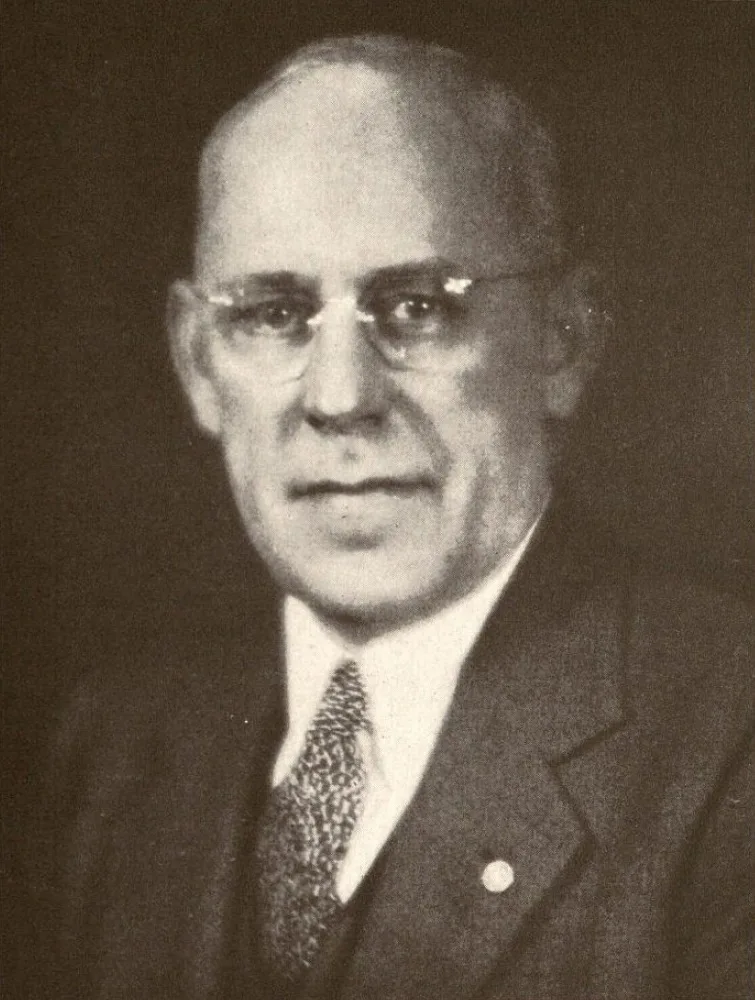
This case involved a dispute over whether a gift of Colorado mountain property made by Roy Terrell to his wife Anina in August 1940 should be included in his taxable estate after his death from cancer in December 1941. The IRS assessed additional federal estate tax on half the property's value under the statutory presumption that transfers within two years of death are made in contemplation of death. After trial without a jury, the court found that the gift was a completed transfer under Colorado law, that Terrell had planned it for over a decade without regard to his impending death, and that he had remained unaware of his cancer diagnosis at the time of the deed. The court therefore held the presumption rebutted and ordered a refund of the protested tax paid by the surviving spouse.
This admiralty case arose from a nighttime collision on Bayou Bell in Louisiana between the motorboats Aurora (eastbound) and Karankawa (westbound), in which the owner of the Karankawa sued the Aurora and its owner for damages from faulty navigation. The court found that the Aurora alone was at fault for crossing the bayou's midline into the Karankawa's proper lane along the north bank, rejecting the defense claim that the Karankawa lacked running lights and misled the Aurora into believing it was anchored. Evidence established that the Karankawa followed the correct side with required lights and took evasive action, while the Aurora's misjudgment caused the impact. The court awarded the libelant $864.47 total, covering repair costs of $330.39 plus $534.08 for sixteen days of lost use in shrimp trawling and freighting operations.
The case involved Texas Petroleum Corporation suing the owners of the SS Ulua and SS Margaret Lykes for damage to a truck shipped from New Orleans to Barranquilla, Colombia. The court held that the carrier Lykes Bros. Steamship Company was liable for the damage but limited recovery to $500 under the Carriage of Goods by Sea Act, as the truck qualified as a package or freight unit and the damage did not result from any deviation from the contract of carriage. The reasoning centered on the terms of the bill of lading incorporating COGSA limitations, the agreement that the truck was a package, and the fact that on-deck stowage did not cause the injury or constitute a deviation that would remove the liability cap.
The case concerned whether New Orleans Private Patrol Service, Inc., a company supplying watchmen and guards to clients, violated the Fair Labor Standards Act of 1938 by failing to pay minimum wages and overtime, and by not maintaining required records. The court found that more than half of the defendant's revenue came from clients in interstate commerce or producing goods for it, and that the company solely controlled the guards' employment terms despite their special police commissions. It concluded that guards assigned to protect interstate facilities, such as steamship operations and bridges, were covered by the Act even during mixed workweeks, and that deductions for uniforms reducing pay below minimums, lack of records, and unpaid overtime for excess hours over 40 per week constituted violations. The court held the defendant liable under the Act and granted an injunction against further violations of its wage, hour, and recordkeeping provisions.
labor & employmentbusiness & regulatoryfederal power
This case concerned a dispute over ownership of oil, gas, and mineral rights in Louisiana marsh lands originally sold by Andrus and Grant to Harrison in 1929 with a reservation of those rights, which were then transferred to defendant Grandison Company. Harrison claimed the rights had reverted to him by prescription due to ten years of non-use and sought to cancel the recorded reservations, while Grandison denied any slander of title and asserted continued ownership in a petitory action, citing drilling operations by its lessee as interrupting the prescriptive period. After removal from state court and denial of a remand motion, the district court found that the mineral servitudes covering two contiguous areas remained valid because bona fide drilling efforts occurred within the ten-year period under Louisiana Civil Code articles on servitudes and prescription. The court entered judgment recognizing Grandison's ownership of the mineral rights in those areas, with the original plaintiff substituted by his heirs after his death during the proceedings.
The case involved Pacific Fire Insurance Company seeking a declaratory judgment that it had no liability under a $20,000 fire insurance policy issued to pawnbroker Morris Reiner for damage to pledged property owned by over 5,000 individuals after a 1941 fire, arguing the policy did not cover the owners' excess-value losses since Reiner, as bailee, had no legal liability to them. Defendant Sidney Thezan, with a $16.50 claim, was named individually and as class representative. The court dismissed the action, holding that a spurious class action could not be maintained because Thezan's minimal interest did not fairly ensure adequate representation of the class under applicable procedural rules, and absent pledge debtors were not joined as parties, preventing any judgment from clarifying relations or binding all interested persons.