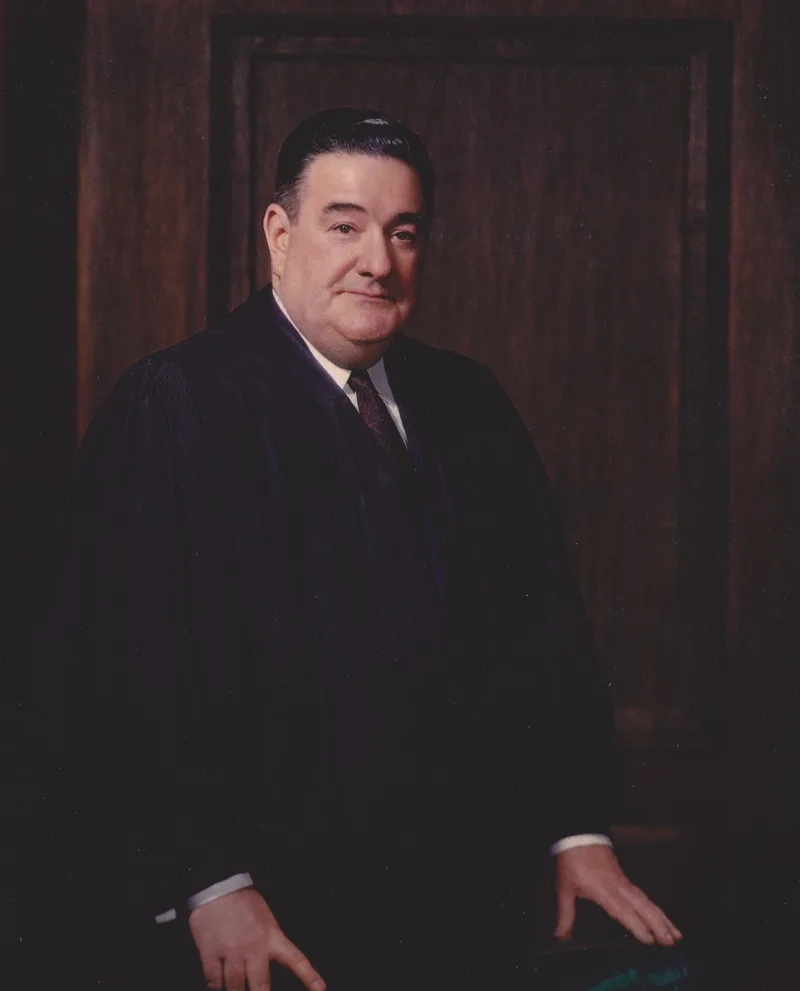
Commonwealth v. Hill
Supreme Court of Pennsylvania · 1980-10-31 · cited 33×
In Commonwealth v. Hill, the defendant was convicted in 1973 of two counts of second-degree murder after a trial in which the jury was instructed, consistent with then-existing law, that he bore the burden of proving his insanity defense by a preponderance of the evidence; no objection was raised to this charge at trial. After the law changed in Commonwealth v. Demmitt to require the prosecution to prove sanity beyond a reasonable doubt, Hill sought post-conviction relief and a new trial on the ground that the earlier instruction was erroneous. The Pennsylvania Supreme Court, evenly divided, affirmed the judgments of sentence, holding that the failure to make a timely objection at trial precluded appellate review of the issue under the principle of issue preservation and Criminal Procedure Rule 1119(b), regardless of the subsequent change in the substantive standard.
criminal lawprocedure
Kaczkowski v. Bolubasz
Supreme Court of Pennsylvania · 1980-09-22 · cited 173×
The case involved a wrongful death action arising from a car accident in which the 20-year-old decedent was a passenger; after liability was established, the retrial focused on damages for lost future earnings. The trial court, following prior precedent, excluded expert economic testimony that would have projected future earnings increases by applying a 4% annual increment to account for inflation and productivity gains, and the jury awarded $30,000 based on instructions that used a simple 6% discount without those factors. The Pennsylvania Supreme Court held that such evidence is admissible and that both inflation and productivity must be considered in calculating lost future earnings to achieve full compensation. The core reasoning was that tort damages law should evolve with economic realities, just as substantive tort doctrines have been updated to meet societal needs, rejecting the prior bar on inflation/productivity adjustments as outdated.
torts & liability
In Re Adoption of E.M.A.
Supreme Court of Pennsylvania · 1979-12-21 · cited 35×
The case concerned whether an unmarried individual could adopt a child based on the natural father's qualified consent that retained his parental rights. The court decided that the petition for adoption must be denied because the Pennsylvania Adoption Act requires either unqualified consents from natural parents or termination of their rights, and the provision allowing qualified consent applies only when the adopter is the spouse of a natural parent. The reasoning was that adoption is a statutory creation requiring strict compliance with legislative requirements, and section 503 of the Act is expressly limited to intra-family adoptions by spouses; extending it to non-spouses would rewrite the statute. The court also rejected the constitutional challenge, noting that unmarried persons may adopt if they obtain proper consents or terminations, and the distinction for qualified consents reflects legitimate legislative policy on family matters.
family lawcivil rights