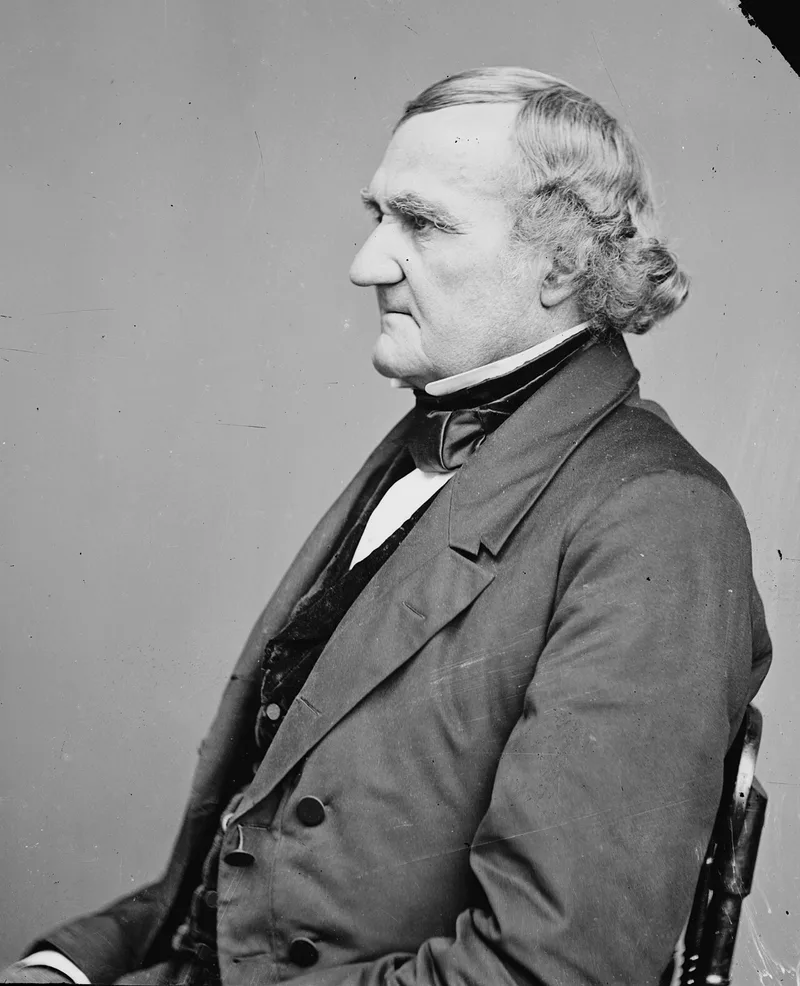
The case involved a dispute over land in Ohio's military district between claimants under two different entries and surveys. Niswanger, as assignee of Ross's earlier entry and survey from 1810 and 1817, challenged Saunders's later 1837 entry and 1838 patent on the same land. The Supreme Court of Ohio had ruled in favor of Saunders, finding that an 1807 federal act did not protect Ross's survey because the underlying warrants were invalid due to prior mergers. The U.S. Supreme Court reversed, holding that the 1807 Act barred new locations on previously surveyed land where the survey appeared regular on its face, and thus Saunders's entry and patent were void.
This case concerned whether a federal district court in Iowa could grant a new trial in a real estate recovery action after the Supreme Court had reversed the lower court's judgment and issued a mandate directing entry of judgment for the defendant. The Supreme Court held that the district court lacked authority to order a new trial and instead was required to execute the mandate by entering final judgment. The Court reasoned that section 24 of the Judiciary Act of 1789 obligates it to direct the judgment the lower court should have entered, and the lower court's role is limited to carrying out that mandate without revisiting the merits. Although Iowa statutes permitted a second trial in real estate cases, that authority did not extend to overriding a Supreme Court mandate. The Court therefore issued a writ of mandamus compelling the district court to vacate its new-trial order and enter the mandated judgment.
This case concerned competing claims to title over land in Missouri originally claimed by James Mackay under a Spanish grant. Mackay's initial claim was rejected in 1809, but he had mortgaged part of the land; Papin later foreclosed on the mortgage and obtained title, while Massey claimed under Mackay's heirs after Congress confirmed the land to the heirs in 1836. The Supreme Court of Missouri held that Papin had superior title, and the U.S. Supreme Court affirmed that decision. The Court reasoned that under Missouri law an imperfect Spanish land claim was subject to mortgage, the heirs took the property subject to that incumbrance, and the congressional confirmation carried the mortgagee's equities along with the legal title.
The case involved the Cleveland Insurance Company seeking to enforce a mortgage lien on twenty acres of land in Wisconsin against James H. Rogers, who had acquired title through prior foreclosures and tax sales and maintained adverse possession since 1838. The court affirmed the dismissal of the bill, holding that Wisconsin's 1839 statute of limitations barred the equitable action to foreclose the equity of redemption or sell the property. The core reasoning was that Rogers's actual and continuous adverse possession triggered the ten-year limitations period in 1839, which expired in 1849, and the 1842 bankruptcy proceedings did not reset or toll the period because Rogers continued to hold adversely without recognizing any trust or mortgage obligation. The bankruptcy assignee's deed to Rogers in 1846 conveyed only the bankrupt's interest as of 1842 and did not alter the limitations analysis. No relief was available against other defendants once Rogers acquired the equity of redemption.
Susan Vigel filed a petition for freedom against Henry Naylor, administrator of George Naylor, asserting she was entitled to emancipation under the will of John B. Kirby, which freed slaves over a certain age or upon reaching ages specified for males and females. Naylor defended by claiming she was his slave, and the circuit court excluded evidence that Vigel's mother, brother, and sister had obtained freedom under the same will through suits against Naylor, along with circumstantial evidence of family separation norms, ruling the prior judgments irrelevant or inadmissible as inter alios acta. The Supreme Court reversed, holding that the offered evidence was competent and relevant because it could allow a jury to infer Vigel was also Kirby's slave at his death and thus freed by his will, particularly given Naylor's possession of the family group, and that the sister's judgment against Naylor established her status in a manner usable as evidence of title. The case was remanded for a new trial with the evidence admitted.
This case concerned a claim by appellee Bolton to confirm title to over 10,000 acres of land in San Francisco originally granted in 1846 by Mexican Governor Pio Pico to priest Jose Prudencia Santillan for abandoned mission Dolores properties, which Santillan sold in 1850. Lower courts had confirmed the grant, but the United States appealed. The Supreme Court reversed those decrees and directed dismissal of the claim, holding that the grant's validity was not established. The core reasoning was that witness testimony was insufficient and inconsistent to prove the grant's authenticity or recording, the timing of its production raised doubts, and none of the grant conditions (such as paying mission debts or obtaining judicial possession) had been fulfilled.