Judicial data via CourtListener (Free Law Project). Social links via Wikidata.
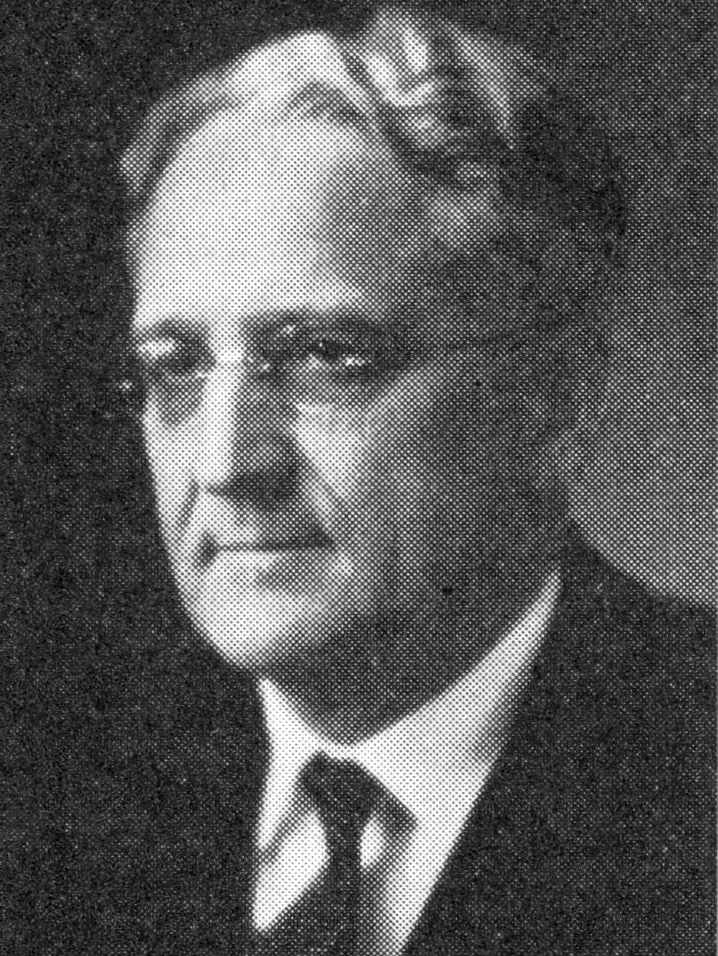
Weihert v. Weihert
Wisconsin Supreme Court · 1953-12-30 · cited 7×
This case involves a divorce decree addressing alimony, child support, and property division between the parties. The trial court awarded a final property division in lieu of alimony, denied alimony to the wife, and ordered the husband to pay $150 monthly in support money allocated partly to the wife and partly to the two children. The Wisconsin Supreme Court held that the portion of the support award designated for the wife's own maintenance constituted alimony, which contradicted the trial court's finding that no alimony was due, and therefore reversed that aspect of the judgment. The court reasoned that support money must be limited to the children's needs and remanded the case for the trial court to reconsider the appropriate amount of child support, while upholding the denial of alimony and the property division.
family law
St. Mary's Congregation v. Industrial Commission
Wisconsin Supreme Court · 1953-12-30 · cited 16×
The case involved whether Zacharias, who was injured while performing repair work for St. Mary's Congregation, was an employee entitled to workers' compensation or an independent contractor. The Industrial Commission found an employment relationship, but the court reversed this, holding that Zacharias was an independent contractor. The court's reasoning centered on the lack of the Congregation's right to control the details of Zacharias's skilled carpentry work, as the pastor lacked the necessary expertise, and Zacharias maintained a separate business as a carpenter and home builder. Additional factors, such as Zacharias hiring his own assistant and the nature of the work requiring skilled craftsmanship, supported classifying him as an independent contractor rather than an employee under the relevant statute.
labor & employment
Wiese v. Swersinske
Wisconsin Supreme Court · 1953-12-01 · cited 4×
This case involved a boundary dispute between neighboring landowners over a strip of land along an old fence line that both parties had long believed marked the true section line. The trial court ruled against the plaintiff's adverse possession claim, finding it was based on a mutual mistake rather than an adverse holding. The Wisconsin Supreme Court reversed, holding that continuous possession for the statutory period up to a clearly defined boundary line establishes title by adverse possession even if the possessor mistakenly believed the line was correct, as supported by prior case law and treatises. The court directed entry of judgment quieting title in the plaintiff to the disputed area east of the old fence and remanded the fence division issue for determination under the statutory fence viewer procedure in ch. 90, Stats., while affirming the denial of damages to either party.
property
Putman v. Deinhamer
Wisconsin Supreme Court · 1953-12-01 · cited 6×
This case involved a dispute over whether an automobile liability insurance policy issued by Hartford Accident & Indemnity Company to Raymond Deinhamer remained in effect at the time of a car accident on April 13, 1952, that injured Arthur Putman and others. Hartford moved for summary judgment in the resulting personal injury suits, asserting that it had properly canceled the policy effective April 4, 1952, by mailing notice on March 28, 1952, supported by employee affidavits describing routine mailing procedures. The trial court denied the motion, finding a genuine factual dispute over whether the notice was actually mailed and received. On appeal, the Wisconsin Supreme Court affirmed, holding that the affidavits from Hartford's employees—prepared eleven months later about high-volume routine tasks—did not conclusively establish mailing and that the plaintiffs were entitled to a trial with cross-examination on the issue.
procedurebusiness & regulatory
Koniecko v. Huffman
Wisconsin Supreme Court · 1953-11-03 · cited 6×
The case was a wrongful death action brought by Olympia Koniecko after her husband died when his northbound car collided with a 42-foot tractor-trailer driven by defendant Brady Huffman, who was entering a three-lane highway from a farm driveway at night. The jury found Huffman not negligent as to lookout or yielding the right of way, but found the deceased negligent as to lookout, speed, and management and control, with each failure causing the collision; the trial court approved the verdict and the Supreme Court affirmed. The court held that credible evidence supported the jury findings, that the plaintiff's arguments relying solely on post-accident photographs were invalid because they omitted speed and timing, and that an improper remark by defense counsel about intoxication was not prejudicial after the trial court's curative instructions.
torts & liabilityprocedure
Wisconsin Axle Division v. Industrial Commission
Wisconsin Supreme Court · 1953-10-06 · cited 14×
This case concerned a dispute over the applicable limitation period for an injured employee's application for additional worker's compensation benefits following an initial award based on a written stipulation of facts. The employer argued that the stipulation was not a compromise or settlement, so the award became final after twenty days under the relevant statute, while the Industrial Commission contended that a six-year period applied. On rehearing, the Wisconsin Supreme Court vacated its prior mandate and affirmed the judgment allowing the longer period. The court reasoned that the statutory term 'stipulation of settlement' was ambiguous as to whether it encompassed stipulations of facts without compromise, and therefore deferred to the commission's longstanding practical interpretation of the provision, which treated such stipulations as subject to the six-year limit.
labor & employmentprocedure
Heuer v. Wiese
Wisconsin Supreme Court · 1953-10-06 · cited 7×
The case involved an oral contract in which plaintiff Ernest Heuer agreed to sell a standing clover crop to defendant Marvin Wiese for $600, with partial payments made and Heuer to cut the crop upon request. After cutting the crop, Heuer demanded removal by a deadline and, when Wiese did not comply, took possession and destroyed the crop by chopping and scattering it; Heuer then sued for breach of contract seeking the unpaid balance plus damages to the field seeding, while Wiese counterclaimed for conversion. The court held that Heuer's destruction of the crop constituted conversion, which was inconsistent with his contract claim admitting Wiese's ownership and thus precluded recovery of the purchase price balance due to estoppel. However, material questions of fact remained regarding whether Wiese left the hay an unreasonable time, whether Heuer minimized damages, and whether the underlying seeding was damaged, so the trial court's denial of Wiese's motion for summary judgment was affirmed.
propertytorts & liabilityprocedure
Sparling v. Thomas
Wisconsin Supreme Court · 1953-07-03 · cited 9×
This case involved a car collision dispute initially heard in Kenosha County's small claims court, where the court apparently assumed proper use of directional signals and imposed a duty on Sparling to avoid the accident. On appeal, the circuit court found that the small claims court had overlooked the requirements of Wis. Stat. sec. 85.175(2) regarding left-turn signals and the 100-foot warning distance, leading to manifest prejudicial error that deprived Sparling of a fair trial. The circuit court reviewed the evidence, determined Thomas was negligent in lookout and signal compliance with that negligence as a proximate cause, concluded Sparling faced an emergency without fault, and entered judgment accordingly under a stipulation. The Wisconsin Supreme Court affirmed, agreeing with the statutory interpretation and that the circuit court's findings were supported by the record and not against the great weight of the evidence.
torts & liabilityprocedure
Pick Industries, Inc. v. Gebhard-Berghammer, Inc.
Wisconsin Supreme Court · 1953-07-03 · cited 7×
This case is a follow-up to prior litigation between two corporations involving an arbitration award. The court applied the law-of-the-case doctrine to reaffirm that the arbitration proceedings were statutory rather than at common law. Interpreting Wis. Stat. sec. 298.09, it held that the one-year period for a party to move for confirmation of the award begins when the award is signed by the arbitrators and that a prior appeal stayed the running of that period, but the motion filed was still untimely. As a result, the court concluded that the arbitration stipulation and proceedings are a nullity and the underlying claims must proceed to trial.
procedure
Johann v. Milwaukee Electric Tool Corp.
Wisconsin Supreme Court · 1953-07-03 · cited 3×
The case involved an inventor who assigned his patent rights in a pneumatic tool to a manufacturing company in exchange for expected royalties under an alleged oral contract, after which the company developed and sold a similar tool under a separate patent while attaching identification tags to over 6,000 units that included both patent numbers. The trial court found no enforceable contract existed due to lack of mutual assent and directed a verdict for the defendant, also citing a later written agreement as an accord and satisfaction. On appeal, the court reversed, holding that the evidence created factual disputes suitable for jury resolution on whether an oral royalty agreement was formed and whether the 1942 writing released such claims, and that the company's use of the tags estopped it from denying the tools embodied the plaintiff's invention. The matter was remanded for a new trial limited to those issues, with the possibility of a $10,000 judgment if the plaintiff prevailed.
business & regulatoryproperty
Carlson v. Marinette County
Wisconsin Supreme Court · 1953-07-03 · cited 8×
The case involved a patient who sued Marinette County after being burned by a scalding hot-water bottle placed in her bed by a hospital employee following surgery, alleging breach of contract and negligence in the care provided at the county-operated general hospital where she was a paying patient. The jury found the hospital negligent in inspecting the hot-water bottle application and awarded damages, which the trial court upheld. The Wisconsin Supreme Court affirmed the judgment, holding that the county was not immune from liability because operating the hospital for full-pay patients constituted a proprietary function rather than a governmental one, and the institution was not entitled to charitable immunity given its profit-oriented operations. The court relied on precedents distinguishing proprietary activities (such as treating paying patients) from governmental functions and noted that immunity should not be extended beyond established bounds.
torts & liabilityhealthcare
Fredrickson v. Kabat
Wisconsin Supreme Court · 1953-07-03 · cited 6×
This case involves a civil action by Roy Fredrickson against Fred R. Kabat, Jr., and seven others for damages from an alleged assault and battery committed pursuant to a conspiracy. After an initial appeal affirming denial of summary judgment, the defendants demurred to an amended complaint and moved for summary judgment on the ground that the action was barred by the two-year statute of limitations under sec. 330.21(2), Stats. The trial court denied the motions, and the Wisconsin Supreme Court affirmed, holding that the amended complaint did not state a new cause of action. The court reasoned that the amended pleading substantially restated or condensed the original allegations without introducing new facts or demands, so the amendment related back to the commencement of the suit and avoided the limitations bar.
proceduretorts & liability
Baehmann v. Baehmann
Wisconsin Supreme Court · 1953-06-02
This case involved a divorce action between parties married in 1945, where the trial court addressed division of property accumulated during their short marriage. The husband had contributed most assets, including a jointly titled farm purchased with his funds and a mortgage, along with machinery and livestock; the wife contributed $1,200 during the marriage. The trial court awarded the wife repayment of her $1,200 contribution, household furnishings, and an additional $1,000 as a final property division in lieu of alimony, while the husband appealed the $1,000 award as too low relative to the roughly $10,000 net estate. The appellate court affirmed, reasoning that the award represented about one-tenth of the estate and fell within the trial court's discretion given the brief marriage and limited contributions by the wife.
family lawproperty
Shy v. Industrial Salvage Material Co.
Wisconsin Supreme Court · 1953-05-05 · cited 8×
The case involved a dispute between Casimir Shy and Industrial Salvage Material Co. over an oral contract for the sale of iron rods and aluminum strips, where the defendant agreed to purchase both but picked up only the rods without paying and delayed further performance. The plaintiff sued for the $408 price of the rods after the defendant failed to pay despite repeated requests, while the defendant counterclaimed for damages from the undelivered aluminum, alleging the plaintiff's nonperformance. The trial court dismissed the counterclaim and awarded the plaintiff judgment for $408 plus interest, and the circuit court affirmed on appeal. The core reasoning was that the parties made time of the essence in the contract due to fluctuating metal prices, and the defendant's unjustified failure to pay for the rods and delay in picking up the aluminum amounted to a material breach that discharged the plaintiff's duty to perform further.
business & regulatory
Touchett v. E Z Paintr Corp.
Wisconsin Supreme Court · 1953-05-05 · cited 9×
The case involved a dispute over two contracts from 1948 and 1949 between plaintiff Touchett and defendant E Z Paintr Corporation concerning the assignment of patent claims, transfer of inventory and machinery, manufacturing rights, royalty payments, and sublicensing authority for paint rollers and trays. Touchett sought reformation of specific provisions in equity, alleging mutual mistake in the written terms that failed to reflect the parties' actual agreements, such as making him the sole manufacturer and adjusting royalty calculations. The trial court, sitting without a jury, found no evidence of mutual mistake or fraud and concluded that the written contracts accurately captured the agreements reached, with some proposed terms never having been the subject of a meeting of the minds. The Wisconsin Supreme Court affirmed the judgment denying reformation. The core reasoning was that the plaintiff's claims appeared to be an afterthought and lacked support in the evidence of the original negotiations.
business & regulatory
Boehmer v. Boehmer
Wisconsin Supreme Court · 1953-05-05 · cited 17×
This case concerned a joint savings account opened by Celestine Boehmer and her husband Jacob in 1948, held in both names with the intent of creating a joint tenancy with right of survivorship. After Jacob suffered a stroke and was declared incompetent in 1950, his guardian (son John P. Boehmer) demanded the passbook, transferred the funds unilaterally to an account in the husband's name alone, and listed them as assets of the guardianship estate. Celestine sued to restore the funds to the joint account. The court found that the account was created with survivorship rights allowing either spouse to withdraw during life, that the guardian lacked authority to exercise this personal election or alter the account without court approval, and that the funds must be returned to joint names under court supervision for withdrawals. It therefore ordered restoration of the $6,426.80 plus interest and barred unauthorized withdrawals by either party.
family lawproperty
Bergren v. Staples
Wisconsin Supreme Court · 1953-03-31 · cited 18×
The case involved a wrongful death action brought by the widow of a construction worker killed on the job and his employer's workers' compensation insurer against third-party tortfeasors and their insurers. After the defendants offered a $5,500 settlement, the trial court ordered the plaintiffs to accept it over the insurer's objection under Wis. Stat. sec. 102.29(1), which governs third-party liability claims in workers' compensation cases. The Wisconsin Supreme Court affirmed, ruling that the statute empowers the court to resolve disputes between the employee’s representative and the compensation insurer over settlement, and that the insurer could not challenge the provision’s constitutionality after accepting the benefits of the exclusive-remedy system.
labor & employmentproceduretorts & liability
McGaw v. Wassmann
Wisconsin Supreme Court · 1953-03-31 · cited 15×
The case involved a personal injury lawsuit by Helen McGaw against Joseph Wassmann and Checker Cab Company after she was injured in a car collision while a passenger in Wassmann's vehicle, which struck a cab parked more than 12 inches from the curb in violation of statute. The jury found both defendants causally negligent and awarded McGaw damages totaling $22,900, including for hearing loss. The Wisconsin Supreme Court reversed the judgment and remanded for a new trial, reasoning that improper and prejudicial remarks by plaintiff's counsel during trial, including references to the plaintiff's personal life and a war-related loss, deprived the defendants of a fair trial.
torts & liabilityprocedure
Johnson v. Viebrock
Wisconsin Supreme Court · 1953-03-03 · cited 8×
This case involved a fatal accident on a rural highway in which pedestrian Kenneth Morris Johnson was struck by a northbound truck driven by defendant Russell Viebrock while crossing the road near a parked truck. The jury found both parties causally negligent—Viebrock in the management and control of his vehicle, and Johnson in crossing the roadway and failing to yield the right of way—and apportioned 90 percent of the negligence to Viebrock and 10 percent to Johnson. On appeal, the Wisconsin Supreme Court affirmed the judgment, holding that credible evidence supported the jury’s findings and that the apportionment was not erroneous as a matter of law, citing a similar prior decision upholding a comparable allocation. The court noted that any adjustment to the percentages would have been within the trial court’s discretion on a motion for new trial in the interests of justice, which was not exercised here.
torts & liability
State v. Surma
Wisconsin Supreme Court · 1953-03-03 · cited 14×
The case involved two brothers charged with cruelty to animals under Wis. Stat. sec. 343.47(1) after they tied a can filled with stones to the tail of a neighbor's unlicensed dog, placed the dog in their car, and later tied it to the rear bumper, resulting in the dog being dragged for a significant distance, suffering severe injuries including denuded flesh and maggot infestation, and ultimately dying. The trial court convicted the appellants based on evidence of the dog's condition and a blood trail, rejecting their claim that they intended only to relocate the dog humanely. On appeal, the Wisconsin Supreme Court addressed whether the dog's lack of an attached license tag barred prosecution under sec. 174.10(1), distinguishing this cruelty case from prior precedent involving non-cruel killing of unlicensed dogs, and upheld the conviction by interpreting the statutes to allow criminal liability for animal cruelty regardless of licensing status. The core reasoning focused on the unambiguous language of the cruelty statute, legislative acquiescence to prior interpretations, and the extreme nature of the acts shown by physical evidence.
criminal law