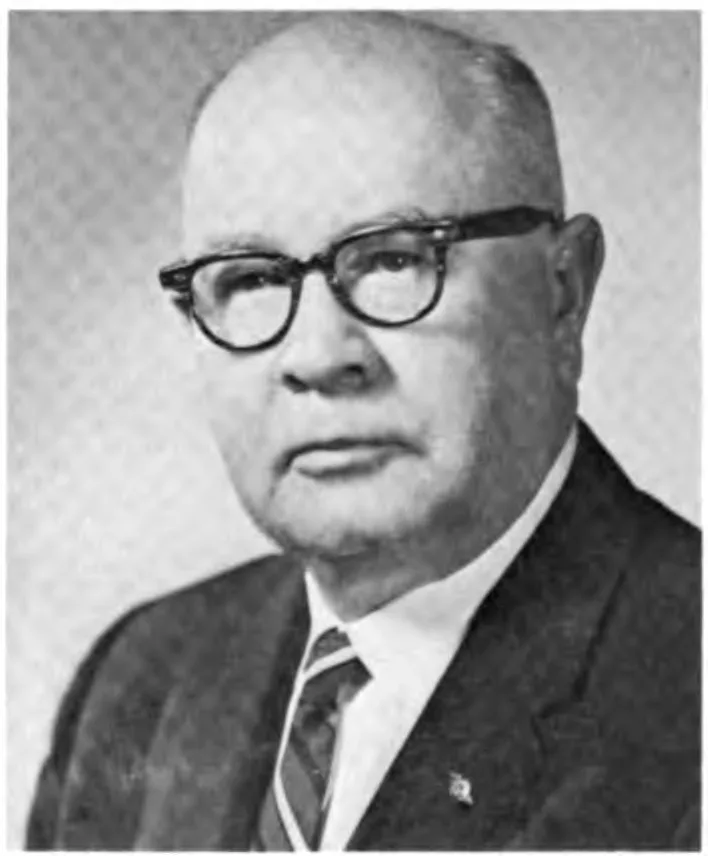
The case involved a habeas corpus petition filed by Ellis William Plumley, a West Virginia prisoner serving consecutive sentences for breaking and entering, who challenged the constitutionality of his conviction and incarceration on grounds including an allegedly coerced confession and ineffective assistance of counsel. After an evidentiary hearing, the court found that Plumley had been properly advised of his Miranda rights on multiple occasions, intelligently waived them, and voluntarily signed a confession, while his appointed counsel had filed a motion to suppress the confession, secured a continuance, and provided adequate representation leading to a plea agreement. The court concluded that no constitutional violations occurred during the state court proceedings and dismissed the petition.
The case involved employees of Buffalo Mining Company who sued the Secretary of Labor, Buffalo, and Lorado Super Market, alleging that Buffalo's deductions from their wages to pay debts owed to Lorado violated the anti-garnishment provisions of the Consumer Credit Protection Act (Title III), 42 U.S.C. § 1983, and the Due Process Clause of the Fourteenth Amendment; they also challenged the constitutionality of West Virginia Code § 21-5-3 regulating wage assignments and sought enforcement orders and damages. Plaintiffs claimed the deductions, made pursuant to agreements they executed, amounted to invalid garnishments exceeding legal limits and that the Secretary failed to enforce federal protections. The court addressed motions to dismiss for lack of jurisdiction and failure to state a claim, as well as pendent jurisdiction over related state-law claims. It dismissed the federal claims against the Secretary due to the absence of a justiciable case or controversy and lack of ripeness, found no viable federal cause of action against the private defendants under the cited statutes or Constitution, and declined to exercise pendent jurisdiction over the state claims once the federal claims were dismissed.
The case involves a diversity jurisdiction claim by West Virginia resident Devada Ann Burwell against Virginia Acme Markets, Inc., a Virginia corporation, for malicious prosecution damages arising from her arrest, extradition, and criminal charges in Virginia for cashing five bad checks totaling $230 at an Acme store; the charges were dismissed after she paid the checks in full. The court first applied West Virginia choice-of-law rules and concluded that Virginia substantive law governs because Virginia has the most significant relationship to the events, including the initiation of prosecution and most alleged injuries. On the merits, the court denied the defendant's motion for summary judgment, holding that a genuine dispute exists over whether proper statutory notice of the dishonored checks was provided to Burwell, which precludes a ruling as a matter of law on the element of probable cause.
This diversity case involved a bank suing its insurer under a Bankers Blanket Bond to recover losses from an assistant cashier's false reports certifying the presence of automobiles in a floor-plan financing arrangement with a car dealer, which led to the bank being held liable in a separate state court suit by another bank that had purchased some of the notes. The court granted partial summary judgment to the plaintiff bank for its direct losses from the employee's dishonesty, as these were covered by the bond's terms protecting against fraudulent employee acts. However, it denied summary judgment on the portion of losses from the state court judgment, finding the record inadequate to determine whether the insurer was bound by that judgment due to lack of notice and opportunity to defend. The core reasoning was that undisputed facts established coverage for the direct employee-related losses, but principles of due process and res judicata required evidence of notice before holding the indemnitor to the prior judgment's result.
The case involves the United States seeking a permanent injunction against Consolidation Coal Company for discharging effluent wastes from its mine into a tributary that flows into the navigable Monongahela River, alleged to violate the Refuse Act of 1899. The defendant moved to dismiss, arguing that the Refuse Act applies only to obstructions to navigation and does not authorize injunctive relief beyond criminal penalties. The court denied the motion, reasoning that Supreme Court precedents require a broad interpretation of the Act to prohibit any discharge of refuse matter into navigable waters or their tributaries, independent of navigational impact, and that equitable relief is available to enforce the statute.
In Marcum v. United States, a federal prisoner moved under 28 U.S.C. § 2255 to vacate his three-year sentence for knowingly making a false statement to a licensed firearms dealer when purchasing a gun in violation of 18 U.S.C. §§ 922(a)(6) and 924(a), asserting that the conviction rested on a 1950 state grand larceny conviction obtained without counsel. The court granted the motion and ordered the prisoner released from federal custody. It reasoned that the prior state conviction had been judicially vacated as void from its inception under Gideon v. Wainwright and related precedents because the petitioner lacked representation by counsel in violation of the Sixth Amendment, and therefore could not lawfully serve as the predicate for the federal offense even though it remained unassailed at the time of the firearm purchase.