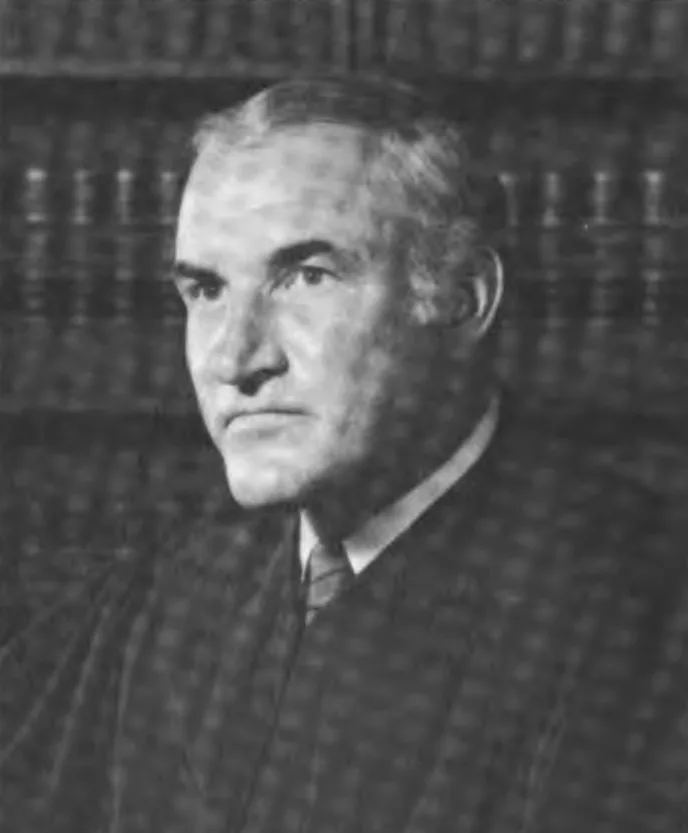
Pennington v. Donovan
District Court, S.D. Texas · 1983-04-18 · cited 3×
This case concerned R.R. Pennington's motion to quash an administrative subpoena issued by the Secretary of Labor under ERISA Section 504 to obtain financial records related to the Control Specialties, Inc. Profit Sharing Plan. The court enforced the subpoena, holding that the Secretary had established a legitimate law enforcement inquiry authorized by ERISA and that the requested records concerning certificates of deposit were relevant to potential violations of Title I of the statute. The court further found that the Secretary had complied with the Right to Financial Privacy Act by providing adequate notice of the inquiry's nature and by serving the subpoena on the customer on the same day it was served on the financial institution.
labor & employmentbusiness & regulatoryprocedure
Angulo v. Kedzep Ltd.
District Court, S.D. Texas · 1983-04-11 · cited 15×
The case involved former officers and employees of a Canadian corporation appealing bankruptcy court orders that authorized subpoenas for their depositions in Houston to aid a foreign bankruptcy proceeding and denied their motion to quash. The U.S. District Court affirmed, holding that section 304 of the Bankruptcy Code permits ancillary proceedings in U.S. courts for discovery purposes when a foreign representative seeks relief consistent with comity and efficient estate administration. The court found that venue was proper in the Southern District of Texas due to the location of assets and potential deponents, and that the statute's broad language and legislative history support flexible relief including discovery without requiring letters rogatory or other international mechanisms.
business & regulatoryprocedurefederal power
United States v. Phoenix Petroleum Co.
District Court, S.D. Texas · 1982-06-23 · cited 2×
This case involved the U.S. Department of Energy's effort to enforce an administrative subpoena against Phoenix Petroleum Company, a petroleum products reseller, seeking records on crude oil purchases, sales, and related transactions to check compliance with allocation and pricing rules under the Emergency Petroleum Allocation Act and related statutes. Phoenix challenged the subpoena on grounds including the appropriateness of summary proceedings after the Act's expiration, the DOE's and issuing official's authority, improper purpose due to congressional influence, and lack of relevance. The court enforced the subpoena, reasoning that the expiration of the EPAA did not bar enforcement of prior violations or subpoenas, the delegation of authority was valid, the subpoena served a lawful purpose without undue influence, and the requested documents were reasonably relevant to the agency's investigation.
business & regulatoryfederal powerprocedure
Tokura Construction Co. v. Corporacion Raymond
District Court, S.D. Texas · 1982-03-11 · cited 11×
This case involved a dispute between Tokura Construction Co., a Japanese corporation, and Corporación Raymond, a Delaware corporation, arising from subcontracts for dredging and other work on a port expansion project in Ecuador. The parties had agreed to arbitrate any disputes under American Arbitration Association rules in Houston, and an arbitration panel awarded Tokura over $1.5 million plus interest and other relief. Tokura sued in federal court under diversity jurisdiction and the Federal Arbitration Act to confirm the award and recover an unpaid balance of about $263,000, while Raymond objected on grounds including alleged errors in the award calculations and prior payments. The court granted confirmation, holding that Raymond's objections were time-barred under the Act's three-month limit and, even if timely, lacked merit because judicial review of arbitration awards is narrowly limited to issues like fraud or arbitrator misconduct, not reexamination of factual or legal errors.
business & regulatoryprocedure
Welch v. State Department of Highways & Public Transportation
District Court, S.D. Texas · 1982-03-01 · cited 11×
In Welch v. State Department of Highways & Public Transportation, the plaintiff, a marine technician employed by the Texas Department of Highways and Public Transportation, sued the State of Texas and the DHPT under the Jones Act for injuries sustained when she was crushed between a mobile crane and a dock while working on navigable waters. The defendants moved to dismiss for lack of subject matter jurisdiction, asserting Eleventh Amendment immunity and sovereign immunity. The court granted the motion and dismissed the Jones Act claims with prejudice, holding that the Eleventh Amendment bars suits against states in federal court for monetary damages unless the state has consented, that operating in a federally regulated sphere like maritime activities does not constitute implied waiver under the standards set in Employees v. Department of Public Health & Welfare, and that Texas's limited waiver under the Tort Claims Act is overridden by the exclusive remedy provisions of its workers' compensation statutes applicable to DHPT employees.
labor & employmentfederal powerproceduretorts & liability
Freeman v. Southern National Bank
District Court, S.D. Texas · 1982-01-26 · cited 11×
In Freeman v. Southern National Bank, plaintiffs sued the defendant bank under the Fair Credit Reporting Act and the Texas Deceptive Trade Practices Act, alleging that the bank continued to report an automobile loan as uncollectible to a credit bureau even after the loan was paid in full and the title released, resulting in adverse credit reports. The court treated the bank's motion to dismiss the federal claim as one for summary judgment and dismissed both claims. It reasoned that the bank was not acting as a consumer reporting agency under the FCRA because the information reported was based solely on its own transactions and experiences with the plaintiffs, which the statute expressly excludes from the definition of a consumer report, and thus the bank owed no duties under the Act; the court also dismissed the pendant state claim. The opinion noted that consumers retain other remedies, such as disputing reports through the credit agency or pursuing common-law claims for malicious false reporting.
business & regulatoryprocedure
United States v. Wyatt
District Court, S.D. Texas · 1981-07-21 · cited 2×
In United States v. Wyatt, Oscar S. Wyatt, Jr. pleaded guilty to willfully violating a federal regulation, 10 C.F.R. § 210.62(c), by engaging in a practice to obtain a higher price for crude oil in violation of the Emergency Petroleum Allocation Act, 15 U.S.C. § 754(a)(3)(B)(i), and was fined $40,000. Wyatt later moved to vacate the conviction and sentence, claiming the information failed to charge an offense because the regulation did not apply to crude oil or was invalid, and that the fine was unauthorized for distribution activities. The court held that the regulation unambiguously prohibited the charged conduct and properly applied to crude oil transactions, so the information stated a valid offense. It further concluded that the $40,000 fine exceeded the statutory penalty of up to one year imprisonment and that Wyatt had been misadvised of the maximum sentence under Rule 11, requiring vacation of the plea. The court therefore vacated the judgment of conviction, sentence, and guilty plea while leaving the criminal information pending.
criminal lawbusiness & regulatoryprocedure
Sign Supplies of Texas, Inc. v. McConn
District Court, S.D. Texas · 1981-07-13 · cited 9×
This case involved plaintiffs engaged in the portable sign business challenging Houston city ordinances that regulated the size, height, location, construction, permitting, and licensing of signs and billboards, including distinctions between on-premise and off-premise signs and requirements like removal bonds. The plaintiffs argued the ordinances violated the First, Fifth, and Fourteenth Amendments as well as contract rights and equal protection by effectively banning certain uses and imposing excessive burdens. The court denied the request for permanent injunctive and declaratory relief against enforcement. The core reasoning was that the ordinances constituted a valid exercise of the city's police power under state law to promote public safety, traffic efficiency, and property values, were regulatory rather than a total prohibition or unconstitutional taking, and did not infringe protected rights on their face or as applied.
free speechbusiness & regulatoryproperty
Malini v. Singleton & Associates
District Court, S.D. Texas · 1981-05-29 · cited 7×
Dr. Srini Malini, a radiologist in Houston, sued hospitals and radiology groups under the Sherman Antitrust Act after her applications for staff privileges were denied due to exclusive contracts granting other providers the right to perform radiology services. The defendants moved to dismiss or for summary judgment, asserting that the court lacked subject matter jurisdiction because the conduct was purely local and did not affect interstate commerce. The court denied the motions, ruling that jurisdiction exists because the plaintiff identified relevant interstate activities—such as out-of-state equipment purchases, insurance and government reimbursements, and patient travel—and demonstrated a logical connection showing that the local radiology services substantially affect those interstate aspects.
business & regulatoryhealthcare
Better Business Bureau of Metropolitan Houston, Inc. v. Medical Directors, Inc.
District Court, S.D. Texas · 1981-02-19 · cited 6×
The case involved Better Business Bureaus suing weight loss companies for using misleading advertisements that falsely implied BBB endorsement or investigation of their program. The court granted a preliminary injunction barring the defendants from using "Better Business Bureau" or "BBB" in their ads. The reasoning was that the ads violated the Lanham Act by creating false impressions and likelihood of confusion, causing irreparable harm to the plaintiffs' reputation, while defendants could advertise without such references, and the public interest favored preventing deception. False advertising claims are not protected by the First Amendment.
business & regulatory
Montgomery v. Lowe
District Court, S.D. Texas · 1981-01-30 · cited 3×
This case involves a former employee's claim under ERISA, 29 U.S.C. § 1132(a)(1)(B), to recover accrued benefits from an employer-sponsored profit-sharing plan after his employment ended in 1978. The plan included a forfeiture clause that triggered if a participant with under 10 years of service entered a competing business within one year of termination, and the court found the plaintiff had done so by starting an executive search firm. The court granted partial summary judgment to the plaintiff, declaring him entitled to 40% of his $25,821 accrued benefit ($10,328.40) as a nonforfeitable interest while allowing forfeiture of the remaining 20%. The reasoning centered on ERISA's minimum vesting standards under 29 U.S.C. § 1053, which require graded vesting schedules that protect specified percentages of benefits from forfeiture regardless of plan provisions like the "bad boy" clause; the plan's schedule exceeded those minimums, so only the excess could be forfeited.
labor & employmentbusiness & regulatory
Southwest Metal Fabricators, Inc. v. Internacional De Aceros, S.A.
District Court, S.D. Texas · 1980-10-15 · cited 5×
The case involves a challenge to a pre-judgment writ of garnishment issued in a debt collection suit filed by Texas plaintiff Southwest Metal Fabricators against Mexican defendant Internacional De Aceros over promissory notes totaling $113,002.13. The garnishee bank and defendant moved to quash or dissolve the writ, contending that Texas garnishment procedures remained unconstitutional after Southwestern Warehouse Corp. v. Wee Tote, Inc. and that the Texas Supreme Court improperly enlarged substantive rights by modifying the rules. The court denied both motions, holding that the underlying statutory right to garnishment under Art. 4076 remained intact, the 1977 amendments to Rules 658 and related provisions added required due process safeguards such as an ex parte hearing and findings of fact, and the rules were consistent with the statute without creating new substantive rights. The decision rested on the distinction between statutory rights and procedural rules, as well as compliance with federal due process standards from cases like Sniadach and Fuentes.
procedurepropertycivil rights
United States v. Garrett
District Court, S.D. Texas · 1980-07-23 · cited 3×
In United States v. Garrett, multiple defendants charged with conspiring to obstruct justice and various firearm offenses, including prohibitions on felons possessing or receiving guns, moved to suppress evidence obtained following their arrest, arguing it was the fruit of an illegal arrest under the Wong Sun doctrine. The court reviewed the events surrounding a surveillance operation and the subsequent arrest of the defendants in a vehicle after they followed a government witness, along with statements made by defendants Garrett and Tinkle and a photo identification of defendant Nelson. The court denied the motions to suppress the later statements and the photo identification, reasoning that the statements were voluntary, given after Miranda warnings and intervening events that attenuated any taint from the arrest, and that the photo display did not violate Sixth Amendment rights or fundamental fairness. The opinion analyzes the admissibility of the evidence separately from the initial arrest circumstances.
criminal lawprocedureguns
Kite v. Marshall
District Court, S.D. Texas · 1980-07-18 · cited 11×
The case involved a constitutional challenge by parents of high school basketball players to the University Interscholastic League's summer camp rule, which barred students from varsity eligibility for one year after attending specialized athletic training camps (with an exception for general activity camps). The plaintiffs argued that the rule infringed on families' rights to make educational decisions for their children. The court held the rule unconstitutional as an overbroad burden on the right of family privacy. It reasoned that while the UIL had legitimate interests in promoting fair competition and balanced educational priorities by indirectly regulating coaches, the rule was not narrowly tailored to those goals and affected families' choices more broadly than necessary.
civil rightsfamily law
Naviera Mercante, S.A. v. Northrup King Co.
District Court, S.D. Texas · 1980-06-12 · cited 6×
This case involved an ocean carrier and its port agent suing a shipper to recover $10,804.36 in unpaid freight and wharfage charges for transporting sorghum seed from Houston to Venezuela. The shipper had already paid the charges to an independent freight forwarder, which failed to remit the funds to the carrier before becoming insolvent; the shipper had not selected the carrier or participated in the billing arrangements. The court ruled for the defendant shipper, finding it not liable to pay the carrier. The core reasoning was that the carrier issued a "freight prepaid" bill of lading without actual prepayment, extending credit to the forwarder, and precedents such as Farrell Lines established that a shipper is not responsible for the forwarder's nonpayment under these circumstances.
business & regulatoryprocedure
United States v. Hollywood Marine, Inc.
District Court, S.D. Texas · 1980-04-15 · cited 1×
This case involved the United States seeking to recover $61,816.85 in oil cleanup costs from Hollywood Marine, Inc., the owner of an unmanned tank barge that spilled over 2,000 gallons of oil into navigable waters while under tow in 1976. The court held that Hollywood Marine was not liable under the pre-1977 Federal Water Pollution Control Act because the discharge was caused solely by a third party. The core reasoning was that the barge had been delivered in seaworthy condition to an independent tug operator under a time charter granting the tug exclusive control over navigation and operations, with no involvement or supervision by the barge owner, qualifying for the statutory third-party defense under 33 U.S.C. § 1321(f)(1)(D) as supported by precedent like United States v. LeBoeuf Brothers Towing Co.
environmentbusiness & regulatory
Intercoastal Refining Co., Inc. v. Jalil
District Court, S.D. Texas · 1980-04-11 · cited 24×
This case was a breach of contract action originally filed by Intercoastal Refining Co. in Texas state court against defendants Jalil and Norkin. One defendant timely removed the case to federal district court under 28 U.S.C. § 1446, but the second defendant joined the removal petition after the statutory 30-day deadline had passed. The plaintiff moved to remand, arguing that the removal was improper because not all defendants had joined in time. The court denied the remand motion, holding that the failure of all defendants to timely join is a nonjurisdictional procedural defect that can be waived, and that the plaintiff's affirmative post-removal conduct—including filing a jury demand and agreeing to extend the time for an answer—amounted to such a waiver.
procedure
Ayers v. Copperweld Corp.
District Court, S.D. Texas · 1980-04-09 · cited 1×
In this diversity case removed from state court, plaintiff Donald Ayers sued Copperweld Corporation and its subsidiary Regal Tube Company to recover amounts allegedly owed under an employee incentive compensation plan based on his employment with Regal Tube in Illinois. The defendants moved to dismiss for lack of personal jurisdiction, submitting affidavits showing they were not registered in Texas, had no Texas assets or agents, and had only limited indirect sales contacts through an independent Texas sales representative. The court granted both motions to dismiss, holding that the plaintiff failed to make a prima facie showing of an agency relationship or sufficient minimum contacts with Texas that would support jurisdiction, particularly because the compensation claim did not arise from those contacts and the contacts were neither substantial nor continuous.
procedurelabor & employmentbusiness & regulatory
Mifsud v. Palisades Geophysical Institute, Inc.
District Court, S.D. Texas · 1980-02-08 · cited 13×
This case is a general maritime and Jones Act suit by plaintiff John F. Mifsud against Palisades Geophysical Institute and the University of Texas Medical Branch, alleging negligence and unseaworthiness caused his injuries while working as an assistant engineer aboard the vessel Ida Green. Defendant U.T. moved to reconsider dismissal, asserting Eleventh Amendment immunity as an arm of the State of Texas. The court denied the motion to dismiss in part, holding that U.T. is immune from unseaworthiness claims and Jones Act suits (the latter due to an exclusive workers' compensation remedy), but if discovery shows Mifsud was a third-party non-employee, he may pursue a general maritime negligence claim because the Texas Tort Claims Act waives state immunity for negligence and does not bar federal jurisdiction despite its venue language requiring suits in state court. The court corrected its prior order to reflect this limited scope of permitted claims.
federal powerproceduretorts & liability
Te Kuei Liu v. Immigration & Naturalization Service
District Court, S.D. Texas · 1980-01-11 · cited 12×
Te Kuei Liu filed a motion for a temporary restraining order and a petition for a writ of habeas corpus to block the Immigration and Naturalization Service from deporting him under Section 241(a) of the Immigration and Nationality Act. The district court held that it lacked jurisdiction over the claims. Section 106(a) of the Act gives the courts of appeals exclusive authority to review final deportation orders entered after Section 242(b) proceedings, while district-court habeas review is limited to challenges to denials of discretionary relief such as stays of deportation where the underlying finding of deportability is not contested. Because Liu’s petition directly attacked the deportation order itself and he had not first sought administrative discretionary relief, the court dismissed both the motion and the petition.
immigrationprocedure