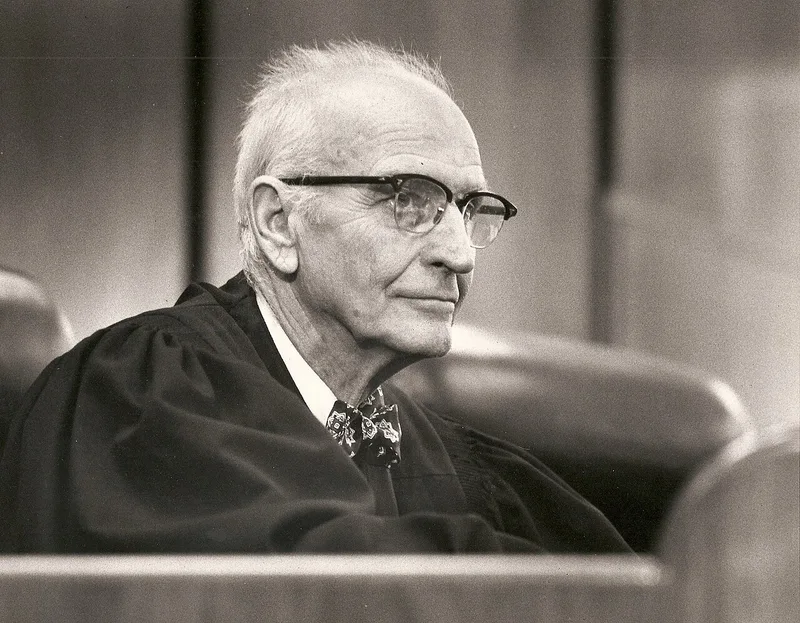
The case involved a class of approximately 90 Iranian students at Bee County College who faced disciplinary actions, including dismissals, after occupying the college gymnasium on March 9, 1978, amid complaints about their conduct from various sources. The students filed suit seeking to enjoin the proceedings, claiming they were denied due process. After consolidating hearings and reviewing the evidence, the court found that the students had received adequate notice of the charges, opportunities for group and individual hearings before the Student Affairs Committee, representation by counsel, and the chance to present their side despite many choosing to remain silent. The court concluded that these procedures satisfied constitutional due process requirements and entered judgment for the defendants.
The case involved a dispute over whether a deceased rice farmer's producer rice allotment and related production history should be included as taxable property in his estate for federal estate tax purposes. The plaintiff bank, as executor, sought a refund after the IRS assessed additional taxes by valuing 1142.6 acres of the allotment at $250,600 and including it in the estate. The court granted summary judgment for the plaintiff, holding that the current year's allotment was used up upon allocation to specific farms and that the rice history did not qualify as transferable 'property' under estate tax law. The reasoning centered on the annual nature of allotments under the Agricultural Adjustment Act, the conditional and expectancy-like character of rice history (dependent on future production and regulatory approvals), and the absence of any automatic transfer at death.
This case involved the United States, on behalf of the Small Business Administration (SBA), seeking to collect on a promissory note executed by The Flasher Company of Texas and guaranteed by Norman Ransleben, with an amount due of $152,626.56 plus interest. The defendant Ransleben admitted the facts but claimed release from the guaranty because the SBA released collateral without his consent by failing to timely file a financing agreement, allowing tax liens. The court granted the plaintiff's motion for summary judgment, reasoning that the guaranty agreement included valid waivers permitting the SBA to deal with the collateral in its discretion without notice to the guarantor and waiving any requirement to first pursue the primary obligor.
In this case, three city employees of Corpus Christi sued after being indefinitely suspended on January 6, 1977, and later suspended without pay for fifteen days and demoted on January 13, alleging violations of their due process rights under the Constitution. The court found that the initial suspension lacked adequate notice and opportunity to respond as required by due process precedents like Thurston v. Dekle, but that the deficiencies were cured by the subsequent investigation, notice of charges, and hearing before the Civil Service Board, which upheld the actions. It ruled the city's civil service regulations unconstitutional for failing to mandate proper pre-deprivation procedures and directed expungement of the January 6 suspension from personnel records, but awarded no damages because wages were paid during the interim period and officials acted in good faith. The probationary employee had no appeal rights, and all claims for injunctive or monetary relief were denied.
The case involved charges against Gibson Products Company, Inc., a licensed firearms dealer, for knowingly making false entries on ATF Form 4473 in nineteen counts related to handgun sales to foreign citizens by its sporting goods manager during 1975. After a bench trial, the court found the corporation guilty on all counts under 18 U.S.C. § 922(m). The core reasoning was that the manager's acts were performed within the scope of his employment and with intent to benefit the corporation, imputing criminal liability via respondeat superior, even though the president had directed compliance with the forms and rarely audited them properly.
This case involved a question of whether federal diversity jurisdiction existed in a lawsuit between Exxon Corporation and Duval County Ranch Company. The court examined whether Exxon Corporation's principal place of business was in New York or if its division Exxon, U.S.A. (formerly Humble Oil) should be treated as a separate entity based in Texas, which would destroy diversity. After reviewing the corporate merger, the court concluded that Exxon, U.S.A. was not a separate juridical entity and that Exxon Corporation's principal place of business was New York based on its administrative activities and total corporate operations. Therefore, the court found diversity jurisdiction existed since Exxon was a citizen of New Jersey and New York, while the defendant was a citizen of Texas.