



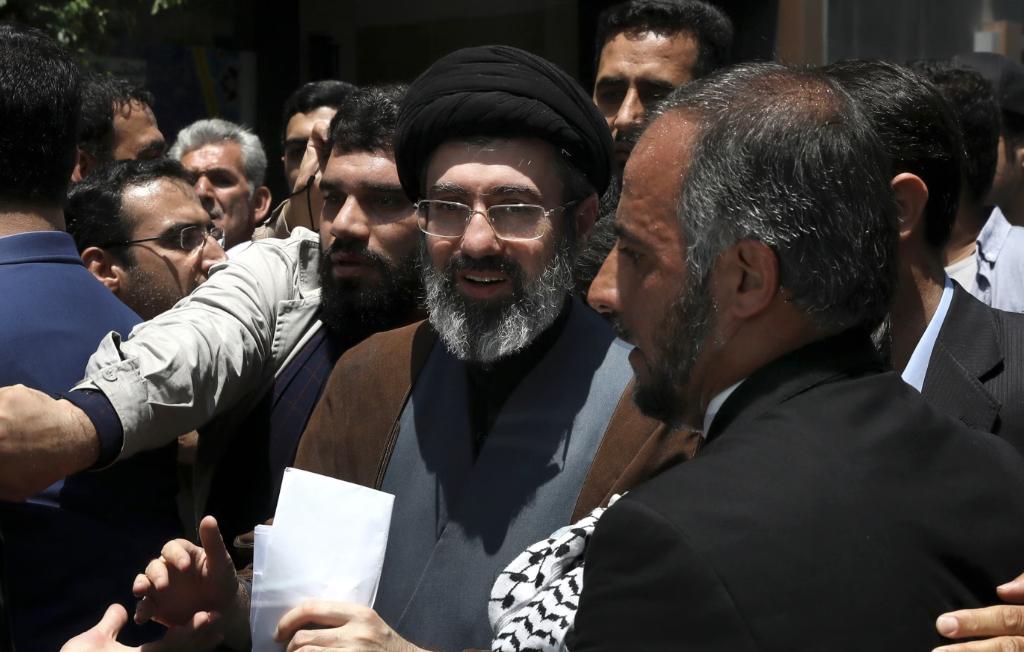
Iran’s leadership crisis has taken a dramatic and deeply controversial turn after Mojtaba Khamenei, the little-known son of the late Supreme Leader Ali Khamenei, was reportedly forced into power despite fierce opposition from inside the regime, objections from President Donald Trump, and even a warning written into his own father’s will.
According to sources cited by The New York Post, Ali Khamenei explicitly asked that his son not be chosen as his successor. The revelation came from Khosro Isfahani, a research director connected to the Iranian opposition group National Union for Democracy, who claims the late leader believed Mojtaba lacked the experience and political stature to run the Islamic Republic.
“In Khamenei’s will, he explicitly asked Mojtaba not to be named as successor,” Isfahani said.
The criticism didn’t stop there. Isfahani described Mojtaba as a figure who rose entirely through family connections rather than achievement.
“All these years, he has been nothing without his father’s name,” he said, adding that Mojtaba had accomplished little politically and had never held a formal government position prior to being elevated to the top post.
But according to multiple reports, the powerful Islamic Revolutionary Guard Corps had other plans.
The IRGC, widely considered the most powerful institution inside Iran, allegedly pressured the country’s Assembly of Experts — the body responsible for selecting the supreme leader — into installing Mojtaba despite widespread resistance among clerics.
Sources claim Mojtaba did not even secure a majority vote during deliberations. Instead, the IRGC reportedly forced the outcome after intense behind-the-scenes pressure, triggering protests and even a boycott by some members of the Assembly when the decision was announced.
“The Assembly of Experts that was supposed to pick the replacement of Khamenei didn’t vote for Mojtaba,” Isfahani said. “There was a lot of pushback against him, but under pressure from the IRGC, he was named as the successor.”
The appointment comes in the aftermath of a devastating strike in Tehran that killed Ali Khamenei and at least 49 high-ranking Iranian officials. The attack, widely attributed to Israeli forces with U.S. backing, has plunged the region into a rapidly escalating conflict.
Mojtaba himself survived the strike but was reportedly injured. Tragically, Iranian media reports that his mother, wife, and son were killed in the blast.
You genuinely can’t make this up.
No one has seen Mojtaba Khamenei.
Dead? Hiding in a bunker? Injured?
Should Mojtaba Khamenei have been appointed as Iran's supreme leader despite his father's wishes?Cardboard Supreme Leader. pic.twitter.com/vURreicOHT
— Iran Spectator (@IranSpec) March 10, 2026
President Donald Trump has made it clear he views Mojtaba as an unacceptable choice for Iran’s leadership.
“I’m not happy with him,” Trump told The New York Post in a call from Florida.
The president reportedly warned that Iran’s leadership must move toward stability and cooperation, especially regarding its nuclear program. According to the Wall Street Journal, the U.S. is demanding that Iran completely abandon its nuclear weapons ambitions.
Trump also reportedly signaled that Mojtaba may not remain in power for long if Tehran refuses to cooperate.
“They are wasting their time. Khamenei’s son is a lightweight,” Trump told Axios, later adding that the new leader “is not going to last long” without U.S. approval.
Behind the scenes, analysts say Mojtaba’s sudden rise may reveal more about the IRGC than about the man himself.
For decades he operated largely in the shadows of his father’s regime, occasionally described in leaked U.S. diplomatic cables as “the power behind the robes.” Critics have long accused him of manipulating internal politics, including alleged involvement in rigging Iran’s presidential elections years ago.
Now, with the country reeling from military strikes and internal power struggles, some observers believe Mojtaba may simply be a convenient figurehead for Iran’s military establishment.
“They see him as a puppet,” Isfahani said. “A blank canvas that they can paint anything on.”
Whether Mojtaba Khamenei can survive the intense pressure from inside Iran — and from the United States and Israel abroad — may determine not only his own future, but the direction of the entire Iranian regime.












