


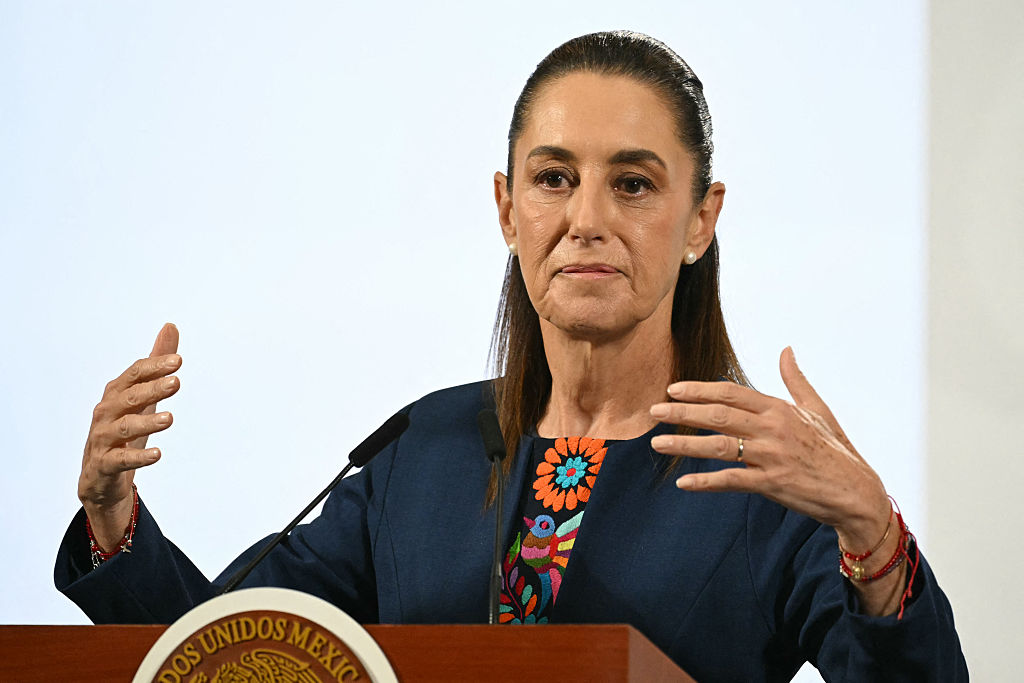
Mexico’s president delivered a blunt message this week after President Donald Trump again floated the idea of U.S. military action against drug cartels inside Mexico: Absolutely not.
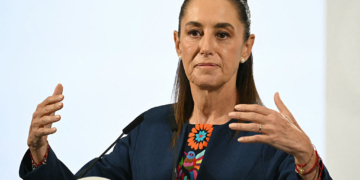
“It’s not going to happen,” President Claudia Sheinbaum said Tuesday, shutting down the suggestion a day after Trump signaled he was open to “whatever we have to do to stop drugs.”
According to The Associated Press, speaking at her regular morning briefing, Sheinbaum said Trump has raised the idea before. Each time, she said, her answer has been the same.
“He (Trump) has suggested it on various occasions or he has said, ‘we offer you a United States military intervention in Mexico, whatever you need to fight the criminal groups,’” Sheinbaum said. “But I have told him on every occasion that we can collaborate, that they can help us with information they have, but that we operate in our territory, that we do not accept any intervention by a foreign government.”
Sheinbaum added that she had delivered the same message to U.S. Secretary of State Marco Rubio and that both men have indicated they understand Mexico’s position.
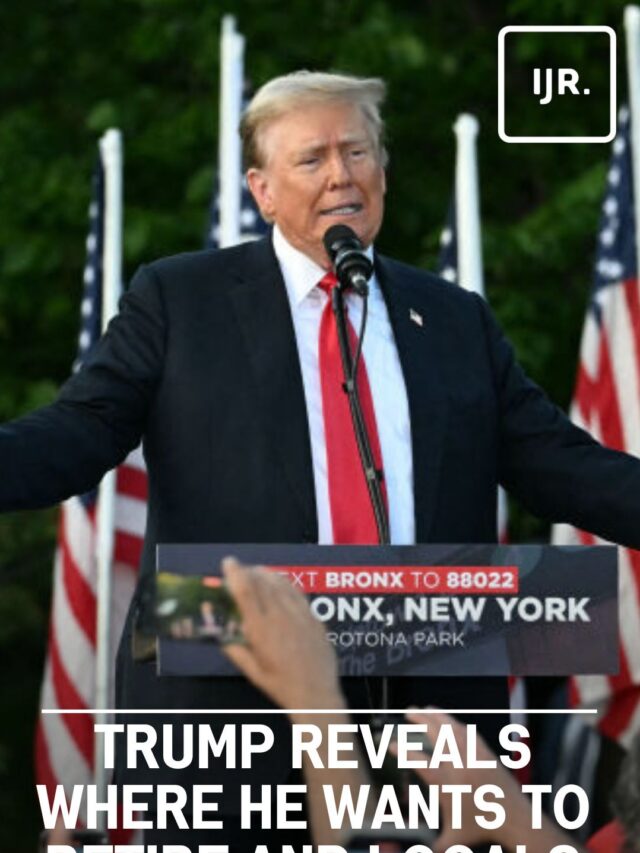
On Monday, Trump said, “Would I want strikes in Mexico to stop drugs? OK with me, whatever we have to do to stop drugs,” adding that he’s “not happy with Mexico.”
Later that day, the U.S. Embassy in Mexico posted a video on X featuring Rubio reiterating that the U.S. would not take unilateral action inside Mexico.
But another incident along the border added unexpected tension. Men arriving by boat at a beach in northeast Mexico installed signs claiming the land was restricted U.S. Department of Defense property. The signs appeared near Playa Bagdad, close to where the Rio Grande meets the Gulf of Mexico.
Mexico’s Foreign Affairs Ministry said the navy removed the signs after determining they were placed on Mexican soil. Sheinbaum said Tuesday that the International Boundary and Water Commission—the binational agency responsible for setting the border—was now involved.
The signs, written in English and Spanish, declared the area “Restricted” and said it had been designated as such by “the commander,” warning against unauthorized entry, photographs, or drawings.
The U.S. Embassy later shared a Pentagon statement confirming contractors had put up markers for “National Defense Area III” at the mouth of the Rio Grande. According to the Pentagon, “Changes in water depth and topography altered the perception of the international boundary’s location.”
It noted that six signs were removed by Mexican personnel and said future coordination would aim to “avoid confusion.”
Sheinbaum said Mexico contacted its consulate in Brownsville, Texas, and then the U.S. Embassy to determine the signs’ origin. Ultimately, it was concluded that contractors working for a U.S. government entity had installed them.
“But the river changes its course, it breaks loose, and according to the treaty, you have to clearly demarcate the national border,” Sheinbaum said.
The stretch of coastline is near SpaceX’s Starbase on the Texas side. The area has drawn scrutiny before. In June, Sheinbaum said Mexico was examining possible contamination after debris from a SpaceX rocket explosion reportedly landed on Mexican territory.
Adding to the backdrop is Trump’s push to rename the Gulf of Mexico as the Gulf of America—an idea Mexico has firmly rejected.
For now, Sheinbaum made clear that the boundary between the two nations includes more than shifting sand and water. It includes sovereignty—and she’s not budging.