



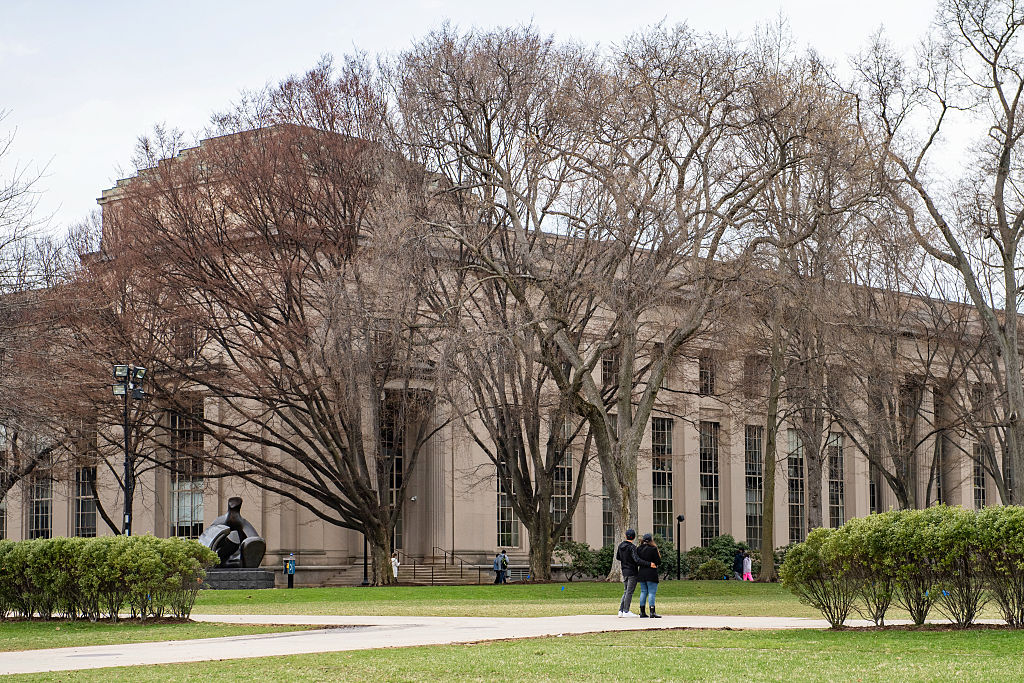
Shock and grief are rippling through the Boston-area academic world after an acclaimed Massachusetts Institute of Technology physicist was shot inside his Brookline home and later died from his injuries.
According to Fox News, authorities say the victim, 47-year-old Nuno F. Gomes Loureiro, was rushed to a hospital Monday evening with “apparent gunshot wounds” and was pronounced dead Tuesday morning.
Investigators have launched a homicide probe but have not identified a suspect or motive.
Loureiro’s death comes at a time when elite university communities in the region were already shaken.
The shooting occurred just two days after an attack at Brown University left two people dead and nine injured.
While investigators are sharing intelligence between the two cases, officials say they have found no reason to believe the incidents are connected.
Ted Docks, the special agent in charge of Boston’s FBI office, said at a Tuesday briefing that authorities do not see a link between the tragedies, despite the two campuses being located less than 50 miles apart.
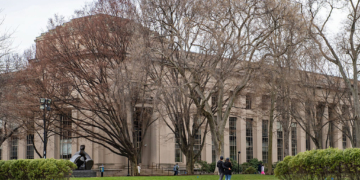
Inside MIT, the loss of Loureiro has left colleagues stunned.
The professor, who led the school’s Plasma Science and Fusion Center, was widely regarded as one of the most influential figures in fusion-energy physics — a field that explores how to reproduce the same reaction that powers the sun, potentially creating clean and abundant energy here on Earth.
His work helped drive major fusion experiments across the U.S. and Europe.
“Nuno was not only a brilliant scientist, he was a brilliant person,” said fellow MIT professor Dennis Whyte in a university obituary. “He shone a bright light as a mentor, friend, teacher, colleague, and leader … His loss is immeasurable to our community at the PSFC, NSE, and MIT, and around the entire fusion and plasma research world.”
Neighbors in Brookline described a shaken community, including Allen Taylor, a Tufts University professor who lives nearby. Standing outside Loureiro’s home on Wednesday, he told Fox News Digital the news struck a deep chord locally and beyond.
“I’m concerned because he was a human being, first, and secondly, because he’s a scientist,” Taylor said. “I know how much we invest in training people so they can make major contributions to our society, and then when they’re murdered, it’s a tremendous compromise to our community and to the world at large.”
Loureiro’s life and work stretched across three continents. Born in Portugal, he completed undergraduate studies in Lisbon before earning a Ph.D. in physics from Imperial College London. His career included post-doctoral work at Princeton University and the Culham Centre for Fusion Energy in the U.K., followed by research in Lisbon before joining MIT’s faculty in 2016.
By 2021, he rose to full professor and later became director of the Plasma Science and Fusion Center. His achievements earned him numerous honors, including the U.S. government’s Presidential Early Career Award for Scientists and Engineers earlier this year.
Loureiro often spoke about science with the passion of an artist, once saying, “When we stimulate theoretically inclined minds by framing plasma physics and fusion challenges as beautiful theoretical physics problems, we bring into the game incredibly brilliant students — people who we want to attract to fusion development.”
In another talk, he encouraged students to embrace difficulty and risk.
“If you’re not failing all the time,” he said, “you’re aiming too low.”
Now, the pioneering researcher’s sudden death has left MIT and the global fusion community confronting a void — one filled with unanswered questions, ongoing grief, and a search for accountability.