

The Iran War’s effects are moving past economics and into the environment.
Multiple instances of what appear to be oil spills have occurred this week in the Persian Gulf, Reuters reported. One apparent spill appears to be emanating from Kharg Island, while another spill appears to be streaming behind an ADNOC Logistics & Services oil tanker that was hit by Iranian drones on May 4.
The images are probably indicative of oil slicks, Reuters reported, citing Louis Goddard, co-founder of Data Desk, a climate- and commodities-focused consultant.
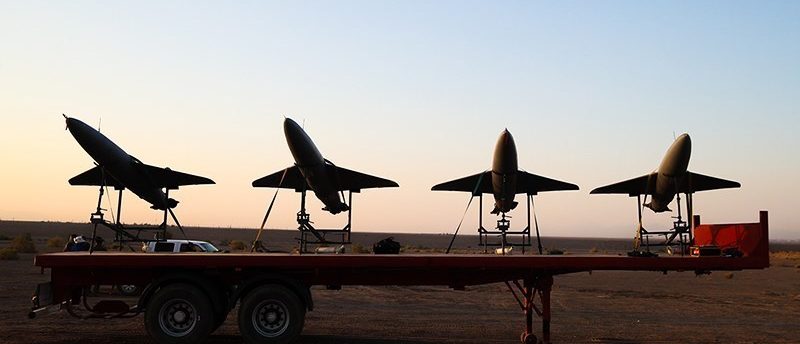
“The ADNOC Logistics & Services vessel Barakah remains at anchor off the coast of Oman after being impacted by two Iranian drones on May 4,” Reuters reported, citing an ADNOC company spokesperson. “A small amount of what is understood to be bunker fuel was unfortunately released as a result of the incident.”
The Barakah is classified as a crude oil tanker, according to MarineTraffic. It remains unclear how much fuel leaked into the Persian Gulf from the vessel.
ADNOC said at the time of the attack that no crew members were injured, Reuters reported.
The Daily Caller News Foundation contacted ADNOC Logistics & Services, the Sultanate of Oman’s Pollution Operations Monitoring Center and the Permanent Mission of the Islamic Republic of Iran to the United Nations; none immediately responded.
“The 60km oil slick originating from Kharg island is now moving southwards, seen on both optical and radar imagery,” Wim Zwijnenburg, an environmental reporter, posted on X.
U.S. strikes previously hit military targets on Kharg Island, The Wall Street Journal reported, citing two U.S. officials. However, it remains unclear whether the strikes are connected to the suspected oil slick.
What appears to be an oil spill can be seen from satellite imagery released by Reuters; however, it is unconfirmed whether the image accurately depicts an oil spill, though some experts suspect it.
“The slick appears visually consistent with oil,” Reuters reported, citing Leon Moreland, researcher at the Conflict and Environment Observatory. Moreland told Reuters that the slick appeared to be approximately 17 square miles.
Islamic Republic News Agency, an Iranian state media outlet, disputed the claims from scientists and environmentalists that the images appeared to depict an oil slick, claiming it was contaminated ballast tank water instead.
All content created by the Daily Caller News Foundation, an independent and nonpartisan newswire service, is available without charge to any legitimate news publisher that can provide a large audience. All republished articles must include our logo, our reporter’s byline and their DCNF affiliation. For any questions about our guidelines or partnering with us, please contact [email protected].