
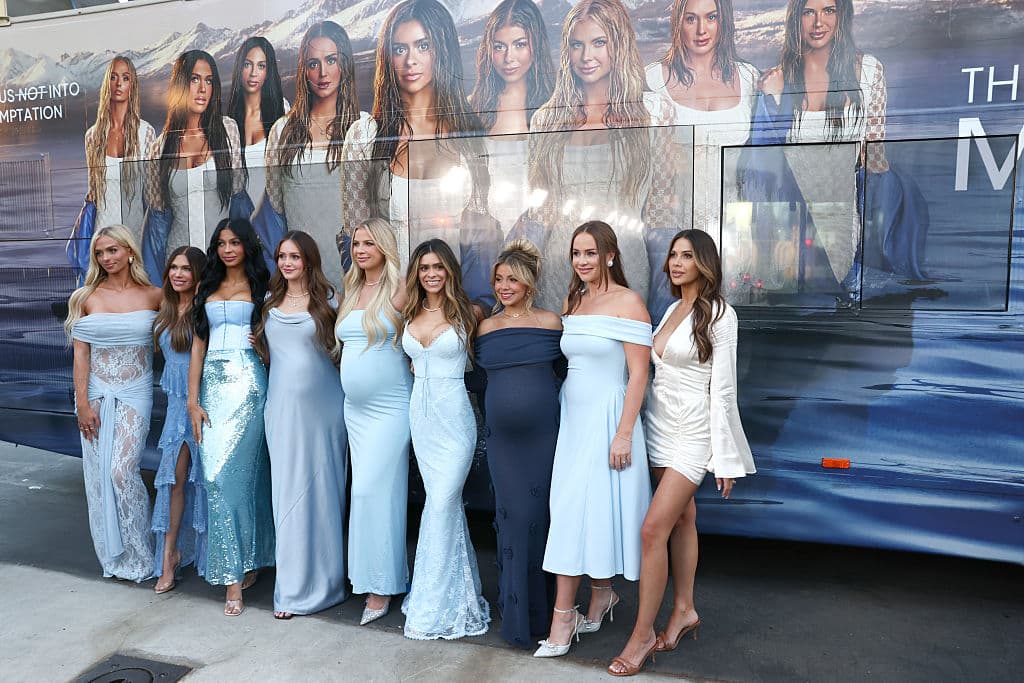
The women of The Secret Lives of Mormon Wives didn’t just land a television show — they sparked a cultural moment.
According to Fox News, what started as a small, unexpected addition to the Reality TV lineup has swiftly grown into one of the genre’s most talked-about franchises, fueling endless online discussion and elevating its cast into national figures.
Experts say the show’s meteoric rise is driven by the tension between expectation and reality.
“Reality television is nothing more than an escape from reality itself,” said Doug Eldridge, founder of Achilles PR, who believes the program’s success stems from its dramatic break from traditional perceptions of Mormon life.
“The construct of the show is antithetical to our macro-understanding of Mormon culture. Strict adherence to LDS teachings and practices couldn’t be further from what is being portrayed on the show.”
Because of that gap, he said, viewers can’t look away.
Eldridge argued that the series stands out in a saturated market.
“After nearly 30 years of Reality TV retreads, this one is somewhat unique, which is saying a lot,” he said. “Mormons are not usually cast for reality programming, as the level of indulgence, opulence, and overt sexuality runs contra to their central beliefs.”
PR executive Steve Honig said the draw runs deeper than controversy alone.
“Viewers have been flocking to the show because it represents rebelling against an establishment,” Honig told Fox News Digital. “People often feel they have to live by certain rules or guidelines because of what society puts on them. These women choose to live their lives according to their own set of rules.”
Conflict and scandal, Honig added, remain “the ingredients of a successful reality show.”
The cast has used the momentum to vault into new opportunities. Whitney Leavitt and Jen Affleck appeared on Dancing With the Stars. Taylor Frankie Paul became the next Bachelorette. Leavitt is preparing for a Broadway run in Chicago. Mayci Neeley released a memoir. Their social media followings now number in the millions.
Diane Winston, a professor at USC’s Annenberg School, told The New York Times the group’s appeal lies in its contradictions.
“These women have turned lifestyle into a booming brand and they’ve done that by falling back on their traditional roles as Mormon mothers and homemakers,” she said. “So it’s an interesting fusion of both feminism and anti-feminism.”
Behind the scenes, the Fame has created fractures.
“It’s hard because this is a new thing that we’re trying to navigate,” Leavitt said. “There can be jealousy and comparison… I’m still trying to navigate that.”
Miranda McWhorter, whose involvement in a swinging scandal shook the cast in Season 2, said outside scrutiny has taken its toll.
“There’s a level of embarrassment almost… but that can also be hurtful,” she explained. She said disagreements with friends, family and church leaders were “natural” as the women move in different directions.
McWhorter said the series pushes past standard depictions of modern Mormon women.
“I don’t think it’s a secret that none of US depict the perfect stereotypical Mormon wife… There’s a lot of breaking social norms and religious norms within the church,” she said. “Some are ex-members… all of our faith journeys are now very separate.”
With Hulu renewing the series for a fourth season, premiering in early 2026, the question now is whether the show can maintain its momentum.
“Right now, the show has a winning formula,” Honig said. “The drama needs to grow organically and sprout new storylines that can continue the show’s position as a cultural force.”