



Fresh satellite imagery is fueling new warnings that Iran is restoring key nuclear infrastructure even as negotiations with the United States continue.
According to Fox News, Alireza Jafarzadeh, a senior figure with the National Council of Resistance of Iran’s Washington office, said the images indicate renewed construction at sites damaged during U.S. strikes and argued the activity shows Tehran is “preparing for war.”
“The regime has clearly stepped up efforts to rebuild its uranium enrichment capabilities,” he told Fox News Digital. “It is preparing itself for a possible war by trying to preserve its nuclear weapons program and ensure its protection.”
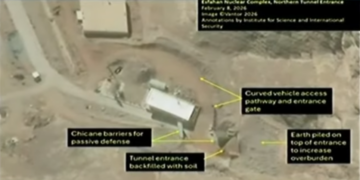
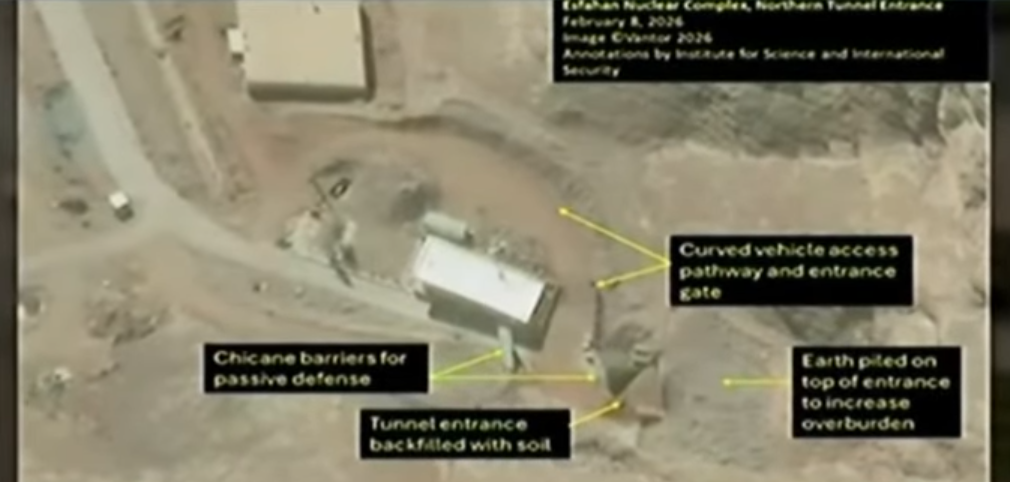
According to the newly released images from Planet Labs, reconstruction work appears to be underway at the Isfahan complex, one of the facilities targeted in the U.S. operation known as “Midnight Hammer.”
That June 22 strike involved coordinated Air Force and Navy attacks on the Fordow, Natanz, and Isfahan sites.
Despite the damage, the imagery shows entrances to tunnel systems at Isfahan have been buried, a move Reuters reported has also been observed at Natanz, which houses additional enrichment plants.
“These efforts in Isfahan involve rebuilding its centrifuge program and other activities related to uranium enrichment,” Jafarzadeh said.
The developments come as Iran participates in nuclear talks with the United States in Geneva.
President Donald Trump warned Thursday that “bad things” would happen if Tehran fails to reach an agreement.
While the negotiations are intended to limit Iran’s nuclear program in exchange for sanctions relief, Jafarzadeh argued the discussions are being used as a delaying tactic.
“Supreme Leader Ali Khamenei agreed to the nuclear talks as it would give the regime crucial time to avoid or limit the consequences of confrontation with the West,” he said.
He also claimed Tehran has spent at least “$2 trillion” on nuclear capabilities, calling the program a central pillar of the regime’s survival.
“Tehran is trying to salvage whatever has remained of its nuclear weapons program and quickly rebuild it,” he said. “It has heavily invested in the nuclear weapons program as a key tool for the survival of the regime.”
Jafarzadeh is known for publicly revealing the Natanz nuclear site in 2002, which prompted inspections by the International Atomic Energy Agency and increased international scrutiny.
“The insistence of the Iranian regime during the nuclear talks on maintaining its uranium enrichment capabilities, while rebuilding its damaged sites, is a clear indication that Supreme Leader Ali Khamenei has no plans to abandon its nuclear weapons program,” he said.
He added that the NCRI, led by Maryam Rajavi, had previously exposed multiple nuclear locations, including Natanz, Arak and Fordow, despite what he described as a crackdown by Iranian authorities.