



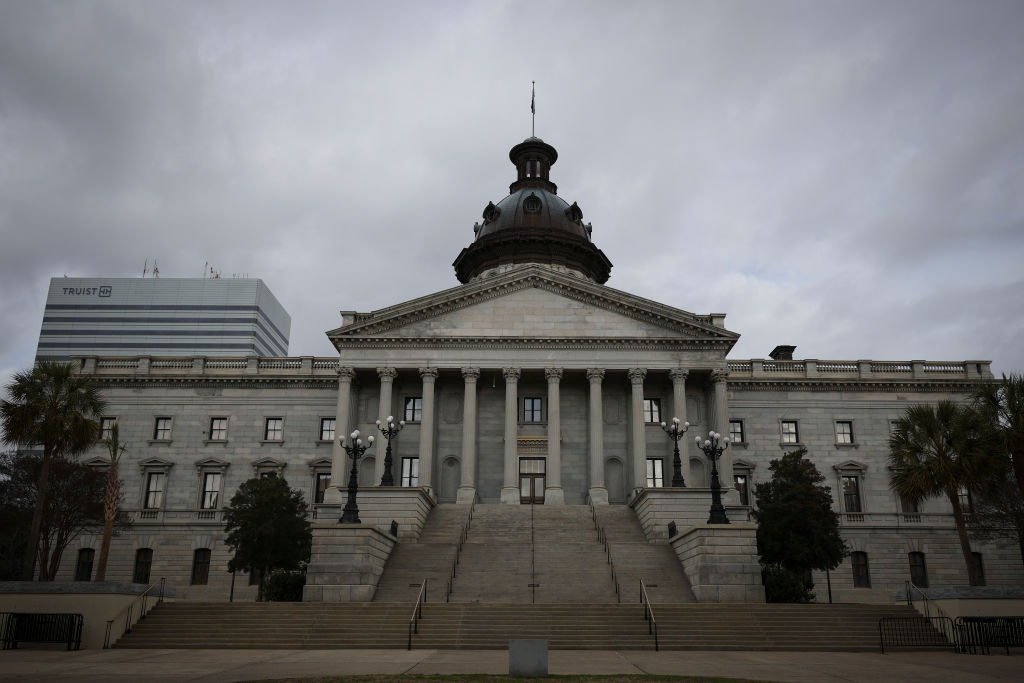
The South Carolina Supreme Court has ruled that state lawmakers violated the state constitution when they gave themselves a $1,500 monthly raise — a decision that will now slash legislators’ paychecks by thousands of dollars.
According to The Associated Press, in a unanimous decision Wednesday, the justices said the money, labeled as “in-district compensation,” legally counts as salary and therefore cannot take effect until after the next general election in 2026.
The court determined that the raise — which was included in this year’s state budget — was made effective immediately in violation of the constitutional rule requiring any pay increases to wait until a new legislature is seated.
As a result, lawmakers will not only lose the pay raise, but their monthly compensation will actually drop by $1,000, because the raise was tied to the $1,000 lawmakers had already been receiving for expenses. Until the General Assembly passes a new measure to correct the issue, those payments will stop.
The lawsuit was filed by Republican Sen. Wes Climer and one of his constituents, who argued that the “in-district compensation” was a thinly veiled salary increase. Attorneys for the House and Senate countered that it was intended to cover expenses and not be subject to the constitutional waiting period.
The high court disagreed. The justices noted that lawmakers themselves referred to the payments as “compensation,” and since there was no requirement to provide receipts or documentation, it was indeed part of their salary.
While acknowledging that pay for lawmakers hasn’t been raised since 1994, the justices wrote that they could not overlook a clear constitutional violation. “Where a legislative enactment clearly contravenes our constitution, we have a duty to declare the legislative enactment unconstitutional,” the court said.
The ruling means when legislators return to Columbia in January, they will receive a one-time payment of $10,400 for their $260-per-day compensation during the 2026 session, along with mileage and lodging reimbursements.
The decision stunned many lawmakers, some of whom said they have long used personal funds to pay for community meetings, constituent events, and local outreach.
During oral arguments in October, the justices suggested lawmakers could have avoided the problem by labeling the raise as an expense fund, delaying its start until 2027, or separating it in the budget.
The controversial raise was introduced late in the budget process by Republican Sen. Shane Martin, who argued the increase was long overdue, given inflation and the growing costs of public service.
South Carolina legislators are among the lowest paid in the nation, earning a combination of $22,400 in salary and in-district expenses — far below part-time lawmakers in states like Alabama and Tennessee, and a fraction of what full-time legislators in California and New York make.












