



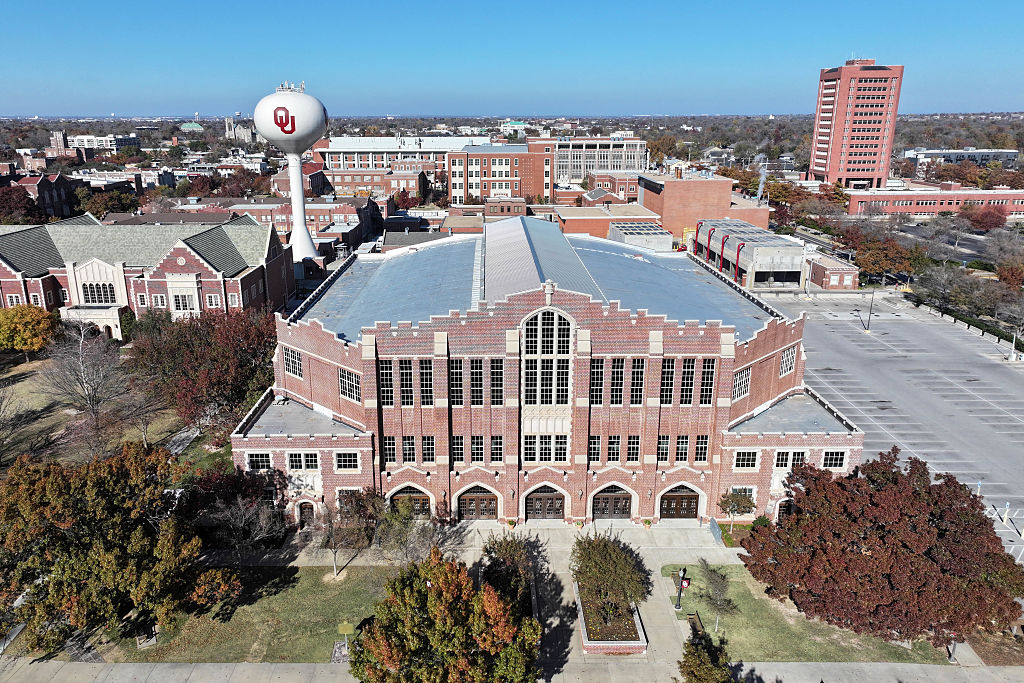
A University of Oklahoma junior says she was blindsided when a routine class assignment turned into a battle over faith, academic standards, and free speech — one that ultimately led to a teaching assistant being placed on administrative leave.
According to Fox News, Samantha Fulnecky, a pre-med student, said the trouble began after she submitted a reaction paper for her lifespan development class.
The assignment instructed students to read a scholarly article on gender norms among adolescents and offer a “thoughtful discussion” of their reaction, drawing from their own experiences and perspectives.
“I was asked to read an article and give my opinion on the article,” Fulnecky told Fox News Digital. She said she approached it the same way she had previous assignments, adding, “Naturally, my views are from the Bible and my Christian kind of worldview.”
Her paper argued that traditional gender roles should be reinforced rather than discouraged. She wrote that, “God made male and female and made us differently from each other on purpose and for a purpose,” and argued that gender roles “should not be considered ‘stereotypes.’”
She also described the idea of multiple genders as “demonic,” and referenced Genesis to explain her perspective on men, women, and identity.
Fulnecky said she believed that fulfilling the assignment meant offering her genuine perspective. But when her paper was graded, she received a zero out of 25.
The score came from graduate teaching assistant Mel Curth, who uses she/they pronouns. Fulnecky said she was stunned not just by the grade, but by the feedback.
She said Curth told her she needed “more empathy” and “empirical evidence” if she was going to challenge “the consensus of every medical field.” Curth also described the essay as “offensive.”
In written comments, Curth insisted the grade was unrelated to Fulnecky’s beliefs, instead arguing that the paper “does not answer the questions for this assignment, contradicts itself, heavily uses personal ideology over empirical evidence in a scientific class, and is at times offensive.”
Curth added that major medical and psychological associations do not consider sex and gender to be binary or fixed, and said calling gender-nonconforming individuals “demonic” was “highly offensive.”
Fulnecky said nothing in the rubric required empirical evidence — the categories were a tie-in to the article, a thoughtful reaction, and clear writing. When she challenged the grade, she said Curth “doubled down,” prompting her to bring the issue to the university.
After the dispute went viral on social media, the University of Oklahoma issued a public statement. The school said it takes First Amendment concerns seriously and had “acted swiftly” once it received Fulnecky’s complaint.
According to the university, a formal grade appeal process was in place to ensure “no academic harm” would come to the student, and a full-time professor has taken over the class. The school also confirmed that Curth has been placed on administrative leave pending the outcome of the review.
Fulnecky maintains that the school’s public description of its response does not align with her experience, saying she was unaware of any action until she saw OU’s statement.
“I honestly don’t think they would have [acted] if it hadn’t blown up on social media,” she said.
The situation has also drawn political attention. Ryan Walters, former Oklahoma superintendent of public instruction, called Fulnecky “an American hero” and accused universities of harboring “anti-Christian bias.”
Fulnecky said she has received both support and hate messages since the dispute became public. She encouraged students facing similar situations to speak up, saying, “Jesus is always worth standing up for.”
She added that she holds no ill will toward the teaching assistant.
“I think I would just say that God loves him,” she said, adding she is saddened that her writing “offends them the way it did.”