



The Trump administration took one of its most sweeping steps yet toward shutting down the U.S. Department of Education, announcing a series of agreements Tuesday that will transfer some of the agency’s biggest grant programs to other parts of the federal government.
According to The Associated Press, the shift follows President Donald Trump’s March executive action calling for the department’s elimination. Until now, the process has mainly unfolded through heavy rounds of layoffs and buyouts that have thinned the agency’s workforce. The new agreements, however, mark a structural overhaul that moves the department closer to being dismantled.
Six agreements signed this week will hand off billions of dollars in federal education funding to other agencies. The most significant change places the Department of Labor in charge of major K-12 programs, including the massive Title I program that sends money to schools serving low-income students.
The move has sparked alarm among state education leaders and advocates who worry about losing the expertise that Education Department staff provide.
“People might think it’s just funding and giving them the money, but it’s not,” said Angélica Infante-Green, Rhode Island’s K-12 education chief. “It is about how to co-mingle some of the funds to educate a child. So if a child is in special education but is also a multilingual learner and they’re in poverty, how do you use that to educate the child holistically?”
Critics warn this type of realignment could disrupt services for the nation’s most vulnerable students, especially those who rely on programs that require specialized oversight.
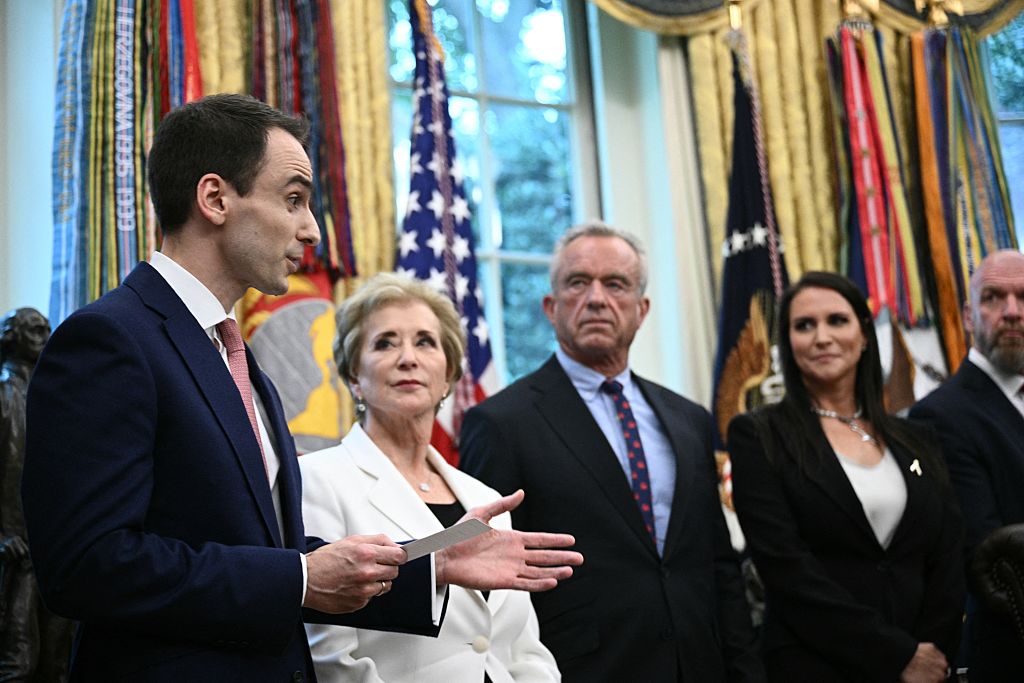
Education Secretary Linda McMahon defended the changes, saying they are central to Trump’s long-term objective of shutting down the department.
“The Trump Administration is taking bold action to break up the federal education bureaucracy and return education to the states,” McMahon said. “Cutting through layers of red tape in Washington is one essential piece of our final mission.”
Department officials said the programs will continue to receive funding levels set by Congress. They declined to say whether more job cuts are on the way.
For now, the department will keep oversight of the $1.6 trillion student loan portfolio and funding for students with disabilities. The Office for Civil Rights will also remain in place. But McMahon has signaled her belief that even those responsibilities should eventually move elsewhere.
The agreements allow the administration to dramatically shrink the department without waiting for Congress to approve its closure. The strategy relies on inter-agency arrangements the federal government typically uses when missions overlap.
A smaller test run earlier this year shifted adult education programs to Labor. The new agreements go further, giving Labor authority over nearly all K-12 and higher-education grants currently managed by the Education Department. That includes funding for teacher development, English-language instruction, and TRIO, a program that helps low-income students pursue college degrees.
Other programs are also being redistributed. Health and Human Services will take over grants for student-parents and foreign medical school accreditation. The State Department will assume responsibility for foreign-language programs. The Interior Department will oversee Native American education programs.
Union leaders said the changes undermine the federal commitment to equitable education.
“That national mission is weakened when its core functions are scattered across other federal or state agencies that are not equipped or positioned to provide the same support and services as ED staff,” said Rachel Gittleman, president of AFGE Local 252.
McMahon has repeatedly pointed to student achievement declines—particularly the steep drops in math and reading scores following pandemic shutdowns—as evidence that the department has failed in its mission. She argues that states should have more flexibility with federal funding currently tied to specific requirements.
Eliminating the department will require congressional approval, a significant hurdle given that many of its core programs have bipartisan backing.
Still, the administration is pressing ahead with its long-term plan. Officials say McMahon will continue touring the country to highlight successful schools while also working with lawmakers in an effort to build support for shutting the agency down.