



President Donald Trump’s push to deliver $2,000 “tariff dividends” to most Americans could add trillions to the national debt, a new analysis released this week revealed.
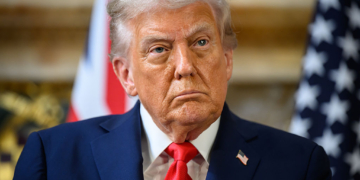
According to FOX Business, Trump told reporters in the Oval Office on Monday that the administration aims to begin issuing the payments by mid-2026. The timeline, he noted, could slip depending on whether Congress authorizes the plan.
“We’re going to be issuing dividends later on, somewhere prior to, you know, probably the middle of next year, a little bit later than that,” Trump said. “Thousands of dollars for individuals of moderate income, middle income.”
The president first unveiled the concept in a Truth Social post, arguing that tariff revenue is surging as his administration expands trade duties. “We are taking in Trillions of Dollars and will soon begin paying down our ENORMOUS DEBT, $37 Trillion,” he wrote. He added that “a dividend of at least $2000 a person (not including high income people!) will be paid to everyone.”
But the nonpartisan Committee for a Responsible Federal Budget (CRFB) estimates that such payments would come at a steep cost. If structured like COVID-era stimulus checks — targeted by income and issued to adults and children — each round of the proposed dividends would cost roughly $600 billion per year.
So far this year, the Trump administration’s tariffs have raised about $100 billion, including revenue from tariffs that federal courts have ruled illegal and that are now awaiting Supreme Court review.
Overall, the administration projects tariff revenue at about $300 billion annually, though only a fraction of that is not tied up in ongoing litigation.
It remains unclear whether the White House envisions the dividends being issued annually or less frequently. Trump has said only that payments would be “at least $2000 a person.”
According to CRFB’s projections, issuing $2,000 dividends every year would add $6 trillion to the deficit over the next decade — about twice what the tariffs themselves are expected to generate over the same period.
The group noted that to keep the program revenue-neutral, the administration could only afford to issue the dividends every other year beginning in 2027, assuming current tariffs remain intact.
If the Supreme Court upholds lower court rulings striking down much of the administration’s tariff program, CRFB said it could take seven years before enough revenue accumulates to issue a single round of $2,000 payments.
“Using income from tariffs to pay dividends would mean that income could not be used to reduce deficits or offset borrowing from the One Big Beautiful Bill Act,” the group wrote.
CRFB also projected that redirecting tariff revenue toward rebates or dividends would increase the national debt as a share of the economy. Under current law, debt is expected to reach 120% of GDP by 2035. Using tariff revenue for dividends would push that share to 127%, while annual $2,000 dividends would drive it even higher, to 134% of GDP.