





The 2010 United States Senate special election in New York took place on November 2, 2010, concurrently with other elections to the United States Senate in other states as well as elections to the United States House of Representatives and various state and local elections. Governor David Paterson had appointed Kirsten Gillibrand to serve as United States Senator from New York until the 2010 special election, replacing former senator Hillary Clinton, who resigned to serve as Secretary of State in the Barack Obama administration. The winner of the special election was to complete the term ending in January 2013. The special election took place concurrently with the regular election for the Senate seat held by Chuck Schumer and the 2010 New York gubernatorial election.
Due to this special election, 2010 marked the first time since the ratification of the 17th Amendment in 1913 that all of New York's six statewide offices were up for popular election on the same day. These elections coincided with the elections of all United States representatives from New York, all members of the New York State legislature, and many other officeholders.
Contents
Appointment history
During the appointment process, a large number of candidates were mentioned, including:
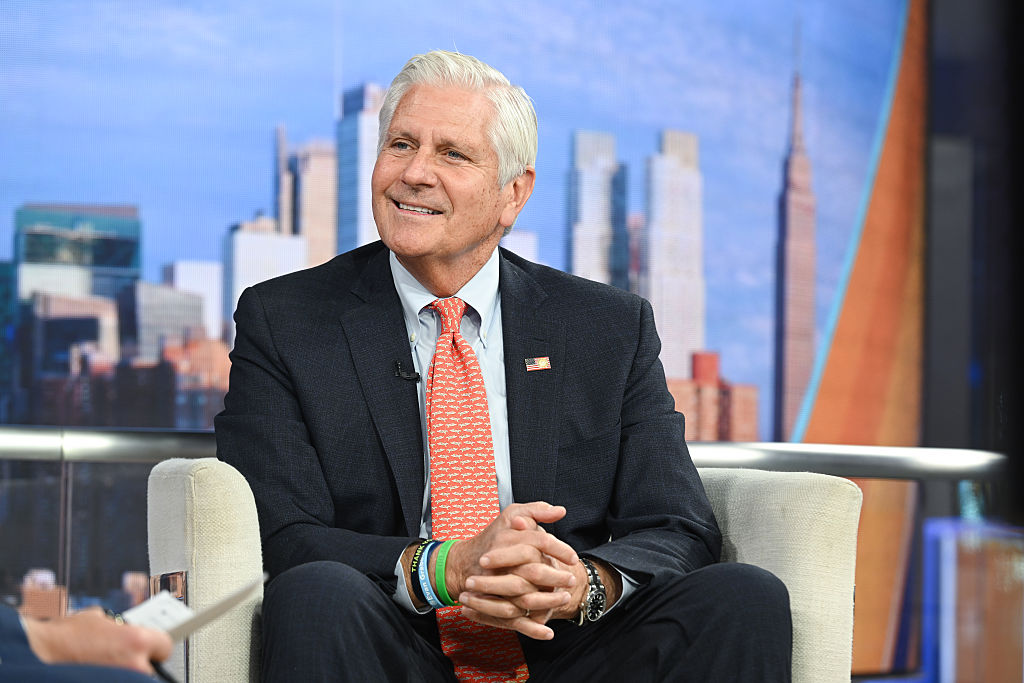
Buffalo Mayor Byron Brown
Former President Bill Clinton
New York State Attorney General and eventual Governor of New York Andrew Cuomo
New York State Assemblywoman RoAnn Destito
Actress and eventual SAG-AFTRA president Fran Drescher
Then-U.S. Representative and eventual seat-appointee Kirsten Gillibrand
U.S. Representative Brian Higgins
U.S. Representative Steve Israel
Attorney, author, and eventual U.S. Ambassador to Japan Caroline Kennedy
U.S. Representative Nita Lowey
Former Lieutenant Governor Stan Lundine
U.S. Representative Carolyn Maloney
U.S. Representative Greg Meeks
U.S. Representative Jerrold Nadler
New York state assemblyman Daniel J. O'Donnell
Nassau County Executive Thomas Suozzi
U.S. Representative Nydia Velázquez
United Federation of Teachers President Randi Weingarten
Speculation
An early favorite for selection was New York Congresswoman Nita Lowey, who in the late 1990s had been planning a run for the 2000 Senate election, but had stepped aside once then-First Lady of the United States Clinton had decided to run for the office. But Lowey soon withdrew from consideration, having gained enough seniority to become one of the powerful "cardinals" on the House Appropriations Committee and did not want to relinquish that position. Another who withdrew from consideration was New York Congresswoman Nydia Velázquez.
Senator Schumer did not publicly indicate a preference, but reportedly favored Congresswoman Gillibrand. The indication by Caroline Kennedy that she was possibly interested in being appointed drew the most media attention. Her family legacy (including that her uncle Robert F. Kennedy had previously held the seat) and star power was balanced against her inexperience in politics and elections. Her uncle Senator Ted Kennedy, in a battle with brain cancer, encouraged her to seek the position. On December 15, Kennedy indicated that she was definitely seeking the appointment, making phone calls to Paterson and other prominent Democrats. Kennedy and her uncle had backed Obama over Clinton at a crucial time in the long presidential nomination struggle, and some past Clinton supporters initially disparaged Kennedy's qualifications for the senate seat. But soon Clinton told her supporters not to stand in the way of a Kennedy selection; Clinton said she herself would have no public comments on any of the possible choices.
Public opinion polls showed that Kennedy and Cuomo were the two most popular choices of New York residents, with their large name recognition factors playing a role. Paterson faced a complex set of factors in making the choice. Women's groups were pressuring him to replace Clinton with another woman, while upstate groups were dissatisfied at their lack of representation in top-level statewide offices. Paterson's own gubernatorial election campaign could benefit from a Democratic star such as Kennedy in the senate race, which would help him raise money and increase voter enthusiasm, while the choice of Kennedy would also bolster his relations with the Obama administration. Whatever candidate is chosen would be faced with likely having to raise $35 million for the 2010 special election and then, if victorious, another $35 million for the 2012 regular election two years later.
By later in December, Kennedy had mounted a concerted effort to gain support around the state, and had made several trips and appearances as well. Kennedy's appointment was supported by Congresswoman Louise Slaughter, State Assemblyman Vito Lopez, New York City mayor Michael Bloomberg, former New York City Mayor Ed Koch and the New York Post editorial page. She received criticism for not voting in a number of Democratic primaries and general elections since registering in 1988 in New York City and also for not providing details about her political views.
Appointment
On the same day that Kennedy dropped out, WPIX-TV and the Albany Times Union reported that Governor Paterson was expected to announce he was appointing Kirsten Gillibrand. The Governor made the official announcement of Gillibrand's appointment at a press conference in Albany on January 23, 2009.
By a month later, Paterson had conceded that his office had been responsible for leaks at the end of the appointment process, intended to contest the Kennedy camp's claim that she had been his first choice for the position. Paterson said, however, that he had not expected the level of attacks that ensued from his office at the time: "The things said about Caroline I found despicable and shocking and very painful. I never would have imagined removing the idea that this is my first choice meant a character assassination."
Democratic primary
The Democratic primary election was held on September 14, 2010.
Background
Paterson's appointment of Gillibrand alienated Caroline Kennedy and Andrew Cuomo supporters as well as some key liberal Democratic ideological constituencies, and made it possible that the centrist Gillibrand would face a primary challenge in 2010. She did not have the full backing of the New York congressional delegation either, and one state Democratic operative said, "I think she's going to get a serious primary in 2010."
Carolyn McCarthy, formerly a colleague of Gillibrand's in the New York delegation to the United States House of Representatives, said that if Gillibrand was appointed, she would mount a primary campaign against her in 2010 if no other candidate who favored stricter gun control laws did so. McCarthy is known as a staunch advocate of gun control laws, after her husband was murdered in a 1993 commuter train shooting spree, while Gillibrand was endorsed by the National Rifle Association of America. Gillibrand also served as a lawyer for Philip Morris, Inc.
Despite the potential for a primary challenge, Democratic Senatorial Campaign Committee chairman Bob Menendez, Senator from New Jersey, suggested that by the election, Gillibrand "will have convinced her fellow Democrats that she deserves their support." However, a February 2009 Quinnipiac University Polling Institute poll showed Gillibrand losing a hypothetical primary matchup to McCarthy, and Gillibrand was said to be worried that Governor Paterson's declining popularity would pull her down too. Congresswoman Carolyn Maloney and Manhattan Borough President Scott Stringer were also seriously considering a primary challenge to Gillibrand, as was Long Island Congressman Steve Israel. In April 2009, Stringer formed an exploratory committee towards that end. Despite the possible challenges, by April 2009 Gillibrand had raised $2.3 million in campaign funds since joining the Senate.
In May 2009, Obama persuaded Israel to forsake a run, in the interests of not having a messy primary. Obama's intervention was largely at the request of Gillibrand patron Charles Schumer. However, Congresswoman Maloney indicated that she was still considering a primary challenge and that Israel's decision would not influence hers. Several days later, Stringer said he would not run either, for the same reasons as Israel. In the wake of their withdrawals, Congressman José Serrano considered running for a while.
In early June 2009, Congresswoman McCarthy took herself out of any run. McCarthy, who had raised only a small fraction of the amount of money Gillibrand had, said her declining was for personal reasons. Maloney, however, still seemed likely to run, and a conversation with Vice President Joe Biden did not change her mind. Several House Democrats from New York said that the White House's interventions to forestall a primary race had been unwise.
Candidates
Kirsten Gillibrand, incumbent U.S. Senator
Gail Goode, attorney
Disqualified
Joseph Huff, running on the Rent Is Too Damn High Party line
Withdrew
Scott Noren, oral surgeon
Jonathan Tasini, labor activist and candidate for U.S. Senate in 2006 (ran for U.S. House)
Declined
Andrew Cuomo, Attorney General of New York (ran for governor)
Harold Ford, Jr., former U.S. Representative from Tennessee's 9th congressional district (1997—2007) and chair of the Democratic Leadership Council
Steve Israel, U.S. Representative for New York's 2nd congressional district since 2001
Caroline Kennedy, author and daughter of John F. Kennedy
Carolyn Maloney, U.S. Representative for New York's 14th congressional district since 1993
Eliot Spitzer, former governor of New York
Tom Suozzi, former Nassau County Executive and mayor of Glen Cove
Bill Thompson, former New York City Comptroller
Republican primary
The Republican primary election was held on September 14, 2010.
Background
Congressman Peter T. King made his likely candidacy clear in December 2008, partly to mention that he was not challenging former New York City mayor Rudy Giuliani as the latter was not in the running and partly to counter the wave of publicity for Caroline Kennedy. By January 2009, King was still deliberating over whether he would run, with the main factor being whether he could raise the estimated millions he would need. National Republican Senatorial Committee Chair John Cornyn was said to support King, which could keep other Republican contenders out of play. However, Cornyn reportedly met with former Governor George Pataki to discuss his potential candidacy, which other Republicans were advocating. In June 2009, due to an appointment to the House Intelligence Committee, King said he was much less likely to run. As August 2009 closed, King announced officially that he would not run, saying: "Senator Gillibrand generates neither strong support nor opposition. This makes it virtually impossible for me to raise the campaign funds I would need to overcome the built-in Democratic registration advantage and the countless millions of dollars which the Democrats will make available to Senator Gillibrand." In September 2009, Giuliani reiterated that he had no interest at all in running for the Senate seat, though, much like Andrew Cuomo's anticipated desire to run for governor, it did not stop speculation that Giuliani might change his mind, and by October 2009, speculation continued that Giuliani would run for the Senate seat, particularly if Cuomo ran for governor. On November 19, 2009, the New York Daily News reported Giuliani would not run for governor, and in fact would run for the Senate to fill out the last two years of the Clinton term, then use that as a springboard for another presidential run. However, a Giuliani spokesperson quickly dismissed the notion that any such plan was in place, saying "When Mayor Giuliani makes a decision about serving in public office, he will inform New Yorkers on his own." On November 26, 2009, Mayor of Larchmont Liz Feld said she's considering running for the seat.
In January 2010, Congressman Peter T. King said he was reconsidering running for the seat. Real estate magnate and publisher Mort Zuckerman was seriously considering a bid by February 2010. Nominally a Democrat, Zuckerman was more likely to run as a Republican or independent in order to avoid an expensive primary fight. But in early March, he indicated he would not run, saying he had not the time to do it. In April 2010, despite a Quinnipiac University Polling Institute result placing him five points ahead of Gillibrand in a potential matchup, Pataki removed himself from consideration. The former governor instead said he would instead run an organization dedicating itself to repealing the Affordable Care Act.
Candidates
Bruce Blakeman, Port Authority Commissioner and 1998 comptroller candidate
Joe DioGuardi, former U.S. Representative
David Malpass, founder of Encima Global and former chief economist at Bear Stearns
Declined
Ed Diana, Orange County Executive
Liz Feld, mayor of Larchmont
Rudy Giuliani, former Mayor of New York City and candidate for Senate in 2000
Peter T. King, U.S. Representative
Brian Kolb, Minority Leader of the New York Assembly
Susan Molinari, former U.S. Representative
George Pataki, former governor of New York
Dan Senor, former adviser to President George W. Bush
Diana Taylor, de facto First Lady of New York City and former state banking superintendent
C. Scott Vanderhoef, Rockland County Executive and nominee for Lieutenant Governor in 2006
Mort Zuckerman, owner of the New York Daily News
General election
Candidates
Democratic: Kirsten Gillibrand
Republican: Joe DioGuardi
Anti-Prohibition Party: Vivia Morgan
Conservative Party: Joe DioGuardi
Green Party: Cecile Lawrence
Independence Party: Kirsten Gillibrand
Libertarian Party: John Clifton
Rent Is Too Damn High Party: Joseph Huff
Taxpayers Party: Joe DioGuardi (originally David Malpass)
Tax Revolt Party: Bruce Blakeman
Working Families Party: Kirsten Gillibrand
Campaign
Gillibrand claimed to be an independent thinker and takes a back seat to no one. She also released television advertising touting her experience as from upstate New York. DioGuardi criticized Gillibrand's recent photos in Vogue magazine.
Debates
October 16 on WABC-TV
October 21 in Russell Sage College in Troy on NY1
Results
Genesee (largest municipality: Batavia)
Putnam (largest municipality: Lake Carmel)
Tioga (largest municipality: Waverly)
Orleans (largest municipality: Albion)
Wayne (largest municipality: Newark)
Steuben (largest municipality: Corning)