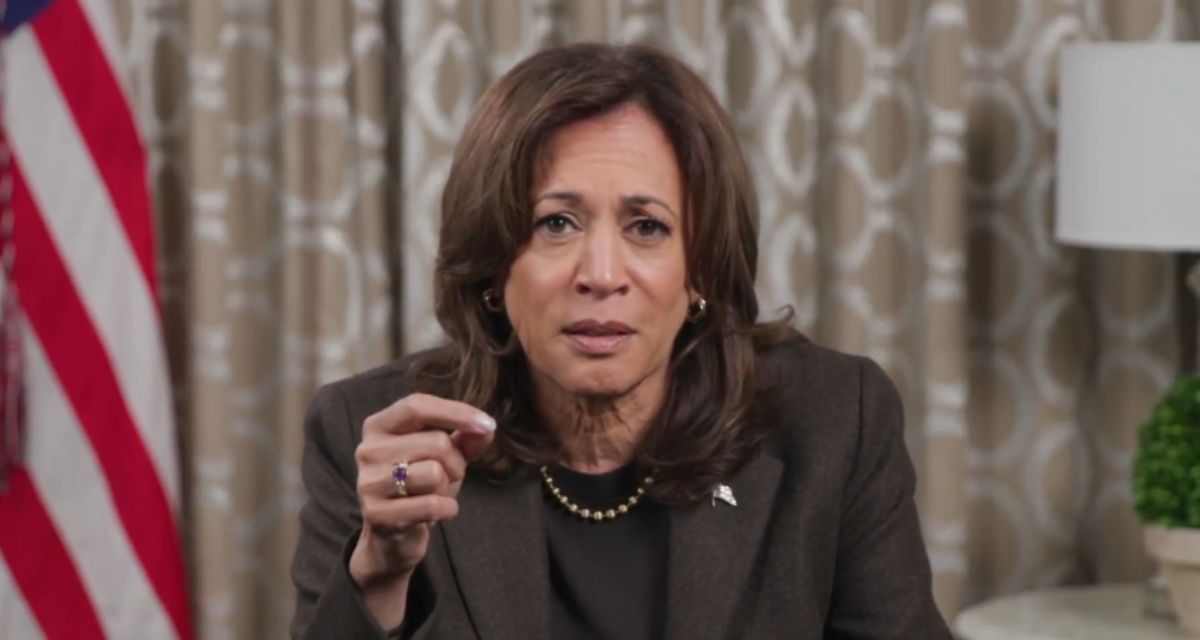
Harris's loss
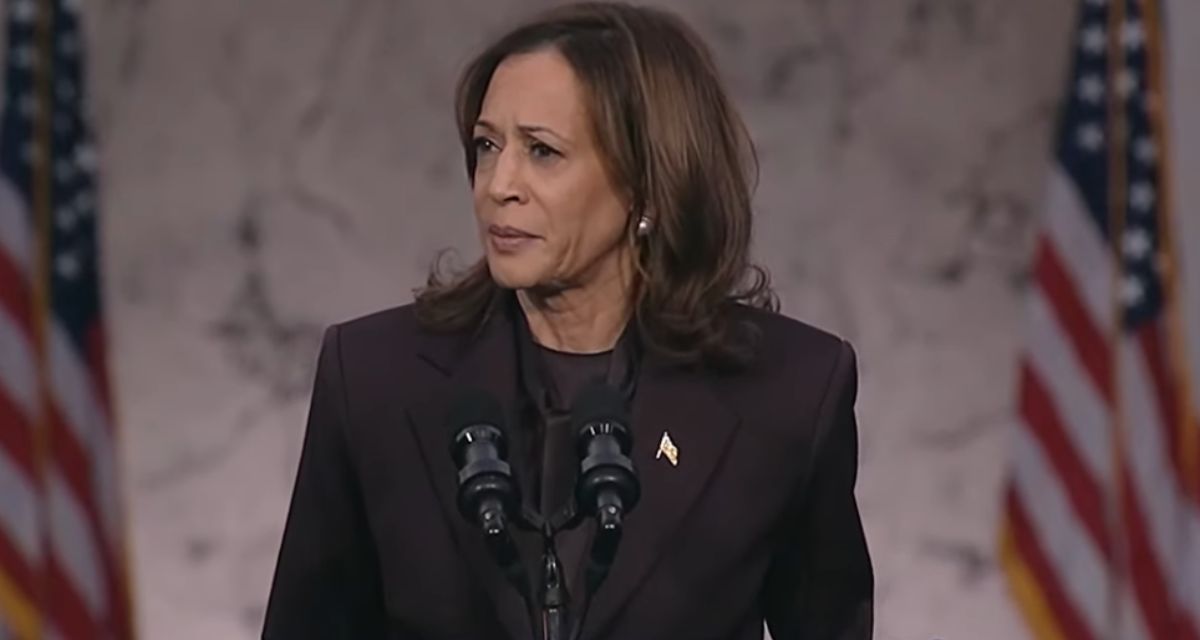
Harris's loss to Trump received substantial media analysis in the aftermath of the election. Proposed explanations for the outcome of the race included inflation, the immigration crisis, a global incumbency backlash, Biden's late exit from the race, and the lack of an open Democratic primary process. Democrats and others argued about what went wrong and how the party should move forward.
According to Gallup, most factors with respect to the electoral environment favored Republicans and Trump. These included low confidence in the economy, Republicans outnumbering Democrats in party affiliation (48–45%), low national satisfaction, Republicans being favored to address the economy and immigration, and Biden's low job approval rating. Harris was viewed more favorably on character and had an advantage on some issues. No incumbent party has won when a president had below a 45% approval rating, either losing reelection (Jimmy Carter in 1980, George H. W. Bush in 1992, and Trump himself in 2020) or the incumbent party lost the White House (Hubert Humphrey in 1968).
According to exit polls, voters disapproved of Biden's performance 59–39%, and disapproved of how things were going in the United States 73–25%. Also, voters judged the economy negatively 68–32%, and said that inflation had caused them hardship 75–24%. A YouGov poll conducted from November 6–7, 2024 found that if Biden had been the Democratic nominee, Trump would have won the popular vote 49–42%. Nonpartisan election forecasters, including The Cook Political Report and Sabato's Crystal Ball, stated before the election that Biden would have been almost certain to lose.
Harris did improve compared to Biden among voters making over $100,000 a year. NBC News found that Trump made larger gains in counties with tougher housing markets.
Almost every incumbent party worldwide facing election in 2024 lost vote share, including in South Africa, India, France, the United Kingdom, and Japan. Among democracies, over 80 percent saw the incumbent party lose support compared to the last election. This is the first time this has ever happened since 1905 (when data was first recorded) and the first time in the history of democracy, as universal suffrage began in 1894.
All 50 states and the District of Columbia shifted rightward compared to 2020. Trump's gains in nearly all geographic areas and among nearly every demographic group provides strong evidence of anti-incumbent backlash. The shifts toward Trump were much less in the swing states where both campaigns focused compared to safe states. The two states with the largest shifts toward Trump, New York and New Jersey, were both won by Harris. Harris had very little room to fall in the swing states, given that Biden had won most of them by very small margins in 2020.
Statistician and election analyst Nate Silver argued before the election that the national electoral environment was difficult for Democrats. This view was also shared by The New York Times political analyst Nate Cohn. After the election, Silver felt that Harris was a replacement-level candidate who did much better than Biden would have, but was unable to separate herself from Biden's record and was negatively perceived by swing voters due to her previous positions. Amy Walter, editor of the nonpartisan The Cook Political Report, also argued that the electoral environment was inherently difficult for Harris because the top issue for voters was inflation during the Biden-Harris administration.
Ronald Brownstein of The Atlantic, who spoke with members of Harris's campaign, argued that the extent of Biden's unpopularity and public discontent with the economy proved too much for Harris to overcome. Brownstein compared the election to the 1968 presidential election (when unpopular incumbent Lyndon B. Johnson withdrew from the race and Vice President Hubert Humphrey lost to Richard Nixon) and the 1980 presidential election (when unpopular incumbent Jimmy Carter lost to Ronald Reagan due to stagflation and the 1970s energy crisis). Members of Harris' campaign stated after the election that their internal polling never showed Harris ahead of Trump and they did not believe that Harris was the favorite to win the election. David Plouffe, a senior campaign advisor to Harris, claimed that even making the race competitive was a win for Harris' staff.
The opportunity to elect Harris as the first female U.S. president proved to be less important to voters than issues like the economy and immigration. Results of VoteCast, as reported by Fox News, find that 13% of voters chose "the fact that Kamala Harris would be the first female president" as the single most important factor to their vote. Even so, polls have shown that voters support backing a female candidate while also acknowledging the challenges they might face on the campaign trail. Surveys conducted in 2023 by Pew Research Center found that respondents believed that there were several reasons why there were fewer women than men in high political offices: that women "have to do more to prove themselves" than men, that women in politics face gender discrimination, and that many Americans are not ready to elect a woman to higher office. 18% in one of the polls said that it is extremely or very important to them personally that the United States elects a woman president in their lifetime. A September 2024 AP-NORC poll found that 34% of respondents thought that the fact that Kamala Harris is a woman would help her get elected. A slightly larger 38% thought that it would hurt her, while 26% did not think it would make a difference. An AP-NORC poll from December of the same year found that about one-quarter said that it was extremely or very likely that the country would elect a woman president in their lifetime. A January 2024 Gallup poll found that 93% of Americans would vote for a generally well-qualified person for president who happened to be a woman.
An Institute for Middle East Understanding (IMEU) poll conducted by YouGov from December 2024 to January 2025 found that the most important issues affecting the vote of Biden 2020 voters that did not vote for Harris were "Ending Israel's violence in Gaza" (29%), "The economy" (24%), followed by "Medicare and Social Security," (12%) "Immigration and border security," (11%) "Healthcare," (10%) and "Abortion" (9%). The survey found swing state Biden 2020 non-Harris voters ranked Gaza as less important than non-swing state voters. The survey also found that 36% of these voters would have been more likely to vote for Harris if she "had pledged to break from President Biden's policy toward Gaza by promising to withhold additional weapons to Israel for committing human rights abuses against Palestinian civilians."
An analysis released by Democratic-leaning data firm Catalist in May 2025 found that Trump's victory rested on support from voters who were less engaged with politics, as well as weakened support and turnout for Harris from a range of Democratic-leaning groups. Nearly half of the 2024 electorate cast ballots in the previous four federal elections, representing an increase of nine points from 2020 and seven points from 2016, and Harris won under 50 percent of these voters, outperforming Biden's and Hillary Clinton's respective performances. In contrast, Harris won 48 percent of voters who only voted in two or fewer of the previous four federal elections, underperforming Biden and Clinton, both of whom won at least 54 percent of those voters. Harris also won less than half of voters who did not cast a vote in 2020 but did so in 2024, compared to Biden and Clinton each winning roughly 55 percent of new voters in their respective elections; Catalist considered this Democratic underperformance to be unprecedented in their history of election analysis. Jennifer Agiesta of CNN reported that new and infrequent voters in 2024 were more likely to be from Democratic-leaning groups but also less likely to have college degrees, a trait increasingly tied to Republican support.
A Pew Research Center post-election analysis of voters who are listed as having voted in their state's voter turnout records who have also reported voting in a survey after the election similarly found a "more racially and ethnically diverse" electorate, one that was less engaged politically than in the four previous federal elections. More 2020 Trump voters (89%) than 2020 Biden voters (85%) also voted in 2024. 15% of those who voted for Biden in 2020 did not vote in the 2024 election. 78% of White voters supported Trump in 2024, a lower level of support for him among this group than in 2020 and 2016. Fewer Black voters supported Harris in 2024 than they did the Democratic candidates in the 2020 and 2016 elections.
The Independent's Jon Sopel wrote that the most pressing issues that decided Harris's defeat were matters Biden had been perceived as a failure at by the American public; these included the fact that, as part of the global 2021–2023 inflation surge, inflation went up by 20% and real wages had not adjusted to match, and the state of the Mexico–United States border. Sopel said that by "embracing the Biden agenda, [Harris] was simply tying herself to his unpopularity".
In a Time piece, Henry M. J. Tonks tied the result to the party's prioritization of professional class workers and suburbs over working class, blue-collar voters. He argued the shift away from working-class voters had been occurring since the late 1960s in response to the Vietnam War and the growth of the tech industry. Of the electoral jurisdictions that Harris won – 19 states, DC, and Nebraska's second congressional district – all except New Mexico had above-average educational attainment.
CNN's Edward-Isaac Dovere felt that some of Harris' problems, such as difficulties with her staff, could have been solved, but other problems such as her ties with Biden could not. Dovere mused that had Biden stepped down earlier, the Democratic Party might have had the time to launch a proper primary campaign. He also mused that Walz was chosen because he could not "outshine" her, and that this reflected her "newfound confidence and her long-standing insecurity". The Economic Times cited surveys showing "broad negative sentiment" about the economy, and Harris being "relentlessly hammered" by Trump during campaigns about this. The Economic Times cited University of Richmond School of Law professor Carl Tobias' appraisal of Trump's stance on immigration winning over Harris', and mentioned how Trump had increased his support from Hispanics, especially near the Mexican–American border and in areas impacted by recent immigration. Harris campaigning at multiple events with former Republican representative Liz Cheney has been suggested as a contributing factor as to why she lost.
Los Angeles Times's Noah Bierman felt Harris could not overcome being the "turn the page" candidate, and cited former president Barack Obama's lead strategist David Axelrod, who said: "If you're the vice president of an administration people want to fire, you're way behind the eight-ball to start." Bierman wrote that besides criminal context, Trump "never followed a script, scoffed at the rules and spoke directly to the economic and cultural anxieties of the country". In The New York Times, Timothy Shenk argued that Democrats failed to articulate a vision for the future other than being against Trump and did not lean into a message of economic populism that polled best with swing voters, but also that the election looked more like a rejection of Biden than the embrace of Trump. In another New York Times article, Nate Cohn analyzed exit polls showing Trump's gains among non-white and young voters, suggesting Trump's populist message resonated with many voters previously considered part of the Democratic Party's base. Jen Psaki, who served as Biden's first press secretary, suggested that Harris focusing on Anti-Trump Republicans was not a winning strategy.
Charlie Cook, founder of the nonpartisan The Cook Political Report, said that swing voters broke in favor of Trump due to anger over inflation associated with the Biden-Harris administration, causing Trump to sweep the swing states. However, Democrats did better in down-ballot races, meaning Trump did not have a strong coattail effect. The Atlantic's Ronald Brownstein argued that the Democratic Party's success in the 2022 midterm elections, when Trump was not on the ballot, had led them to underestimate Trump's support. Democrats also performed better than Harris in down-ballot races, suggesting voters likely assigned their blame over the economy on the Biden-Harris administration rather than the Democratic Party at-large.
The BBC's Courtney Subramanian said Harris "couldn't shake the anti-Biden sentiment that permeated much of the electorate", that she "failed to deliver a convincing argument about why she should lead the country", did not state a strategy to combat economic frustrations, and failed to address widespread concerns over immigration. Vox's Nicole Narea highlighted inflation outpacing wages in certain industries, rising unemployment, and rising consumer debt and falling savings as key economic indicators that Democrats "may have missed". In another Vox article, Andrew Prokop argued Harris suffered from a worldwide backlash to incumbents over inflation, as well as her struggles unifying the party over Gaza, failing to be a change candidate, and her difficulty in defending or abandoning positions she took during her 2020 presidential run.