Later years
As the blacklist eased in the mid-1960s, Polonsky began to get credited work again. He was the creator, script supervisor and writer of the pilot episode of the Canadian television series Seaway. Shot in and around Montreal in 1965, the series was distributed internationally by Lew Grade 's ITC. In 1968, Polonsky was the screenwriter for Madigan, a neo-noir film where he used his own name in the credits. The film was directed by Don Siegel and starred Richard Widmark and Henry Fonda.
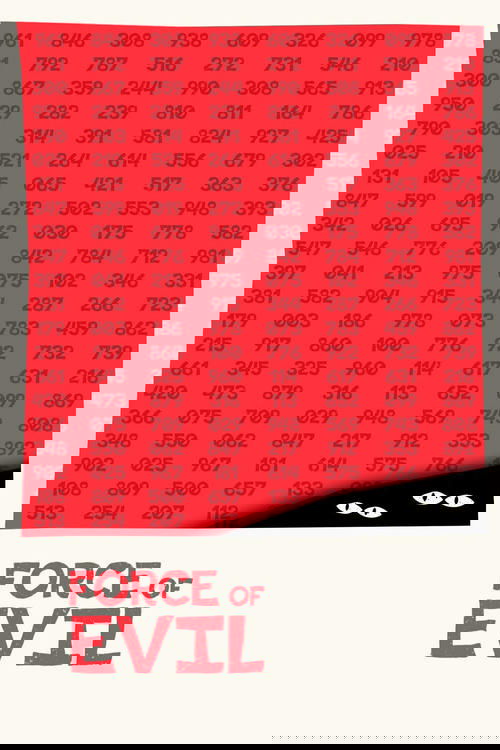
After a 21-year absence, Polonsky returned to directing in 1969 with the Western, Tell Them Willie Boy Is Here. Starring Robert Redford, Robert Blake, and Katharine Ross, it's a tale of a fugitive Native American pursued by a posse. Polonsky transformed it into an allegory about racism, genocide, and persecution. In a glowing New York Times review of the film, Roger Greenspun characterized Polonsky's long absence since Force of Evil as "perhaps the most wasteful injustice of the late 1940's Hollywood blacklisting".
While working in London on his next directorial project after Romance of a Horsethief (1971)—an adaptation of Mario and the Magician starring Albert Finney—Polonsky developed a severe heart problem which required emergency surgery. He survived the procedure but was advised by his cardiologist that he could no longer handle the pressure and workload of film directing, and so from then on he confined himself to writing and teaching.
Polonsky was an uncredited contributor to the Mommie Dearest (1981) screenplay (based on Christina Crawford's memoirs of her adoptive mother Joan Crawford), and to the screenplay adaptation of A. E. Hotchner's novel The Man Who Lived at the Ritz (1988). To supplement his income, Polonsky taught a two-year production class in San Francisco State University's Film Department from 1980 to 1982. In the 1990s, he taught a philosophy class called "Consciousness and Content" at the USC School of Cinema-Television.
He publicly objected when director Irwin Winkler rewrote his script for Guilty by Suspicion (1991), a film about the Hollywood blacklist era. Winkler converted Polonsky's lead character David Merrill (played by Robert De Niro) from a Communist into a wrongly accused liberal. At that point, Polonsky was so offended by the script changes, he had his name removed from the credits. He later said he turned down "a ton of money" to withdraw from Guilty by Suspicion, but he added, "I would have sold out long ago if I could be bought." In 1996, he appeared in Thom Andersen's documentary Red Hollywood, which focused on films made by the "Hollywood Ten" and other blacklistees.
Although Polonsky had resigned his CPUSA membership in the 1950s after rejecting Stalinism, he remained committed to Marxist political theory, stating in a 1999 interview: "I was a Communist because I thought Marxism offered the best analysis of history, and I still believe that."
Until his death, Polonsky was a virulent opponent of director Elia Kazan who had "named names" of his Communist associates to the HUAC. In 1999, Polonsky was furious when he learned that Kazan would receive an Academy Honorary Award for Lifetime Achievement. Polonsky said he hoped Kazan would be shot onstage: "It would no doubt be a thrill in an otherwise dull evening." He added that his latest project was designing a movable headstone: "That way if they bury that man in the same cemetery, they can move me."
In 1998, Polonsky was a co-winner (along with Casablanca screenwriter Julius Epstein) of the Career Achievement Award presented by the Los Angeles Film Critics Association. Polonsky said during an interview prior to the award ceremony: "I have no regrets. Fighting for lost causes is a perfectly proper activity for a human being. It's one reason I've had such a helluva good life."
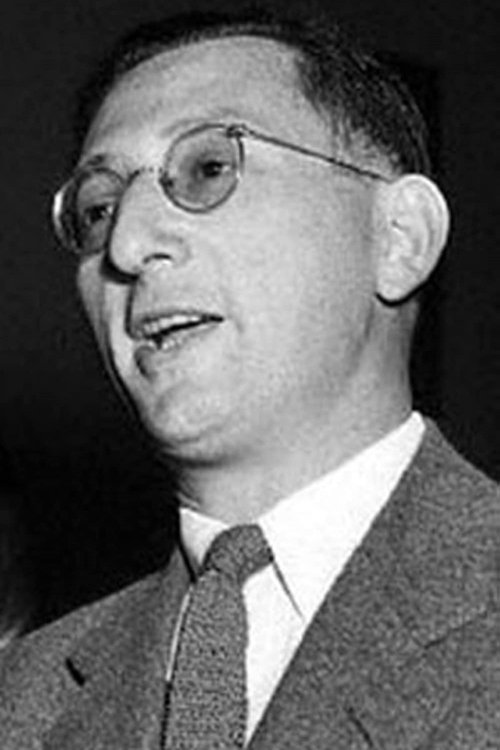
Abraham Polonsky died on October 26, 1999, in Beverly Hills, California. He was 88.