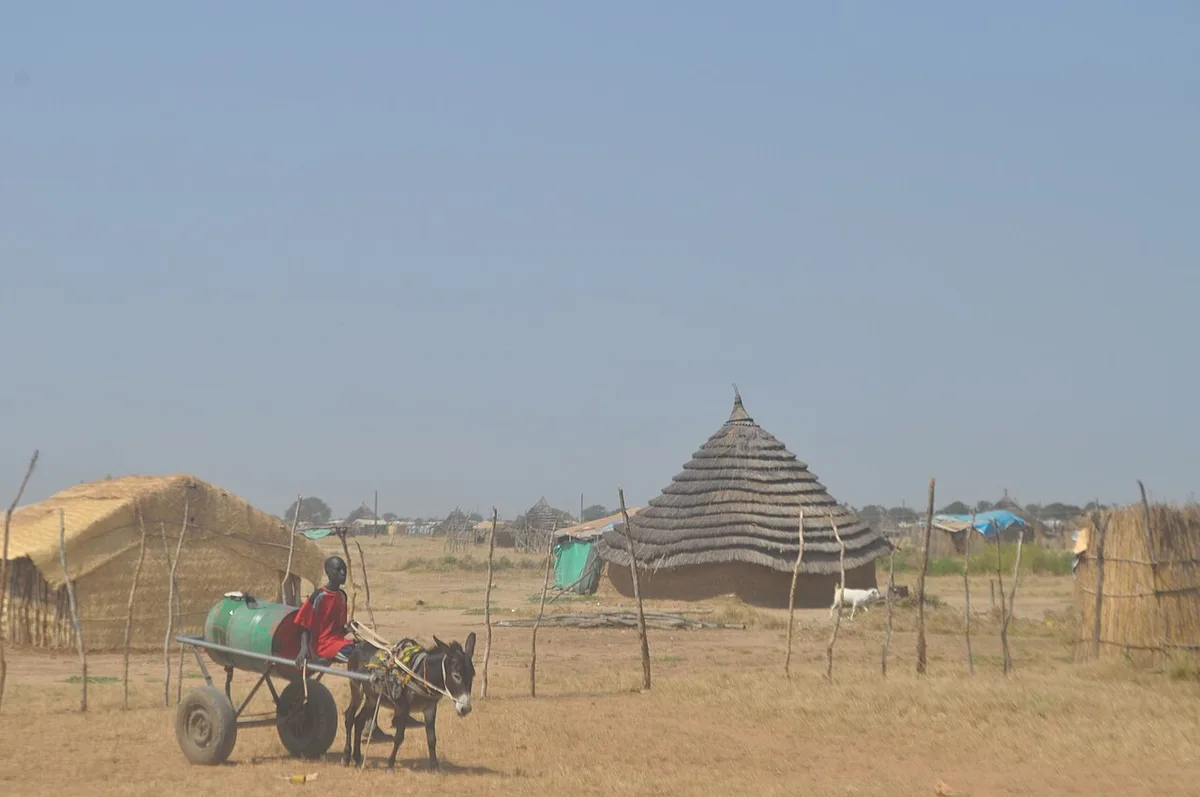
Overview
The Abyei Area is an area of on the border between South Sudan and Sudan that has been accorded "special administrative status" by the 2004 Protocol on the Resolution of the Abyei Conflict (Abyei Protocol) in the Comprehensive Peace Agreement (CPA) that ended the Second Sudanese Civil War. The capital of the Abyei Area is Abyei Town. Under the terms of the Abyei Protocol, the Abyei Area is considered, on an interim basis, to be simultaneously part of both the Republic of South Sudan and Republic of Sudan, effectively a condominium.
In contrast to the borders of the former district, the Abyei Protocol defined the Abyei Area as "the area of the nine Ngok Dinka chiefdoms transferred to Kordofan in 1905". In 2005, a multinational border commission established this to be those portions of Kordofan south of 10°22′30″ N. However, following continued disputes that erupted into violence and threatened the CPA, an international arbitration process redrew Abyei's boundaries in 2009 to make it significantly smaller, extending no further north than 10°10′00" N. This revised border has now been endorsed by all parties to the dispute.
History
The Sudan Tribune claims that the Dajo people were located in the region of Abyei prior to the seventeenth century, before being displaced by new migrants. From at least the eighteenth century Abyei was inhabited by the agro-pastoralist Ngok Dinka, a sub-group of the Dinka of Southern Sudan. The Messiria, a nomadic Arab people, who spend most of the year around their base at Muglad in northern South Kurdufan, would graze their cattle south to the Bahr river basin in Abyei during the dry season. Abyei's permanent residents were thus the southern Dinka, but half the year the Dinka were outnumbered by the Muslim, northern Misseriya. At the establishment of the Anglo-Egyptian Condominium, the Messiria were predominantly located in the province of Kordofan (considered "northern"), while the Ngok Dinka were located in Bahr el Ghazal (considered "southern"). In 1905, after continued raids by the Messiria into Ngok Dinka territory, the British redistricted the nine Ngok Dinka chiefdoms into Kordofan. The reason was threefold: to protect the Ngok Dinka from raids by the Messiria and thus pacify the area; to demonstrate that a new sovereign power was in control; and to bring the two feuding tribes under common administration. When the British left in 1956, they left the status of Abyei unclear.
From Wikipedia (CC BY-SA 4.0).