First woman to cross the Atlantic Ocean in 1928
In early 1928, inspired by Charles Lindbergh's successful solo transatlantic flight in 1927, American heiress Amy Phipps Guest – daughter of philanthropist (and Andrew Carnegie's business partner) Henry Phipps Jr. – announced her intention to become the first woman to cross the Atlantic by air. At the time, she was living in London with her husband, former British air minister Frederick Guest.
Using her wealth and social connections, Guest assembled a team of aviation professionals to support her endeavor. She hired pilot Wilmer Stultz from Williamsburg, Pennsylvania, to lead the flight. In March 1928, Stultz had made headlines for completing the first non-stop flight from New York to Havana, accompanied by Oliver LeBoutillier and passenger Mabel Boll, aboard the aircraft Columbia. The previous year, Stultz had also piloted transatlantic attempts for aviator Frances Wilson Grayson.
Guest also recruited mechanic and co-pilot Louis Gordon from Collin County, Texas. For the aircraft, she acquired a Fokker F.VIIb Tri-Motor from famed explorer Commander Richard E. Byrd. Byrd had initially planned to use the plane for an Antarctic expedition, but when his backer, Edsel Ford—son of Henry Ford—suggested using a Ford Tri-Motor instead, Byrd agreed and sold the Fokker. Byrd would later serve as a technical advisor for the transatlantic flight. Guest named the plane Friendship to honor the special relationship between the United States and her new home, Great Britain.
However, upon learning of her plans, Guest's family reacted with alarm. Her sons, Winston and Raymond, even threatened to quit Yale and Cambridge respectively. Under family pressure, Guest reluctantly gave up her dream of making the flight herself. Nevertheless, she remained determined to see a woman achieve the milestone. Instead of flying, she resolved to sponsor the project—and began searching for what she called "the right sort of girl". The candidate would need to be a pilot, well-educated, well-mannered, physically attractive, and American.
In April 1928, George Palmer Putnam—the publicist and publisher of Charles Lindbergh's best-selling autobiography "WE"—caught wind of the planned transatlantic attempt. Curious, he met with his friend Captain Hilton Railey and shared that he had heard Richard Byrd had sold his plane to a mysterious buyer, and that floats were being fitted to the Fokker at East Boston Airport. Determined to get involved, Putnam encouraged Railey to "crash the gate" and investigate. Railey found Wilmer Stultz in a bar and, catching him in a talkative mood, learned of Amy Guest and the true purpose of the newly outfitted seaplane Friendship.
Putnam and Railey resolved to take on the task of finding the "right sort of girl" on Amy Guest's behalf. Railey reached out to his friend, Rear Admiral Reginald R. Belknap, in Boston. After hearing the criteria outlined by Guest, Belknap immediately replied, "Call Denison House and ask for Amelia Earhart".
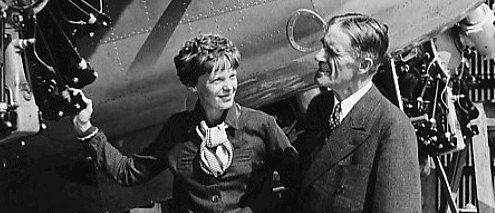
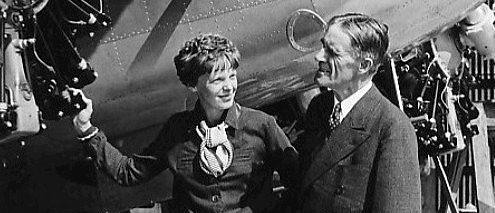
Upon receiving Railey's call, Earhart was initially skeptical, but agreed to meet him at his office. The moment she arrived, Railey was convinced he had found the right woman. Almost immediately, he asked her, "How would you like to be the first woman to cross the Atlantic?" Earhart wrote later "Under the circumstances... I couldn't say no."
However, Earhart had conditions before accepting the invitation. She made it clear that the role of a mere passenger held no appeal to her—she wanted the opportunity to take her turn at the controls. Although she lacked experience with multi-engine aircraft and non-visual instrument flying, it was agreed that, weather permitting, she would be allowed to pilot the aircraft for a portion of the journey.
It was written into her flight contract that Earhart would hold the title of commander aboard Friendship. She was granted final authority over all matters of policy, procedure, personnel, and any other issues that might arise during the mission—at least until their arrival in London. Both Wilmer Stultz and Louis Gordon would serve as her subordinates during the flight.
On June 3, 1928, after three unsuccessful attempts to take off from the Jeffries Yacht Club in East Boston, the crew of Friendship made critical adjustments to reduce weight. Six five-gallon cans of fuel were unloaded, and backup pilot Lou Gower voluntarily stepped down from the crew to further lighten the aircraft. The fourth attempt proved successful. After 67 tense seconds, Friendship lifted off the water and climbed steadily, heading north on the first leg of its transatlantic journey to Trepassey, Newfoundland. Friendship finally arrived in Trepassey on June 5, after poor weather forced Wilmer Stultz to make an unexpected landing in Halifax, Nova Scotia, the day before. Earhart later described the arrival at Trepassey as chaotic, likening it to a rodeo, with "maritime cowboys" in small boats aggressively vying to tow the plane, nearly entangling it in ropes and knocking crew member Slim Gordon into the water.
Stranded by relentless gales, dense fog, and mechanical setbacks, the crew of Friendship endured nearly a fortnight of frustrating delays. Their departure was repeatedly thwarted by unpredictable tides, stormy seas, and sputtering engines, turning what should have been a quick refuel stop into a test of endurance. When dawn broke clear and brisk over Newfoundland on June 17, and weather reports suggested marginally favorable conditions over the Atlantic, Earhart insisted they seize the opportunity to take off—despite objections from pilot Wilmer Stultz, who was nursing a severe hangover. After nearly two weeks of delays, Friendship finally took to the skies.
Meanwhile, at Harbour Grace, Newfoundland, the crew of the rival aircraft Columbia remained grounded. Captain Oliver LeBoutillier had reunited with socialite Mabel Boll, determined to make her own mark with a transatlantic crossing. However, LeBoutillier refused to risk flying in the still-uncertain weather and chose to wait for clearer skies. Frustrated and left behind, Boll could only listen for updates as Friendship soared eastward toward the United Kingdom. Furious and disheartened, she accused Earhart's team of receiving preferential treatment—claiming they had been provided with a more favorable weather report than the one given to Columbia. The accusation was firmly rejected by the local meteorologist, who maintained that both crews had received identical forecasts. Nevertheless, Friendship had gained the advantage—not by deception, but by daring.
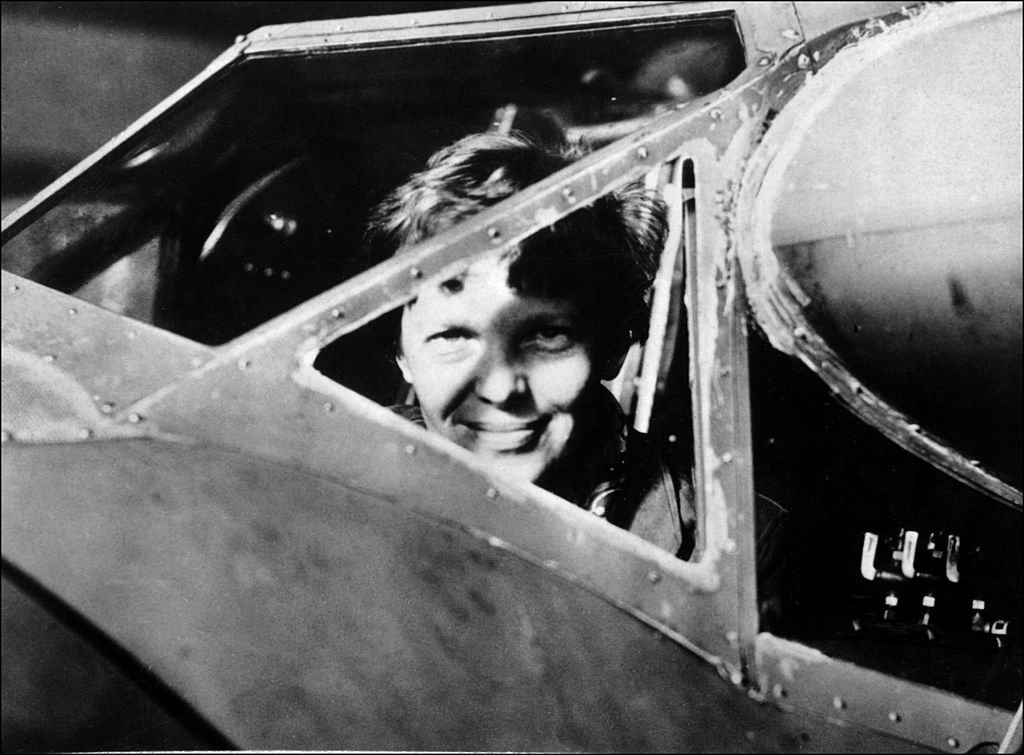
From early in the flight, the crew encountered fog, cloud cover, and poor visibility, forcing pilot Wilmer Stultz to rely entirely on instrument flying. Earhart, although a licensed pilot, had no experience with non-visual, instrument-only flying, and was therefore unable to take the controls. Instead, she kept the flight log and helped with navigation checks, while mechanic Louis Gordon managed fuel and engine performance.
Several hours into the flight, they spotted the SS America, an ocean liner under the command of Captain George Fried, roughly 75 miles south-east of Cobh, Ireland. Hoping to confirm their position, the crew of Friendship circled the vessel. Captain Fried, recognizing the significance of the aircraft, ordered the ship's name and location to be chalked on the deck to assist the crew. However, before the message could be prepared, Friendship had already vanished into the mist, continuing eastward. Critically, the aircraft's radio had failed early in the flight, leaving the crew unable to transmit or receive any messages. This failure meant they could not confirm their course, update anyone on their status, or receive weather updates. As a result, their arrival location would be a complete surprise to those on the ground.
After nearly 21 hours in the air, with low fuel and limited visibility due to persistent mist, the crew of Friendship were in urgent need of a suitable landing site. While flying along the coast of South Wales (although they did not know their location at the time), they identified an estuary and a nearby industrial town with a harbour as a potential landing area. The aircraft landed in the Burry Estuary, between the town of Burry Port and the village of Pwll, in Carmarthenshire, Wales. Upon landing, co-pilot Louis "Slim" Gordon climbed onto the starboard pontoon and secured the aircraft to a large navigation buoy off the coast of Burry Port, using rope kept on board for emergencies or for use as a sea anchor. This improvised mooring was the only available option in the area.
Despite their arrival following a transatlantic flight, initial local response was minimal. A few nearby railway workers observed the aircraft but did not approach. Eventually, Norman Fisher, a manager at the Frickers Metal Company in Burry Port, rowed out to the plane. Wilmer Stultz went ashore with him to make contact with their sponsors, who were waiting in Southampton. The original intention had been to refuel in the estuary and continue the journey to Southampton, where the crew's sponsors—including Captain Hilton Railey and Amy Phipps Guest—were assembled. Earhart and Gordon remained on board the aircraft, as the crew did not consider the flight officially complete at that point.
Several small boats approached the aircraft during this time, but Earhart declined to go ashore, intending to do so only if the flight continued as planned. Later that day, Captain Railey arrived in Burry Port by seaplane, accompanied by Allen Raymond, a reporter for The New York Times. Following discussions regarding the aircraft's fuel status, the challenging tidal conditions, and ongoing poor visibility, the decision was made to take Friendship to Burry Port Harbour. It would be there, in the small Welsh harbour town, that Earhart's transatlantic journey officially concluded—securing her place in history as the first woman to cross the Atlantic by air. Friendship moved under its own power from the navigation buoy to Burry Port Harbour, where the crew were then rowed ashore. A large and excitable crowd had gathered and local police escorted the aviators to the Frickers Metal Company office for safety, where the police awaited reinforcements while the crew were served refreshments.
As the world's press descended on Burry Port, Earhart attracted the majority of public and media attention, though she consistently emphasized that the primary credit belonged to the pilots. When interviewed after coming ashore, she remarked: "Bill (Wilmer Stultz) did all the flying—had to. I was just baggage, like a sack of potatoes ... maybe someday I'll try it alone." Later that evening, the crew travelled by car to the Ashburnham Hotel in nearby Pembrey, where they were able to rest and recover after their historic journey.
Friendship departed Burry Port Harbour at approximately 11 a.m. on 19 June 1928, beginning the final leg of its journey to Southampton, but not without a final moment of drama. Among the spectators that morning was Sir Arthur Whitten Brown, who—alongside John Alcock—had completed the first non-stop transatlantic flight in 1919. Living in nearby Swansea, Whitten Brown had travelled to Burry Port with his family to congratulate Earhart and present her with a bouquet of flowers. A boat was dispatched to carry him out to the Friendship, but unaware of his approach, the crew had already begun their departure. As a result, a potentially historic meeting between the first man and the first woman to cross the Atlantic nonstop by air was narrowly missed.
At Southampton, the Friendship crew were once again met by enthusiastic crowds. Among those welcoming them was Amy Phipps Guest—the flight's principal sponsor and owner of Friendship. It was the first time Guest and Earhart met in person.
She had changed aircraft and flew an Avro 594 Avian III, that was owned by Irish aviator Lady Mary Heath, the first woman to hold a commercial flying licence in Britain. Earhart later acquired the aircraft and had it shipped to the United States.