Overview
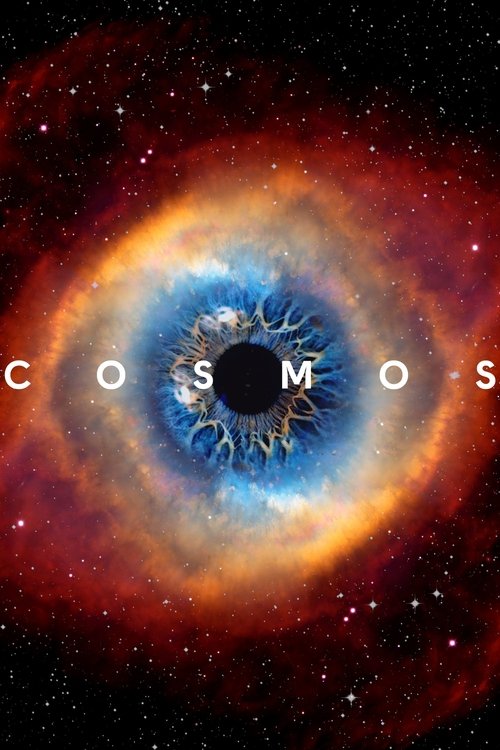
Ann Druyan ( ; born June 13, 1949) is an Emmy and Peabody Award-winning American documentary producer and director specializing in the communication of science. She co-wrote the 1980 PBS documentary series Cosmos, hosted by Carl Sagan, whom she married in 1981. She is the creator, producer, and writer of the 2014 sequel, Cosmos: A Spacetime Odyssey and its sequel series, Cosmos: Possible Worlds, as well as the book of the same name. She directed episodes of both series.
In the late 1970s, she became the creative director of NASA's Voyager Interstellar Message Project, which produced the golden discs affixed to both the Voyager 1 and Voyager 2 spacecraft. She also published a novel, A Famous Broken Heart, in 1977, and later co-wrote several best selling non-fiction books with Sagan.
Early life
Druyan was born in Queens, New York, the daughter of Pearl A. () and Harry Druyan, who co-owned a knitwear firm. Her family was Jewish. Druyan's early interest in math and science was, in her word, "derailed" when a junior high-school teacher ridiculed a question she asked about the universality of . "I raised my hand and said, 'You mean this applies to every circle in the universe?', and the teacher told me not to ask stupid questions. And there I was having this religious experience, and she made me feel like such a fool. I was completely flummoxed from then on until after college." Druyan characterized her three years at New York University as "disastrous", and it was only after she left school without graduating that she discovered the pre-Socratic philosophers and began educating herself, thus leading to a renewed interest in science.
Career
In the late 1970s, Druyan became the creative director of NASA's Voyager Interstellar Message Project. As creative director, Druyan worked with a team to design a complex message, including music and images, for possible alien civilizations. These golden phonograph records affixed to the Voyager 1 and Voyager 2 spacecraft are now beyond the outermost planets of the solar system, and Voyager 1 has entered interstellar space. Both records have a projected shelf life of one billion years.
From Wikipedia (CC BY-SA 4.0).