Writer and director
In 1995, an acquaintance introduced Kashyap to Shivam Nair. The day they met, Kashyap watched Taxi Driver (1976) at Nair's place, and the film inspired him to "write something". The team of Sriram Raghavan, Sridhar Raghavan and Shiv Subramaniam were working on two projects, one of which was a short TV series, Auto Narayan, based on the life of serial killer Auto Shankar; the second one was a film scripted by Kashyap. Auto Narayan got delayed because the script written by Subramaniam was not "working". Kashyap rewrote the script and got credit for the same, but it was scrapped. In 1997, he wrote the screenplay of Hansal Mehta's first film, Jayate which failed to find a theatrical release; and episodes of the TV series Kabhie Kabhie (1997).
In 1998, actor Manoj Bajpayee suggested his name to Ram Gopal Varma to write a film. Varma liked Kashyap's Auto Narayan and hired him, alongside Saurabh Shukla to write the script for his crime film, Satya (1998). Satya was a critical and commercial success, and is regarded as one of the best films of Indian cinema. He later collaborated with Varma in scripting Kaun (1999) and writing dialogues for Shool (1999). In 1999, he made a short film, titled Last Train to Mahakali for television. He wrote dialogues for Nayak: The Real Hero.
While working with Nair, Kashyap came across files related to the Joshi-Abhyankar serial murders that took place in Pune in 1976, which became the inspiration for his directorial debut Paanch. A crime thriller about a group of five friends of a rock band who turn into criminals. The film faced trouble with the Central Board of Film Certification because the board felt that it dealt unapologetically with sex, drugs and celebrated violence.
It was cleared by the Board in 2001, but remains unreleased due to some problems faced by the producer. In these years, he also wrote dialogues for many films including Paisa Vasool (2004), Mani Ratnam's Yuva (2004), the Canadian film Water (2005), Main Aisa Hi Hoon (2005) and Mixed Doubles (2006).
After a failed attempt to make Allwyn Kalicharan in 2003, Kashyap started working on Black Friday, a film based on the namesake book by Hussain Zaidi about the 1993 Bombay bombings. The Bombay high court put a stay on the release of the film, until the judgement in the bomb blasts case was delivered. It was decided after a petition filed by a group of 1993 bomb blasts accused, challenging the release of the film based on their case. The film got censorship clearance in 2007, and was released after two years meeting universal acclaim. Nikhat Kazmi gave the film a three star out of five rating and mentioned: "It was indeed a difficult film to make, yet the director has managed to grapple with all the loose threads and put them together in a composite whole. So much so, the film moves like a taut thriller, without ideology coloring the sepia frames."
The same year, Kashyap adapted Stephen King's short story "Quitters, Inc." into No Smoking. A surrealistic thriller about a chain-smoker who gets trapped in the maze of a person who guarantees will make him quit smoking. The film starring John Abraham, Ayesha Takia, Ranvir Shorey and Paresh Rawal in the leads with music by Vishal Bhardwaj, premiered at the Rome Film Festival. No Smoking received an overwhelming negative reception and failed at the box-office. CNN-IBN's Rajeev Masand called it a "colossal disappointment". His final release of the year was Return of Hanuman, an animation film about adventures of the Hindu god Hanuman.
In 2009, Kashyap had two releases. Dev.D, a contemporary takes on Sarat Chandra Chattopadhyay's novel Devdas. It was the twelfth film adaptation of the Bengali novel. Starring Abhay Deol who actually pitched the original idea of the film to Kashyap, with Mahie Gill and newcomer Kalki Koechlin portraying the characters of "Paro" and Chandramukhi respectively. The film met with generally positive reviews and strong box office results. Gulaal, a political drama, was his final release of that year. Kashyap started working on the film in 2005 and had finished 70–80 per cent of the film in 2006, when its producer fell ill. Later on, Zee Motion Pictures took over the project and was finally finished in 2008 and released on 13 March 2009. Anupama Chopra gave the film three stars and referred to Kashyap as "the Anti-Yash Chopra". Despite positive reviews, the film underperformed at the box office.
Mumbai Cutting (2010), an anthology film, was his next directorial venture. It consisted of eleven short films made by eleven directors. He directed one of the short films. It premiered at the 2008 Indian Film Festival of Los Angeles.
In 2011, Kashyap directed That Girl in Yellow Boots, a thriller starring Kalki Koechlin who also co-wrote the film with him. The film was screened at many festivals including 2010 Toronto International Film Festival, 67th Venice International Film Festival, Indian Film Festival of Los Angeles and the London Indian Film Festival. Shot in thirteen days, the film was released in September 2011. Roger Ebert gave it 3.5 out of 4 stars, praising the character-driven film and the portrayal of its lead alongside the city compared to most Hindi films: " a film like this provides a radically different view of India than you can find in the pleasures and excesses of Bollywood".
In 2012, Kashyap came up with his ambitious directorial venture Gangs of Wasseypur, which screened at the 2012 Cannes Directors' Fortnight, London Indian Film Festival, Toronto film festival and the Sundance Film Festival in 2013. The film with an ensemble cast, was a two-part crime saga centered on the coal mafia of Dhanbad with the story spanning from the early 1940s to 2009. The first part was released on 22 June, and the second on 8 August 2012, both receiving appreciation from Indian and international critics alike. The combined budget of the two films allowed it to be a box-office success.
In 2013, Kashyap directed That Day After Everyday, a 20-minute short film that was released on YouTube; starring Radhika Apte, Geetanjali Thapa and Sandhya Mridul. It showed the story of three working women facing troubles every day, both inside and outside their houses and how they overcome them. Dealing with issues like eve teasing and public molestation, the video got four lakh hits in two days. Speaking about the purpose of the project, Kashyap showed his intention to make people feel angry without offering a solution. The same year he teamed up with Dibakar Banerjee, Zoya Akhtar and Karan Johar to direct "Murabba", one of the four segments of anthology film Bombay Talkies. It was made to celebrate the 100 years of Indian cinema, and was screened at the 2013 Cannes Film Festival. The film did not perform well at the box office, but was well received by critics.
His next film was Ugly (2014), a thriller about the kidnapping of a struggling actor's daughter, and the events followed by it. It was screened in the Directors' Fortnight section at the 2013 Cannes Film Festival, receiving a standing ovation. The film's theatrical release was halted for over a year regarding censorship issues over depiction of smoking in it. Though it was released on 26 December 2014 to generally positive reviews.
Kashyap's next release was Bombay Velvet (2015), a period film set in Bombay in the 1960s, based on Princeton University Historian Gyan Prakash's book Mumbai Fables. It stars Ranbir Kapoor, Anushka Sharma and Karan Johar. The film was co-edited by the Academy Award winner editor Thelma Schoonmaker, who is known for her collaboration with Martin Scorsese. Released on 15 May 2015, some critics appreciated its retro-look, performances, styling and music, but criticized its faltered storytelling. It also emerged as a box-office failure. Bombay Velvet was Kashyap's dream project and its failure was a huge disappointment to him. In an interview with critic Rajeev Masand, Kashyap stated that at one point he wanted to leave India because he felt that people here did not understand his films but then realized that he did not manage the budget of the film.
A die-hard comics enthusiast, Anurag Kashyap once reached out to Raj Comics—one of India's biggest comic book companies—to acquire the rights to their gritty vigilante character Doga, envisioning what could have been India's first proper superhero film with a distinctly dark, grounded tone. After detailed discussions, he successfully secured the rights and began developing the project, positioning it as a major cinematic leap post Bombay Velvet. However, the scale of a superhero film demanded a massive budget, making the entire fate of Doga heavily dependent on the box office performance of Bombay Velvet—if it succeeded, the film would greenlight Kashyap's ambitious vision. Unfortunately, the film failed miserably at the box office, collapsing under its own expectations, and with that financial blow, the Doga project fell apart, quietly slipping into development hell and leaving behind a fascinating "what could have been" moment in Indian cinema history.
In 2016, Kashyap co-wrote and directed Raman Raghav 2.0, a thriller inspired by the notorious serial killer Raman Raghav. It starred Nawazuddin Siddiqui as the title character along with Vicky Kaushal. The film premiered at the 2016 Sydney Film Festival and the 2016 Cannes Film Festival, in the Director's Fortnight section to a positive response.
After working on Raman Raghav 2.0, Kashyap received a script from Vineet Kumar Singh of Mukkabaaz. He did not like the initial script but was excited by a "10-minute chunk" that he had not come across before. He then rewrote the script with his team having the 10-minute as a base. Singh trained himself for six months for the film. The film was screened at 2017 Toronto International Film Festival, the Mumbai Film Festival
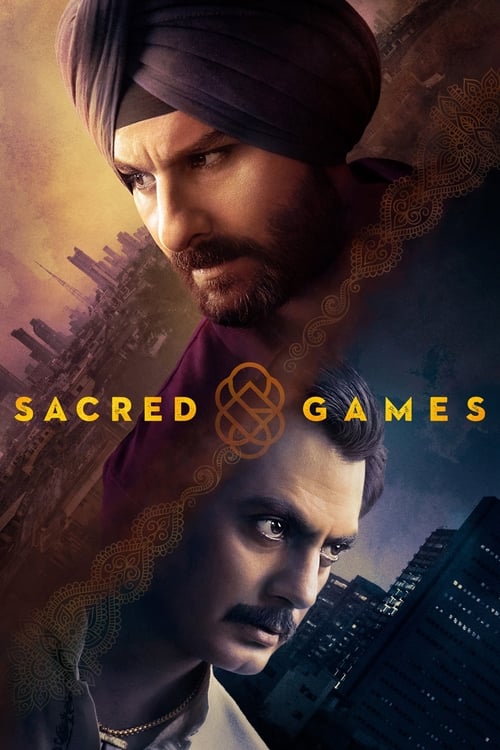
and was released theatrically on 12 January 2018. Saibal Chatterjee of NDTV called it "one of the more important films to have come out of the Mumbai movie industry in recent times." In 2018, Kashyap again collaborated with Banerjee, Akhtar and Johar for the anthology film Lust Stories. Based on the theme of lust, it had stories told from the female perspective. Kashyap's story had Radhika Apte and Akash Thosar. The film was released on Netflix on 15 June 2018. It was followed by India's first Netflix Original series, the crime thriller Sacred Games, based on Vikram Chandra's novel of the same name. Kashyap co-directed the series with Vikramaditya Motwane. The show received critical acclaim, with Lincoln Michel of GQ calling it the "best Netflix original in years." His final directorial venture of the year was Manmarziyaan, a love triangle set in Punjab, starring Abhishek Bachchan, Tapsee Pannu and Vicky Kaushal. Written by Kanika Dhillon, the film was premiered at the 2018 Toronto International Film Festival and was released in India on 16 September to positive reviews. In December 2019, Kashyap launched the audio web-series titled Thriller Factory which he directed for Amazon's Audible Suno application. It features voices of Tabu and Nawazuddin Siddiqui.
The next year, Kashyap reunited with his Lust Stories team to direct the horror anthology film Ghost Stories. His story was about a pregnant woman going through anxiety. It was released on Netflix on 1 January 2020. He continued his association with Netflix and released his directorial venture Choked (2020) on the same. Starring Saiyami Kher and Roshan Mathew, the film tells the story of a bank cashier who finds a stash of cash hidden in her kitchen sink.
In 2022, Kashyap directed the science fiction thriller Dobaaraa. The film is an official remake of the 2018 Spanish film Mirage; it opened at the London Indian Film Festival and was released theatrically on 19 August 2022. Dobaaraa met with mostly positive reviews with Tanul Thakur of The Wire writing: "A sharp adaptation, the film is deeper than it cares to admit and never slips into an instructional mode."
Just months after releasing Dobaara, Kashyap released another directorial venture titled Almost Pyaar with DJ Mohabbat. The musical romantic drama starred Alaya F and debutant Karan Mehta. It had its world premiere at the 2022 Marrakech International Film Festival and the film was released theatrically on 3 February 2023.
In 2023, Kashyap wrote and directed the thriller film Kennedy. He initially wanted to cast Vikram and had named the film after Vikram's real name. However, they could not work together because of some miscommunication. The role eventually went to Rahul Bhat; Sunny Leone also appears in a pivotal role. The film had its world premiere at the 2023 Cannes Film Festival.
His next directorial venture, Bandar, starring Bobby Deol, Sanya Malhotra, Sapna Pabbi, and Saba Azad, in pivotal roles, premiered at the 2025 Toronto International Film Festival. It was theatrically released on 5 June 2026 to positive reviews from critics. However, the film received criticism for its misogynistic undertones, and its themes were said to be out of touch with the MeToo movement. Kashyap acknowledged the validity of the criticisms, and further stated that the final cut of the film was not his original, and therefore, he distanced himself from the film.