Historical accuracy
Although some characters are merged, the film is generally faithful to events. Most historians doubt that Germany could realistically have won the Battle of Britain, given Britain's superiority in aircraft production, its vast radar and surveillance infrastructure, the superior experience of its pilots, and the inherent advantage of fighting an air war over its home territory. While loss of pilots was an issue, Britain could supplement its ranks with experienced pilots who had fled Poland, Czechoslovakia, France, Belgium, and other countries Germany had conquered, as well as pilots from the Dominions and volunteers from the United States.
The film includes a sequence which relates the events of 15 August 1940, when the Luftwaffe attempted to overwhelm fighter defences by simultaneous attacks on northern and southern England, reasoning that "even a Spitfire can't be in two places at once". North East England was attacked by 65 Heinkel He 111s escorted by 34 Messerschmitt Bf 110s, and RAF Driffield was attacked by 50 unescorted Junkers Ju 88s. Out of 115 bombers and 35 fighters sent, 16 bombers and seven fighters were lost. As a result of these casualties, Luftflotte 5 did not appear in strength again in the campaign.
The confrontation between Keith Park and Trafford Leigh-Mallory in front of Dowding is fictitious, though there undoubtedly were tensions between the two sides. The film does not mention that following the Battle of Britain Dowding and Park were replaced by Sholto Douglas and Leigh-Mallory, despite Dowding and Park having demonstrated that Leigh-Mallory's "Big Wing" strategy was unworkable.
The scene in the operation room in which the British listen to their fighters' wireless transmissions relies on dramatic licence, as the operations room received information by telephone from the sector airfields. The scenes at the end in which the RAF pilots are seen suddenly idle and left awaiting the return of the Luftwaffe raids similarly rely on licence, as the fighting fizzled out through late September, although daylight raids continued for some weeks after the 15 September engagement, and the British regard 31 October 1940 as the official end of the Battle of Britain. In the film's combat scenes, there was no attempt to recreate tracer rounds. Göring's train in the film is Spanish rather than French (the Renfe - Spanish National Railways - markings are just visible on its tender), and the steam locomotive shown did not come into service on Renfe until 1951.
The film does not make reference to the Italian pilots from Corpo Aereo Italiano, an Italian expeditionary force, that fought in the Battle of Britain, nor does the list of participants and casualties that is part of the end credits. Although the State of Israel was not created until 1948, the list attributes one pilot to it, referring to RAF officer George Goodman, an ace born in Haifa during the Palestinian Mandate (when the region was under British administration), who was killed in action in 1941.
Reported German losses during the battle derive from claims made and believed at the time, but subsequent research has shown that these were substantial overestimates, as a result of issues such as multiple claims on the same downed aircraft. The actual number of German losses on 15 September, for example, was 56.
Pilot Officer Archie, played by Edward Fox, is based on Ray Holmes of No. 504 Squadron RAF. On 15 September 1940, now known as Battle of Britain Day, Holmes used his Hawker Hurricane to destroy a Dornier Do 17 bomber over London by ramming but at the cost of his aircraft (and almost his own life). Holmes, making a head-on attack, found his guns inoperative, and flew his plane into the top-side of the German bomber, cutting off the rear tail section with his wing and causing the bomber to dive out of control and crash. The Dornier pilot, Feldwebel Robert Zehbe, bailed out, only to die later of wounds suffered during the attack, while the injured Holmes bailed out of his plane and survived. As the RAF did not practise ramming as an air combat tactic, this was considered an impromptu manoeuvre and an act of selfless courage; Holmes was feted by the press as a war hero who saved Buckingham Palace. This event became one of the defining moments of the Battle of Britain and elicited a congratulatory note to the RAF from Queen Wilhelmina of the Netherlands, who had witnessed the crash. The film does not depict the aeroplane ramming into the bomber's tail section; rather, it portrays Pilot Officer Archie simply shooting it down.
Skipper, played by Robert Shaw, is based loosely on Squadron Leader Adolph 'Sailor' Malan, a South African fighter ace and No. 74 Squadron RAF commander during the Battle of Britain. Section Officer Maggie Harvey, played by Susannah York, is based on Felicity Peake, a young section officer at Biggin Hill in 1940. Her reaction to the heavy raid that resulted in the deaths of several Women's Auxiliary Air Force (WAAF)s and confrontation with Warrant Officer Warwick were based on real events.
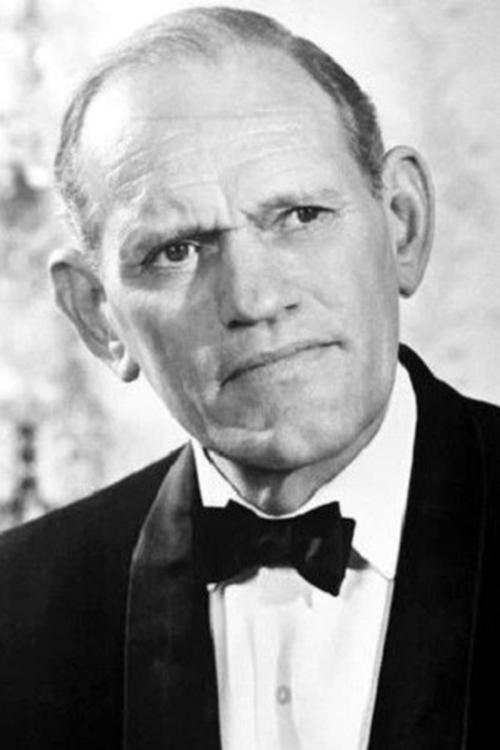
An RAF officer pilot with a disfigured face appears in a scene with Kenneth More and Susannah York. He was not an actor, but retired Squadron Leader Bill Foxley, a trainee navigator with RAF Bomber Command during World War II who suffered severe burns following a crash. He was notable for the support he gave to other burn victims and for this film appearance, which gave a wide audience some awareness of the facial burns suffered by World War II aircrews and the reconstructive surgery of that era.
The scene of a school being destroyed could have been the South Hallsville School on Agate Street in Canning Town, which was hit directly by a parachute mine on Saturday 10 September 1940, with around 200 dead, but it could be as high as 600 dead. The Hallsville Primary School is there today.
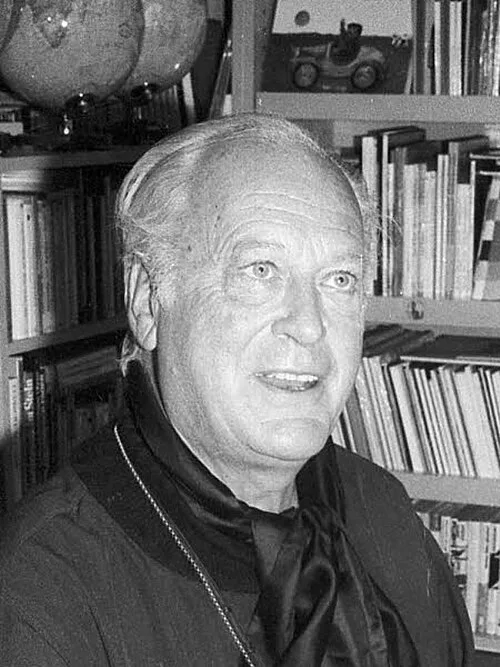
The character of Major Falke is based on Generalleutnant Adolf Galland, a famous ace during the Second World War who actually did ask Reichsmarshall Göring for "an outfit of Spitfires for my squadron". In his autobiography, Galland explained that the request was only meant to upset Göring because he was "unbelievably vexed at the lack of understanding and stubbornness with the command who gave us orders we could not execute", and that, while he felt the Spitfire was more manoeuvrable than the Bf 109, and therefore more suitable as a defensive fighter, "fundamentally I preferred the Bf 109". Galland served as a German technical adviser on the film, and he was joined by his friend Robert Stanford Tuck. He was upset about the director's decision not to use his real name and, during filming, took exception to a scene in which Kesselring is shown giving the Nazi salute, rather than the standard military salute; journalist Leonard Mosley witnessed Galland spoil a shot and have to be escorted off the set. Subsequently, Galland threatened to withdraw from the production, warning of "dire consequences for the film if the scene stayed in". When the finished scene was screened before Galland and his lawyer, he was persuaded to accept it after all.