Overview
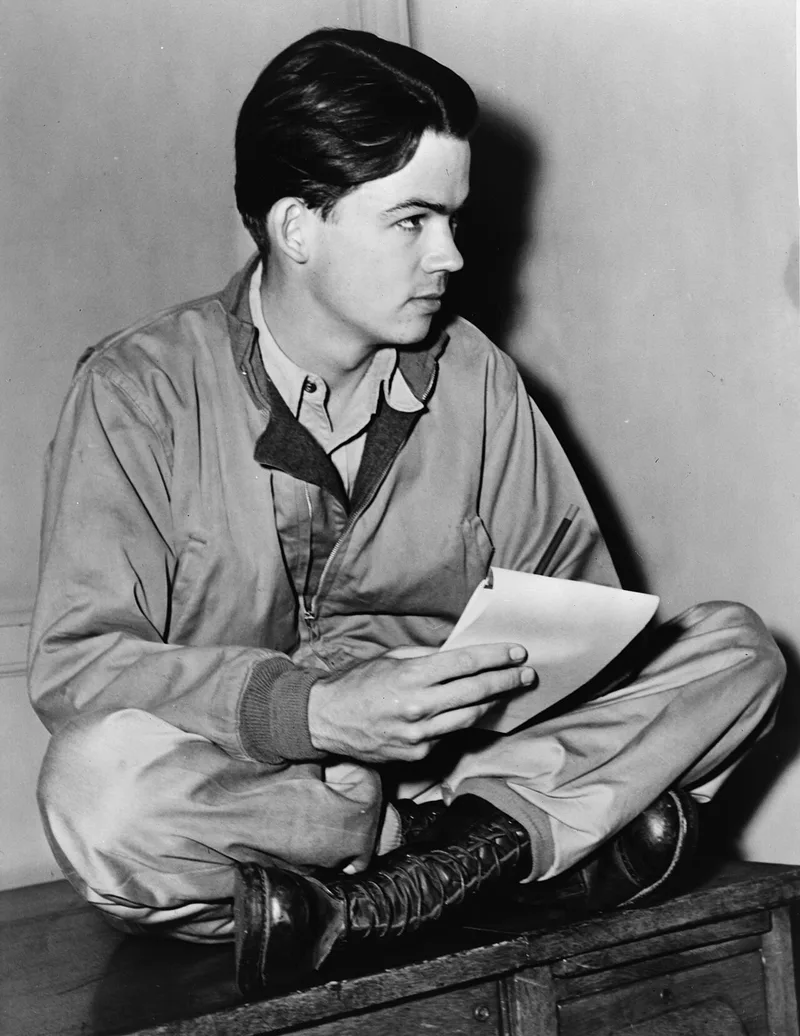
William Henry Mauldin (; October 29, 1921 – January 22, 2003) was an American editorial cartoonist who won two Pulitzer Prizes for his work. He was most famous for his World War II cartoons depicting American soldiers, as represented by the archetypal characters Willie and Joe, two weary and bedraggled infantry troopers who stoically endure the difficulties and dangers of duty in the field. His cartoons were popular with soldiers throughout Europe, and with civilians in the United States as well. However, his second Pulitzer Prize was for a cartoon published in 1958, and possibly his best-known cartoon was after the Kennedy assassination.
Early life
Mauldin was born in Mountain Park, New Mexico, into a family with a tradition of military service. His father, Sidney Albert Mauldin (né Bissell, but adopted after being orphaned) served as an artilleryman in World War I. Bill's grandfather by way of his father's adoption, for whom Bill was named, had been a civilian scout in the Apache Wars. After his parents' divorce, Bill and his older brother Sidney moved to Phoenix, Arizona in 1937 and attended Phoenix Union High School. It was there that he began his career in editorial journalismwriting for PUHS's Coyote Journal. Bill did not graduate with his class (he was later granted a diploma in 1945) and in 1939 he took courses at the Chicago Academy of Fine Arts where he studied political cartooning with Vaughn Shoemaker. While in Chicago, Mauldin met Will Lang Jr. and became fast friends with him. Lang Jr. later became a journalist and a bureau head for Life magazine.
World War II
Shortly after returning to Phoenix in 1940, Mauldin enlisted in Company D, 120th Quartermaster Regiment, of the Arizona National Guard, at Phoenix, Arizona. His division, the 45th Infantry Division, was federalized just two days later. While in the 45th, Mauldin volunteered to work for the unit's newspaper, drawing cartoons about regular soldiers or "dogfaces". Eventually he created two cartoon infantrymen, Willie and Joe, who represented the average American GI.
During July 1943, Mauldin's cartoon work continued when, as a sergeant of the 45th Infantry Division's press corps, he landed with the division in the invasion of Sicily and later in the Italian campaign. Mauldin began working for Stars and Stripes, the American soldiers' newspaper; as well as the 45th Division News, until he was officially transferred to the Stars and Stripes in February 1944.
From Wikipedia (CC BY-SA 4.0).