




The British royal family comprises King Charles III and other members of his family. There is no fixed legal definition of its membership, although the Royal Household has issued various lists identifying those regarded as part of the family. Members typically support the monarch in carrying out public engagements and undertake charitable, diplomatic, and ceremonial duties.
Senior royals collectively undertake thousands of official engagements each year across the United Kingdom, the British Overseas Territories, the Crown Dependencies and abroad, including state visits, national commemorations, and patronage activities. The family also represents the United Kingdom internationally and contributes to the country's soft power through its public presence and ceremonial role.
Initiatives associated with the family include charitable foundations such as The King's Trust and The Royal Foundation, which focus on youth development, mental health, conservation, and early childhood. The monarchy operates within a constitutional framework, with succession determined by statute and long‑standing convention.
Contents
Members
The Lord Chamberlain's List of the Royal Family, published in November 2025, identifies all of King George VI's living descendants and their spouses, together with Queen Elizabeth II's cousins who hold royal rank and their spouses. The list is used for regulatory purposes, including the authorised use of royal symbols and images.
During the reign of Queen Elizabeth II, the royal website stated that "generally speaking, the children, grandchildren and great-grandchildren of a Sovereign, as well as their spouses, are members of the Royal Family. First cousins of the monarch may also be included. Children are included on coming of age or after they have completed their education."
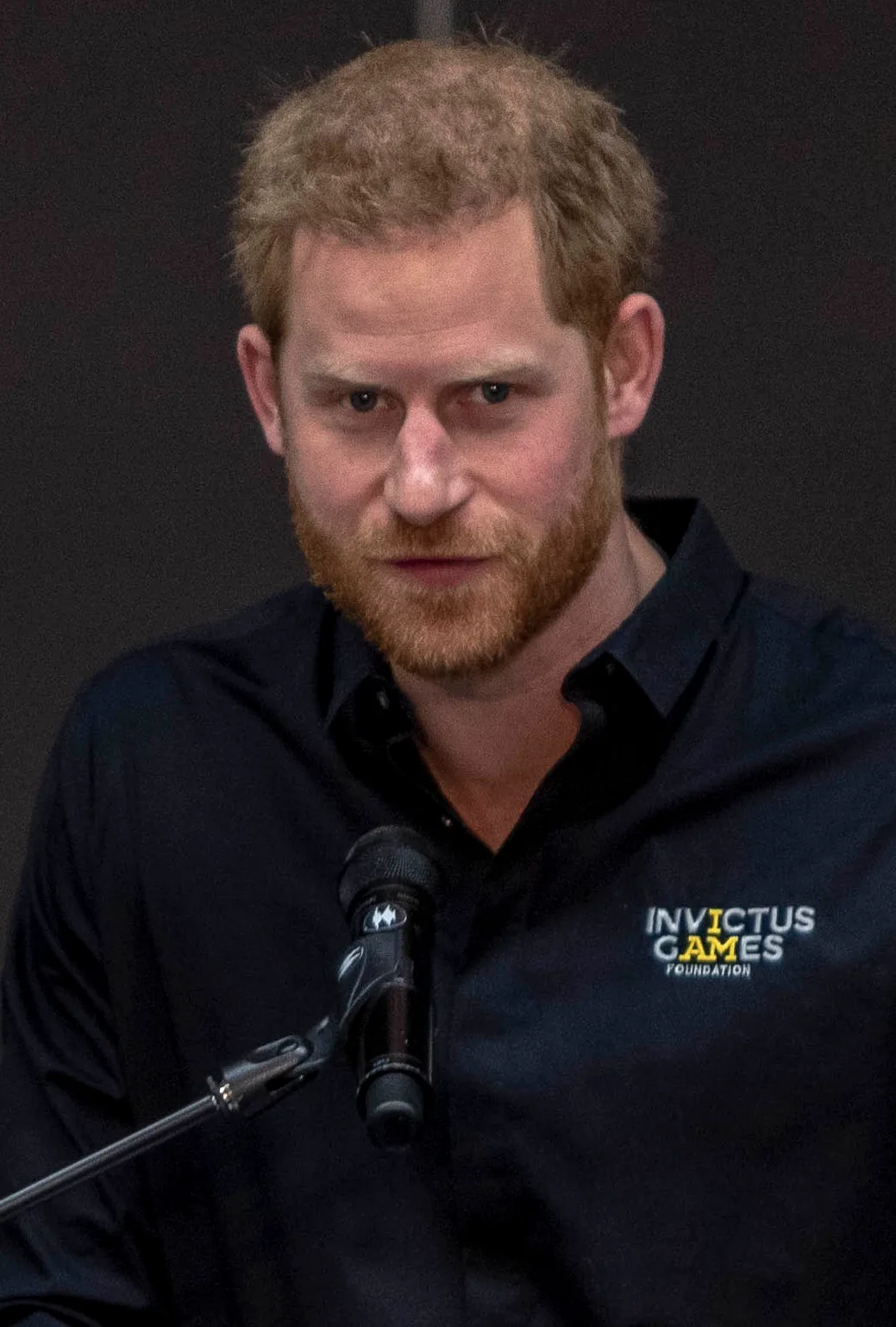
The website of the royal family currently lists the following as "Members of the Royal Family": King Charles III and Queen Camilla; William, Prince of Wales, and Catherine, Princess of Wales; Prince Harry, Duke of Sussex, and Meghan, Duchess of Sussex; Anne, Princess Royal; Prince Edward, Duke of Edinburgh, and Sophie, Duchess of Edinburgh; Prince Richard, Duke of Gloucester, and Birgitte, Duchess of Gloucester; Prince Edward, Duke of Kent; and Princess Alexandra, The Honourable Lady Ogilvy. Among them, the Duke and Duchess of Sussex do not undertake royal duties. Those who do perform official engagements on behalf of the monarch are often described as "working royals".
Other members of the royal family who hold royal rank but do not carry out official duties include Prince George, Princess Charlotte, and Prince Louis of Wales; Prince Archie and Princess Lilibet of Sussex; Princess Beatrice; Princess Eugenie; and Prince Michael of Kent and Princess Michael of Kent.
Titles and surnames
The monarch's children and grandchildren (if they are children of the monarch's sons), and the children of the eldest son of the Prince of Wales, are automatically entitled to be known as prince or princess with the style His or Her Royal Highness (HRH). Peerages, often dukedoms, are bestowed upon most princes prior to marriage. Peter Phillips and Zara Tindall, children of the King's sister, Princess Anne, are, therefore not prince and princess. Lady Louise Windsor and James, Earl of Wessex, though entitled to the styles "Princess Louise of Edinburgh" and "Prince James of Edinburgh", respectively, are not called prince and princess, as their parents, the Duke and Duchess of Edinburgh, preferred them to have more modest titles.
By tradition, wives of male members of the royal family share their husbands' title and style. Princesses by marriage do not have the title prefixed to their own name but to their husband's; for example, the wife of Prince Michael of Kent is Princess Michael of Kent. Sons of monarchs are customarily given dukedoms upon marriage, and these peerage titles pass to their eldest sons.
Male-line descendants of King George V, including women until they marry, bear the surname Windsor. The surname of the male-line descendants of Queen Elizabeth II, except for women who marry, is Mountbatten-Windsor, reflecting the name taken by her Greek-born husband, Prince Philip, Duke of Edinburgh, upon his naturalisation. A surname is generally not needed by members of the royal family who are entitled to the titles of prince or princess and the style His or Her Royal Highness. Such individuals use surnames on official documents, such as marriage registers, however.
Public role
Members of the royal family support the monarch in "state and national duties", while also carrying out charitable work of their own. If the sovereign is indisposed, two counsellors of state are required to fulfil the role, with eligibility restricted to the sovereign's spouse and the first four people in the line of succession over the age of 21. In 2022, the then Earl of Wessex and the Princess Royal were added to the list by special legislation.
Each year the family "carries out over 2,000 official engagements throughout the UK and worldwide", entertaining 70,000 guests and answering approximately 100,000 letters. Engagements include state funerals, national festivities, garden parties, receptions, and visits to the Armed Forces. Many members have served in the Armed Forces themselves, including the King's brothers and sons. Engagements are recorded in the Court Circular, a daily list of appointments and events attended by the royal family. Public appearances are often accompanied by walkabouts, during which the royals greet and converse with members of the public outside events. The start of this tradition is sometimes attributed to a tour undertaken by Queen Elizabeth II in 1970 to Australia and New Zealand. Queen Elizabeth the Queen Mother also interacted with crowds during a visit to Canada in 1939 and in 1940 during the Blitz in London.
Annual events attended by the royal family include the State Opening of Parliament, Trooping the Colour, and the National Service of Remembrance. According to historian Robert Lacey, Queen Elizabeth II once said that investitures of honours recipients are the most important duty she performed. Besides the King, Prince William and Princess Anne also conduct investitures. Members of the royal family represent the monarch on official visits and tours to other countries as ambassadors to foster diplomatic relations. They have also attended Commonwealth meetings on the monarch's behalf. The family participates in state visits on the advice of the Foreign and Commonwealth Office, which includes welcoming dignitaries and attending a formal banquet. Journalist James Forsyth has described the family as "soft power assets".
Given the royal family's public role and activities, it is sometimes referred to by courtiers as "The Firm", a term that originated with George VI. Members of the royal family are expected to remain politically and commercially independent, avoiding conflicts of interest with their public roles. They are regarded as British cultural icons, with young adults from abroad identifying the family among the figures they most associate with British culture. Members are also expected to promote British industry. Royals are typically members of the Church of England, headed by the monarch. When in Scotland they attend the Church of Scotland as members, and some have served as Lord High Commissioner to the General Assembly.
Media and criticism
Royal biographer Penny Junor noted that the monarchy has historically cultivated an idealised domestic image, stating: "Right back to the Queen Mother, and the two little princesses, the whole idea was that the monarchy was a model family". According to author Edward Owen, during the Second World War the monarchy sought to project a "more informal and vulnerable family", which had a unifying effect on the nation during a period of instability. In 1992, a series of events undermined this image: the Princess Royal and Captain Mark Phillips divorced; the Prince and Princess of Wales separated; a biography detailing the Princess's bulimia and self-harming was published; private telephone conversations involving the Princess of Wales were leaked; intimate telephone conversations between the Prince of Wales and Camilla Parker Bowles also surfaced; the Duke and Duchess of York separated; and photographs of the topless Duchess having her toes sucked by another man appeared in tabloids. Historian Robert Lacey said that these developments "put paid to any claim to being a model of family life". The scandals contributed to public reluctance to fund repairs to Windsor Castle following the 1992 fire. A further "PR disaster" was the royal family's initial response to the death of Diana, Princess of Wales, in 1997.
In the 1990s, the royal family established the Way Ahead Group, comprising senior family members and advisers and chaired by Elizabeth II, in an effort to adapt to public expectations. The wedding of Prince William and Catherine Middleton in April 2011 generated a "tide of goodwill", and by Elizabeth II's Diamond Jubilee in 2012 the family's public image had recovered. A 2019 YouGov poll indicated that two-thirds of Britons favoured retaining the monarchy. The role and public relations of the extended royal family again came under scrutiny due to the Duke of York's association with convicted sex offenders Jeffrey Epstein and Ghislaine Maxwell, allegations of sexual abuse, his widely criticised 2019 interview on the subject and the subsequent 2021 lawsuit. In June 2019, the family, several of whose members advocate for environmental causes, faced criticism after reports that its carbon footprint from business travel had "doubled".
In a 2021 interview, the Duchess of Sussex, who is of biracial heritage, relayed second-hand that there had been "concerns and conversations" within the royal family about the skin colour of their son, Archie, while the Duke of Sussex stated it was a single instance. The interview received a mixed response from the British public and media, and several of their claims were questioned. The Duke of Cambridge said the royal family were "very much not a racist family". In June 2021, documents revealed that "coloured immigrants or foreigners" had been barred by Elizabeth II's chief financial manager in the 1960s from working as clerks, prompting black studies professor Kehinde Andrews to argue that "the royal family has a terrible record on race". In response, the palace stated that it complied "in principle and in practice" with anti-discrimination legislation, and that second-hand accounts of "conversations from over 50 years ago should not be used to draw or infer conclusions about modern-day events or operations."
Funding
Senior members of the royal family, who represent the monarch, draw their income from public funds known as the Sovereign Grant, an annual payment of the British government to the monarch. It comes from the revenues of the Crown Estate, which are commercial properties owned by the Crown. Members of the royal family who receive money from the sovereign grant must be accountable to the public for it and are not permitted to make money from their name. The monarch also receives the income of the Duchy of Lancaster, and the Prince of Wales receives the income of the Duchy of Cornwall.
The security expenses for the royal family are typically covered by the Metropolitan Police rather than the sovereign grant. The royal family, the Home Office, and the Metropolitan Police decide which members have a right to taxpayer-funded police protection. Extended members do not retain automatic right to protection; in 2011, Princesses Beatrice and Eugenie ceased receiving police security.
Residences
The sovereign's official residence in London is Buckingham Palace. Announcements of the births and deaths of members of the royal family are traditionally attached to its front railings. Both Buckingham Palace and Windsor Castle, the monarch's weekend home in Berkshire, are used to host state visits. The Palace of Holyroodhouse and Hillsborough Castle serve as official royal residences when the monarch is in Scotland or Northern Ireland, respectively.
Clarence House served as the official residence of Charles III from 2003, when he was Prince of Wales, until his accession on 8 September 2022. Another London residence of his during his tenure as Prince of Wales was St James's Palace, which he shared with the Princess Royal and Princess Alexandra. Because Buckingham Palace is undergoing renovation, the King and Queen continue to reside at Clarence House. In June 2026, it was officially announced that the King and Queen would not reside at Buckingham Palace after renovations. The King also privately owns Sandringham House in Norfolk and Balmoral Castle in Aberdeenshire, which are his personal property, inherited from Elizabeth II. The Princess Royal resides at Gatcombe Park in Gloucestershire, and Princess Alexandra at Thatched House Lodge in Richmond.
The Prince and Princess of Wales and the Duke and Duchess of Gloucester have their official London residences and offices in apartments at Kensington Palace. The Prince and Princess of Wales and their children moved to Forest Lodge in Windsor Great Park in 2025. The Duke of Kent resides in Wren House in the grounds of Kensington Palace. Andrew Mountbatten-Windsor lives at Marsh Farm on the Sandringham Estate, while the Duke and Duchess of Edinburgh reside at Bagshot Park in Surrey.