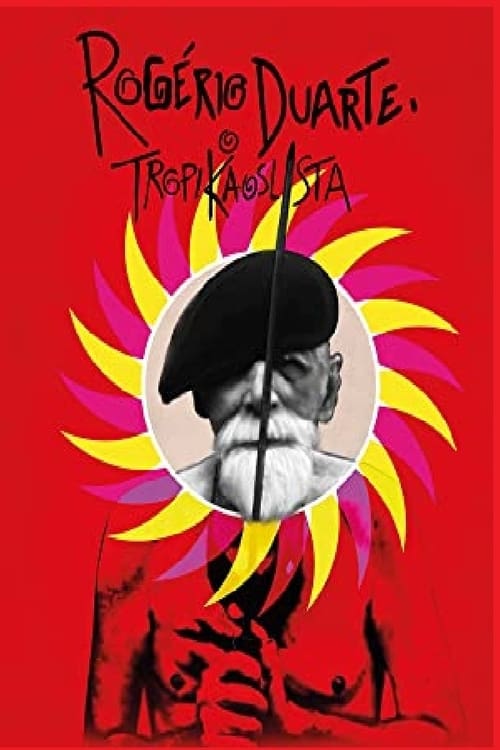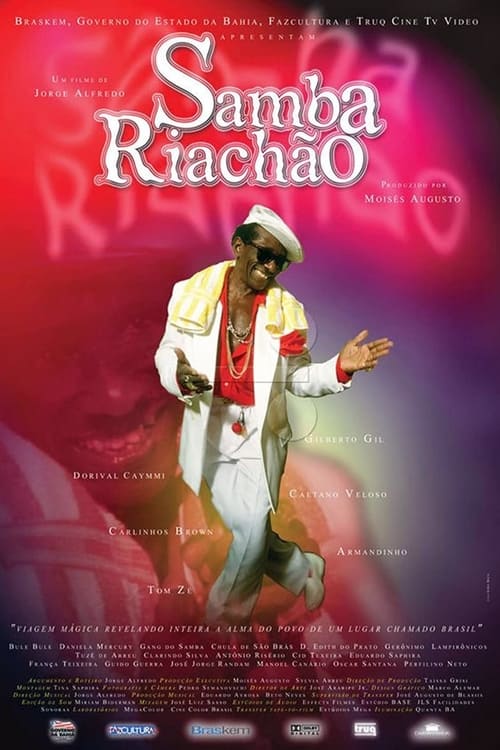




Caetano Emanuel Viana Teles Veloso (Brazilian Portuguese: [kajˈtɐnu emɐnuˈɛw viˈɐnɐ ˈtɛliz veˈlozu]; born 7 August 1942) is a Brazilian singer-songwriter, musician, writer, and political activist. In the late 1960s, he helped develop Tropicália, a Brazilian musical movement that combined Brazilian popular music with rock and roll and avant-garde influences. Along with Gilberto Gil, Gal Costa, Tom Zé, and Os Mutantes, he participated in the 1968 collaborative album Tropicália: ou Panis et Circencis, which became a musical manifesto of the movement.
Veloso's anti-authoritarian political stance brought him into conflict with the Brazilian military dictatorship, which censored and banned some of his songs. He and Gil were arrested and eventually released on condition that they leave Brazil. They lived in exile in London before Veloso returned to Brazil in 1972. His subsequent work combined international musical styles with Brazilian folkloric traditions, and his popularity expanded outside Brazil during the 1980s.
Veloso has continued to record and perform internationally. He has received nine Latin Grammy Awards and two Grammy Awards, and in 2012 was named the Latin Recording Academy Person of the Year.
Contents
Biography
Veloso was born in Santo Amaro da Purificação, Bahia, Brazil, the fifth of seven children of José Teles Veloso (1901–1983) and Claudionor Viana Teles Veloso (1907–2012). His childhood was influenced greatly by artistic endeavors: he was interested in both literature and filmmaking as a child, but focused mainly on music. The musical style of bossa nova and João Gilberto, one of its most prominent exponents, were major influences on Veloso's music as he grew up. Veloso was 17 years old when he first heard Gilberto, whom he describes as his "supreme master". He recognizes Gilberto's contribution to Brazilian music as new—"illuminating" the tradition of Brazilian music and paving the way for future innovation. Veloso moved to the Bahian port city of Salvador as a teenager, the city in which Gilberto lived, and a center of Afro-Brazilian culture and music.
In 1965, Veloso moved again to Rio de Janeiro, with his sister Maria Bethânia, also a musician. Shortly after the move, Veloso won a lyrics contest for his composition "Um Dia" and was signed to Philips Records. On 21 October 1967, Veloso won fourth prize and gained a standing ovation at the third annual Brazil Popular Music Festival with his song "Alegria, Alegria". on which he was backed by São Paulo group Beat Boys; along with the performance of his friend Gilberto Gil, who was backed by psychedelic band Os Mutantes, this marked the first time that rock bands had performed at the festival. During this period, Veloso, Bethânia, Gilberto Gil, Gal Costa, Tom Zé, and Os Mutantes developed "Tropicalismo", which fused Brazilian pop with rock and roll and avant-garde music. Veloso describes the movement as a wish to be different - not "defensive" like the right-wing Brazilian military government, which vehemently opposed the movement. Although Gil and Veloso's performances at the 1967 MBP Festival were rapturously received, within a year, Tropicalismo had become a deeply divisive issue among Brazil's youth audience, with Marxist-influenced college students of the Brazilian left wing condemning Tropicalismo, because they believed it commercialized Brazilian traditional music by incorporating musical influence from other cultures, specifically the United States.
The musical manifesto of the Tropicalist movement was the landmark collaborative LP Tropicália: ou Panis et Circencis ("Tropicalia: or Bread and Circuses"), issued in mid-1968, which brought together the talents of Veloso, Os Mutantes, Gilberto Gil, Tom Zé and Gal Costa, with arrangements by avant-garde composer-arranger Rogerio Duprat (who had studied with Pierre Boulez) and lyrical contributions from poet Torquato Neto. The album's group cover photograph depicted the collective holding a variety of objects and images, in a deliberate reference to the cover of The Beatles' Sgt. Pepper's Lonely Hearts Club Band.
Imprisonment and exile
In October 1968, Caetano Veloso and Gilberto Gil performed at Sucata club in Rio de Janeiro, with Hélio Oiticica's poem-flag Seja marginal, seja herói displayed on stage. The journalist Randal Juliano of RecordTV propagated a story that Caetano and Gil had sung the Brazilian National Anthem in subversive parody. The two musicians were arrested without trial 27 December 1968—shortly after the military state had passed on 13 December Institutional Act Number Five, which suspended habeas corpus. On 23 January 1969, Veloso underwent interrogation by Major Hilton Justino Ferreira, who asked Caetano whether he had sung the national anthem of Brazil to the melody of "Tropicália," to which Caetano responded that it would be impossible because the verses of the Brazilian anthem are decasyllable and the verses of "Tropicalia" only have eight poetic syllables.
Veloso and Gil were both arrested in February 1969 and held in prison for three months, followed by a further four months under house arrest; they were eventually released on condition that they leave the country, and spent the next few years in exile. He said that "they didn't imprison us for any song or any particular thing that we said," ascribing the government's reaction to its unfamiliarity with the cultural phenomenon of Tropicália—they seemed to say "We might as well put them in prison." The federal police detained the two and flew them to an unknown destination. Finally, Veloso and Gil lived out their exile in London, England. When Caetano was asked about his experience there he says, "London felt dark, and I felt far away from myself." Nevertheless, the two improved their music there and were asked to make a musical production with the producer Ralph Mace.
Career
Musical career (1972–present)
Veloso's work upon his return in 1972 was often characterized by frequent merging not only of international styles but of Brazilian folkloric styles and rhythms as well. His popularity grew outside Brazil in the 1980s, especially in Greece, Portugal, France, and Africa. His records released in the United States, such as Estrangeiro, helped gain him a larger audience.
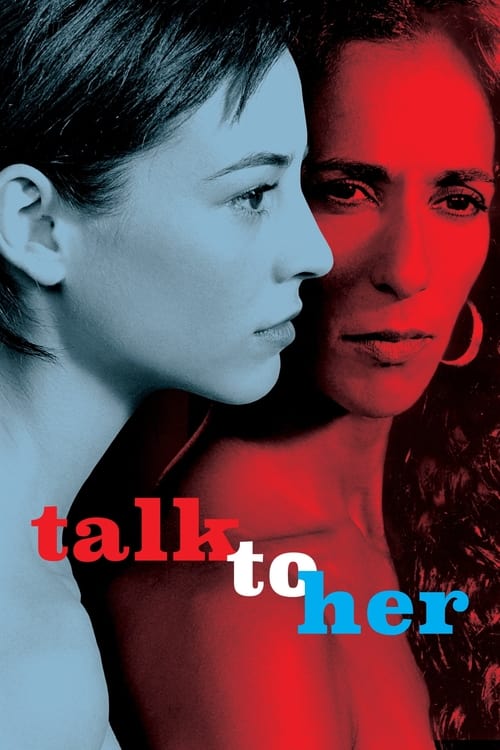
To celebrate 25 years of Tropicalismo, Veloso and Gilberto Gil released a CD called Tropicalia 2 in 1993. One song, "Haiti", attracted people's attention during the time, especially because it included powerful statements about sociopolitical issues present in Haiti and also in Brazil. Issues addressed in the song included ethnicity, poverty, homelessness, and capital corruption in the AIDS pandemic. By 2004, he was one of the most respected and prolific international pop stars, with more than 50 recordings available including songs in film soundtracks of Michelangelo Antonioni's Eros, Pedro Almodóvar's Hable con ella, and Frida, for which he performed at the 75th Academy Awards but did not win. In 2002 Veloso published an account of his early years and the Tropicalismo movement, Tropical Truth: A Story of Music and Revolution in Brazil.
His first all-English CD was A Foreign Sound (2004), which covers Nirvana's "Come as You Are" and compositions from the Great American Songbook such as "Carioca" (music by Vincent Youmans and lyrics by Edward Eliscu and Gus Kahn), "Always" (music and lyrics by Irving Berlin), "Manhattan" (music by Richard Rodgers and lyrics by Lorenz Hart), "Love for Sale" (music and lyrics by Cole Porter), and "Something Good" (music and lyrics by Richard Rodgers). Six of the seven songs on his third eponymous album, released in 1971, were also in English.
Veloso has contributed songs to two AIDS benefit compilation albums produced by the Red Hot Organization: Red Hot + Rio (1996) and Onda Sonora: Red Hot + Lisbon (1998).
In 2011, he again contributed two songs to the Red Hot Organization's most recent compilation album, Red Hot + Rio 2. The two tracks include a remix of "Terra" by Prefuse 73 ("3 Mellotrons in a Quiet Room Version") and "Dreamworld: Marco de Canaveses", in collaboration with David Byrne.
His September 2006 album, Cê, was released by Nonesuch Records in the United States. It won two Latin Grammy Awards, one for best singer-songwriter and one for Best Portuguese Song, "Não Me Arrependo".
Personal life
Veloso married fellow Baiana and actress Andrea Gadelha (or Dedé) on 21 November 1967, in a ceremony that reflected the style of the counterculture era. Their son Moreno was born on 22 November 1972. On 7 January 1979, their daughter Júlia was born 3 months premature; she died 11 days later. Veloso separated from Dedé Veloso in 1983. In 1986 Veloso married Rio native Paula Lavigne, with whom he had two more sons, Zeca Lavigne Veloso, born 7 March 1992, and Tom Lavigne Veloso, born on 25 January 1997, in Salvador. Paula confirmed to Playboy magazine in 1998 that, "[Paula] was 13 years old when she lost her virginity to the musician, who was 40 years old at the time." Caetano has since been accused of pedophilia, as having sex with Paula would be considered statutory rape. This marriage lasted twenty years. After their separation in 2004, the two still worked together. In 2016, the couple reunited. Veloso's 1989 CD Estrangeiro includes songs ("Esse Amor", which means "This Love", and "Branquinha") inspired by and dedicated to, respectively, his ex-wife Dedé and his wife at the time, Paula Lavigne.
Veloso is one of the few public atheist celebrities in Brazil. He was brought up in a religious Catholic family but left the faith early on. In an interview Veloso stated that he did not like to "lie to his own intelligence" by believing in God. In a separate interview Veloso generated controversy when he said that Brazil would be better off if most people in the country were to become irreligious or atheist. Despite this, two of Veloso's sons have become members of the neo-Pentecostal Universal Church of the Kingdom of God, with Veloso attending his children's baptism, stating that "what is good for them is good for me."
In 2022 Veloso talked about his bisexuality in a show commemorating his 80th birthday.
Musical style
Veloso's home, Bahia, has had a decisive role in his music. He praises Bahia for its importance in Brazil's colonial period—when the Portuguese first came—as well as for Bahia's contribution to Brazilian music. He has cited among his musical influences Amália Rodrigues, Cole Porter, the Rolling Stones 1969 tour, and above all, João Gilberto.
Veloso says that he is unable to make a comparison between his musical style in the 1960s, at the height of Tropicália, and his current work. He does note, however, that he has been able to accomplish music of a higher quality later in his career; that he is "better at everything."