



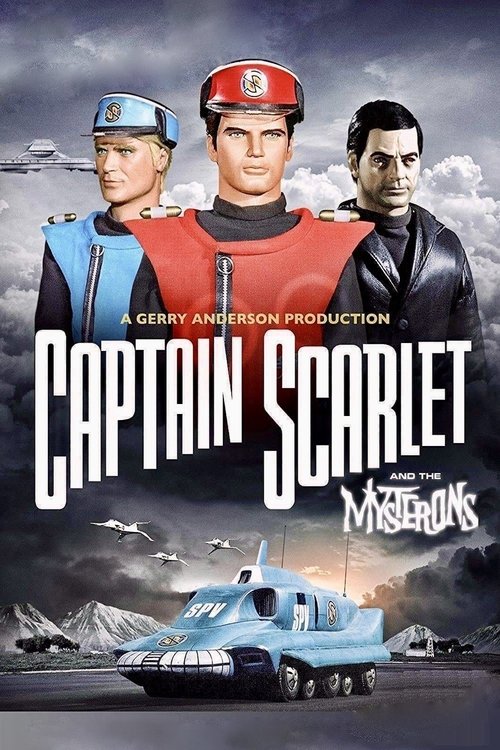

Captain Scarlet and the Mysterons, often shortened to Captain Scarlet, is a British science fiction television series created by Gerry and Sylvia Anderson and filmed by their production company Century 21 for ITC Entertainment. It is the sixth Anderson series to be filmed using a form of electronic marionette puppetry dubbed "Supermarionation" combined with scale model special effects. Running to thirty-two 25-minute episodes, it was first broadcast on ITV regional franchises between 1967 and 1968 and has since aired in more than 40 other countries, including the United States, Canada, Australia, New Zealand and Japan.
Set in 2068, Captain Scarlet presents a "war of nerves" between Earth and the Mysterons, a race of aliens operating from Mars who possess partial control over matter. When a misunderstanding causes human astronauts to attack their city on Mars, the Mysterons swear revenge and launch reprisals against Earth. These are countered by Spectrum, a worldwide security organisation. In the first episode, Spectrum agent Captain Scarlet acquires the Mysterons' self-healing power of "retrometabolism" and is rendered "indestructible", being able to recover from injuries that would normally be fatal. Scarlet immediately becomes Spectrum's top asset in its fight against the Mysterons.
Captain Scarlet, the eighth of the Andersons' ten puppet series, was preceded by Thunderbirds and followed by Joe 90 and The Secret Service. In terms of visual aesthetic, it marked a departure from earlier series in its use of puppets that were sculpted to realistic body proportions. Repeated several times in the UK, it has generated tie-ins ranging from toy cars and action figures to audio plays and novels, as well as strips in the weekly children's comic TV Century 21.
Compared to earlier Anderson productions, Captain Scarlet is widely regarded as "darker" in tone and less suited to children because of its violent content, as well as its themes of alien aggression and interplanetary war. The change in puppet design has divided opinion and the decision to make the protagonist "indestructible" has been brought into question. The series has been praised for its use of a multinational, multiethnic puppet cast and depiction of a utopian future Earth. A computer-animated remake, New Captain Scarlet, first aired in 2005.
Contents
Plot
The series begins in 2068. In the first episode, the crew of the Zero-X spacecraft are investigating the surface of Mars after mysterious radio signals are found to be coming from the planet. The source is discovered to be an alien city, which the astronauts destroy in a missile attack after mistaking a surveillance device for a weapon. The city's inhabitants, the Mysterons, are a collective of sentient computers that possess partial control over matter and communicate in a deep, echoing voice. After using their power of "reversing matter" to rebuild their city, they vow revenge for humanity's unwarranted aggression and declare war on Earth.
Reversing matter, also called "retrometabolism", enables the Mysterons to re-create people and objects as facsimiles that they can control. They use it to wage a "war of nerves" against Earth, issuing threats against specific targets (from world leaders and military installations to whole cities and continents) and then destroying and reconstructing whatever instruments are needed (whether humans or objects) to carry out their plans. The Mysterons' presence is indicated by twin circles of green light that they project onto scenes of destruction and reconstruction. Although the Mysterons are able to influence events from Mars, their actions on Earth are usually performed by their replicated intermediaries.
Zero-X mission leader Captain Black becomes the Mysterons' primary agent when they seize control of his mind. Prior to the events of the series, Black was an officer in Spectrum, a worldwide security organisation that mobilises all its resources to counter the Mysteron threat. Spectrum's senior agents hold military ranks and colour codenames. They are posted to the organisation's headquarters, Cloudbase—an airborne aircraft carrier stationed 40,000 feet (7.6 mi; 12 km) above the Earth's surface—where they answer to its commander-in-chief, Colonel White. Cloudbase is defended by Angel Interceptor fighters flown by an all-female team of pilots led by Destiny Angel. The base's computer systems are controlled by White's assistant, Lieutenant Green. Spectrum also incorporates a fleet of armoured Spectrum Pursuit Vehicles (SPVs), which are hidden in secret locations around the world, as well as patrol cars, maximum-security transports, passenger jet aircraft and machine gun-equipped helicopters.
Captain Scarlet becomes Spectrum's top asset in its fight against the Mysterons following the events of the first episode, in which the Mysterons attempt to assassinate the World President as their first act of retaliation. The Mysterons engineer a road accident that kills the original Scarlet and replace him with a reconstruction. After being shot by Captain Blue and falling to its death from the top of a tower, the reconstruction returns to life with the consciousness of the original Scarlet restored, and is thereafter free of Mysteron control. With his new Mysteron body, Scarlet possesses two extraordinary abilities: he can sense other reconstructions nearby; and if he is injured or killed, his retrometabolism restores him to full health, making him virtually "indestructible". As hostilities with Mars continue, Scarlet repeatedly sacrifices himself to thwart the Mysterons, secure in the knowledge that he will return to face them again.
Production
Development
When efforts to secure a US network broadcast of Thunderbirds fell through in July 1966, Lew Grade, the owner of AP Films (APF), capped Thunderbirds Series Two at six episodes and cancelled the production. Having overseen APF's work since the making of Supercar in 1960, Grade was keen for Supermarionation to penetrate the lucrative American market and believed that a new concept would stand a better chance of landing a network sale than a second series of Thunderbirds.
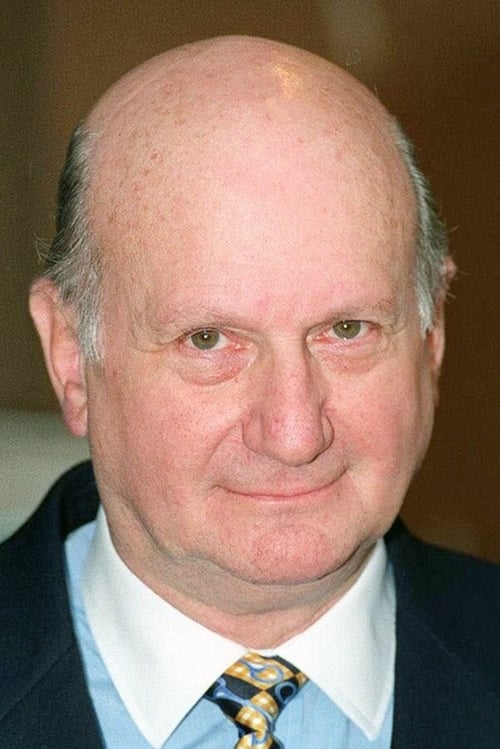
Gerry Anderson was therefore required to come up with an idea for a new series. He had once been inspired by the thought of creating a live-action police drama in which the hero is unexpectedly murdered partway through the series and replaced by a new lead character. Now returning to this idea, Anderson realised that a major selling point could be a character who is killed at the end of each episode and resurrected by the start of the next. This, coupled with contemporary theories about the possibility of life on Mars, led to the idea of an interplanetary war between Earth and its neighbour and a security organisation being called on to defend humanity. After further thought, Anderson decided that "Scarlet" would be a suitably unusual name for the organisation's "indestructible" top agent, while his partner could be called "Blue". From this, Anderson resolved that all the personnel would have colour codenames and the organisation would be called "Spectrum". Aware that white light is composed of—and can be broken down into—the colours of the spectrum, he named Spectrum's leader Colonel White.
Intrigued by the phrase "life as we know it", Anderson wanted to set his enemy aliens apart from the conventional extraterrestrials of 1960s TV and film. Therefore, while devising the Mysterons, he worked from a basis of "life as we don't know it", making the aliens a collective of sentient computers rather than organic life forms (though their exact nature is not explicitly stated in the series itself). The intention was that the original Mysterons were extragalactic beings that established a base on Mars in the distant past. In the early 20th century they abandoned the planet, leaving their computers behind.
Anderson's memories of the Second World War provided inspiration for a number of design aspects. For example, he remembered that during the Battle of Britain, RAF pilots had struggled to counter German attacks quickly, because having to take off from the ground meant that it took a long time to intercept the enemy. He therefore made Spectrum's headquarters, Cloudbase, an airborne aircraft carrier. According to Anderson, the Mysteron rings were inspired by a TV advertisement for wool that featured the Woolmark logo being projected onto a woman.
Casting and characters
Captain Scarlet had the largest regular character voice cast of any Supermarionation production. Its use of a British protagonist was a departure from earlier series like Thunderbirds, whose lead characters had been written as Americans to increase their appeal to the profitable US market. Stephen La Rivière suggests that the producers had been encouraged to give greater prominence to British characters following the transatlantic success of UK series like The Avengers, The Baron and The Saint, which had made it "altogether more acceptable to have English lead characters". Chris Drake and Graeme Bassett argue that the voice acting in Captain Scarlet was less exaggerated than before, relating this to the puppets' transition to realistic proportions. According to Simon Archer and Marcus Hearn, the proliferation of British accents from Thunderbirds to Captain Scarlet changed the sound of Supermarionation and its impression on the viewer.
Francis Matthews, who supplied the voice of Captain Scarlet, had turned down offers to voice characters in Thunderbirds. According to Matthews, Gerry Anderson went to great lengths to cast him after being impressed by his imitation of Cary Grant in a radio programme, and the actor did indeed model the voice of Scarlet on Grant's Anglo-American accent. Anderson, however, stated in his biography that the Grant impression was Matthews' choice at audition, and while it was not the kind of voice he had in mind, he was happy for Matthews to use it.
Matthews' co-star in the film Dracula: Prince of Darkness (1966) had been Bud Tingwell, who was chosen to voice Cloudbase medical officer Dr Fawn. Tingwell, who had provided voices for Thunderbirds Series Two and Thunderbirds Are Go, had been recommended by fellow Australian Ray Barrett, a regular voice artist on Stingray and Thunderbirds. Due to theatre commitments, Tingwell left the series following the completion of the first 12 episodes. Also departing at that time was Paul Maxwell, the voice of Captain Grey (and previously Steve Zodiac in Fireball XL5 and Captain Travers in Thunderbirds Are Go), who left to take up the role of Steve Tanner in Coronation Street. In Tingwell and Maxwell's absence, Fawn and Grey's roles were reduced to a handful of non-speaking appearances, though guest characters voiced by the two actors can be heard in flashbacks to earlier episodes.
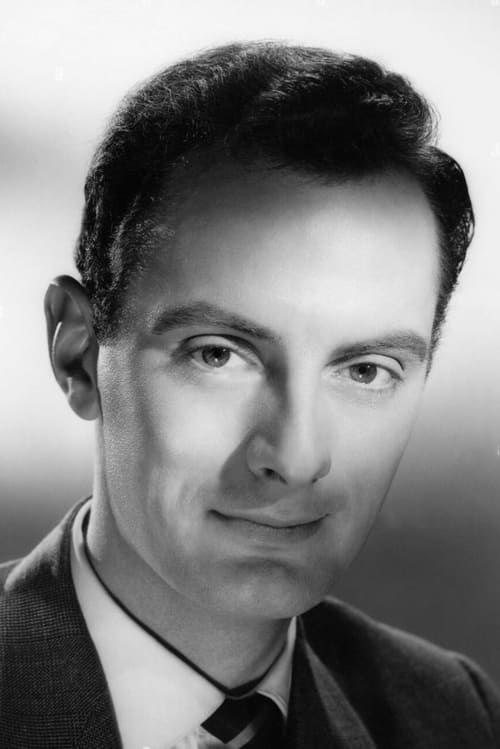
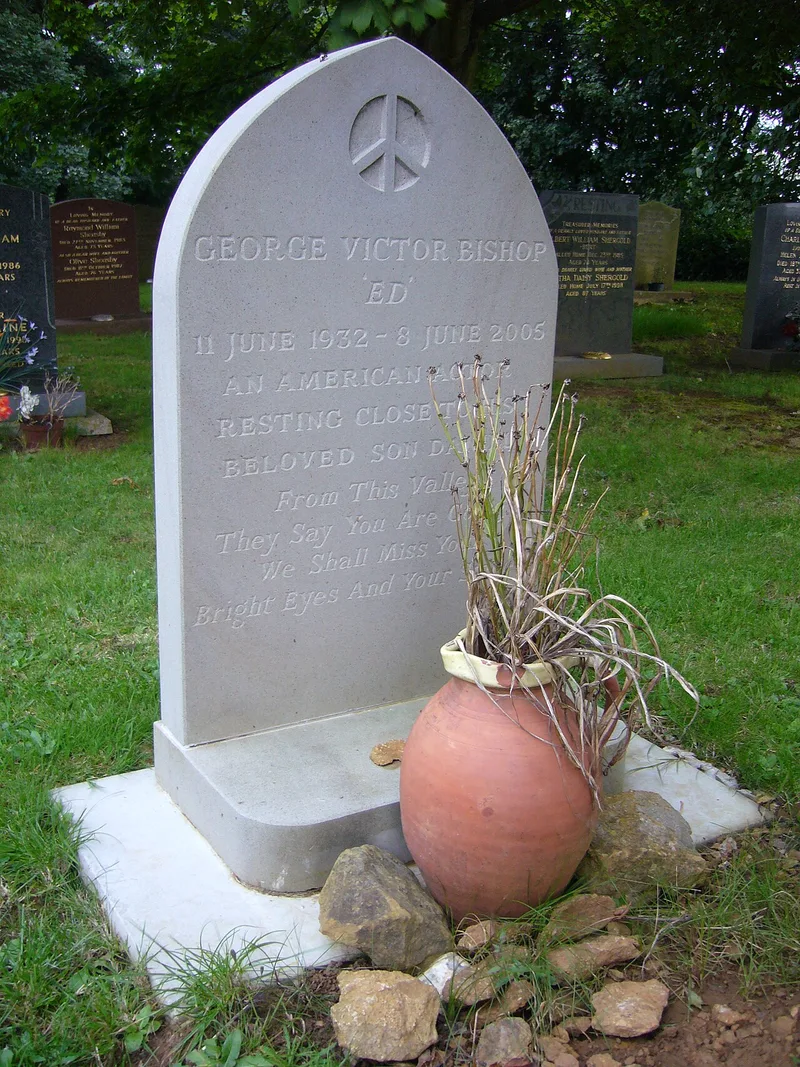
Cy Grant, the voice of Lieutenant Green, had been known to the Andersons for his appearances on Tonight, in which he sang calypsos inspired by current affairs. The casting of Grant led to that of Ed Bishop as Captain Blue. Bishop, who was working in theatre and had the same agent as Grant, recalled in an interview: "And [my agent's representative] said, 'Oh, by the way, Mr Anderson, we've just taken on a new, young American actor'—shows you how long ago it was—'a new American actor, name of Edward Bishop. And we know how much you like American voices. Would you like to meet him as well?'"
Design and effects
The scale model-making and special effects were handled by a separate unit headed by effects director Derek Meddings. It comprised two full-time crews and a "second unit" responsible for shots depicting flying aircraft. One of the series' technical innovations was that the noses of miniature vehicles would now "dip" as they came to a stop, to imitate the sudden application of brakes on a life-sized vehicle. The vehicles were designed by Meddings or his assistant Mike Trim. The former created Cloudbase, the SPV and the Angel fighter (the last of these during a flight to New York), while the latter produced many of the series' minor vehicles. The six-foot-long (1.83 m) Cloudbase filming model proved too heavy to be suspended on wires, so was mounted on a pole instead. Some of Trim's creations, such as the Spectrum Patrol Car, were originally meant to appear in only one episode, but proved to be so popular with the producers that they became regular features. As production continued, Trim's responsibilities grew as Meddings devoted more of his time to Thunderbird 6.
Supermarionation—a technique by which puppets' mouth movements were electronically synchronised with recorded dialogue—was first employed during the production of Four Feather Falls in 1960. On all the Anderson series prior to Captain Scarlet, the solenoid that powered the automatic mouth movements had been housed in the cranium, which caused the puppets' heads to appear disproportionately large compared to the rest of their bodies. Upsizing the bodies to match the heads would not have been practical, as the puppets would have become too heavy to operate effectively and it would have meant having to enlarge all the sets as well. The oversized heads gave the puppets a caricatured look that frustrated Gerry Anderson, who wanted the design to use natural body proportions. Before the pre-production of Captain Scarlet, producers Reg Hill and John Read created a new type of puppet with the solenoid built into the chest, enabling the heads to be reduced to a realistic size.
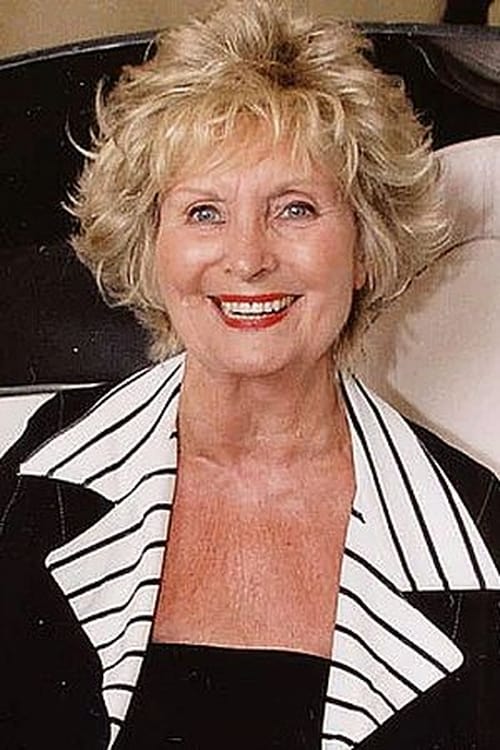
After being sculpted in Plasticine, the puppet heads were moulded on a silicone rubber base and finished in fibreglass. At heights ranging from 20 to 24 inches (51 to 61 cm) (approximately one-third life size), the new generation of puppets were the same height as previous ones. As in earlier series, the main characters were given interchangeable heads with a range of expressions; these included "smiler", "frowner" and "blinker" heads. Because episodes would be filmed in pairs on separate stages, the "expressionless" versions were made in duplicate. The costumes were designed by Sylvia Anderson, who drew inspiration from the work of Pierre Cardin (in particular, his 1966 "Cosmonaut" collection) when devising the Spectrum uniforms.
Filming
The first episode, "The Mysterons", began filming on 2 January 1967 after two months' pre-production. The budget for the series was set at £1.5 million (about £24 million in 2025). At an average cost of £46,000 per episode, or £2,000 per minute, it was the most expensive Anderson production to date. The previous month, APF had been renamed "Century 21 Productions".
By the time Captain Scarlet entered production, many of the directors on earlier Anderson series—including Alan Pattillo, David Elliott and David Lane—had either left the company or were committed to Thunderbird 6. Although Lane, Brian Burgess and Desmond Saunders reprised directorial duties for at least one episode each, the Andersons were forced to promote some of the junior production personnel to replace the outgoing directors. Among these were camera operator Alan Perry and art assistant Ken Turner. Other directors were recruited from outside the company; one of them was Robert Lynn, who had been an assistant director on feature films. After directing the first episode himself, Saunders stayed with the production as its "supervising director" to guide the new recruits.
Captain Scarlet was filmed in a set of converted factory units on the Slough Trading Estate, which had served as Century 21's studios since the making of Stingray in 1964. Continuing a practice begun on earlier series, episodes were filmed in pairs on separate stages to speed up production. Filming overlapped with the Thunderbird 6 shoot, which was being conducted on a different stage. Production design duties were split between Keith Wilson and John Lageu, the latter being responsible for the technical elements of the sets. The Mysteron rings were created by panning a transparency of two green circles using a slide projector, a technique suggested by producer Reg Hill.
When the series started airing in September 1967, principal photography had been completed on the first 20 episodes. The puppet footage for each episode usually took two weeks, or 11 working days, to shoot. Although filming of the series was scheduled to take eight months, the demands of the Thunderbird 6 shoot caused it to overrun, finally concluding in November 1967.
Music
The music for Captain Scarlet was composed by Barry Gray, who had scored all prior Supermarionation series. The opening theme—"The Mysterons"—was produced electronically and accompanied by a seven-note staccato drumbeat introducing Scarlet. Gerry Anderson, who had intended this to be more like a traditional fanfare, said of his initial response: "I thought, 'Christ, is this all he could produce?' Looking back on it, however, I can see that what he came up with worked very well." The drumbeat had two other functions: to cut from one scene to another, with the shot alternating between the previous scene and the next in time with each beat; and to cut into and out of each episode's midpoint advert break, where it was accompanied by a zooming image of the Spectrum logo.
Two versions of the ending theme—"Captain Scarlet"—were recorded. The first version, used on the first 14 episodes, is entirely instrumental except for the lyrics "Captain Scarlet!", repeated at intervals by a vocalist ensemble including Ken Barrie. Each instance is followed by a vocoded repetition supplied by Gray himself, the final two forming a ternary with the word "Indestructible!". The instrumental was later reworked as a song with lyrics performed by The Spectrum, a London boy band who shared their name with the fictional organisation. Formed in 1960 and signed to RCA Victor, the group were being promoted as a British imitation of The Monkees. They were brought to the Andersons' attention by Gerry's chauffeur, who had heard them on the radio, and signed a contract with Century 21 worth £100,000. At their early concerts in 1977, Siouxsie and the Banshees performed a spoof of the ending theme with extra lyrics mocking Scarlet.
Between March and December 1967, Gray also recorded incidental music for 18 episodes. The remaining 14 re-used these scores, supplemented by cues produced for earlier Anderson series. Compared to Thunderbirds, the incidental music for Captain Scarlet was recorded with smaller ensembles: no episode features more than 16 instruments.
In their notes on the CD release, Ralph Titterton and Tim Mallett write that the Captain Scarlet soundtrack has a "military feel" that favours percussion, brass and wind instruments, in contrast with the full orchestral sound of Thunderbirds. Gray preferred traditional instruments for much of the action, limiting electronic music to scenes set in outer space and an echoing four-note motif that serves to identify the Mysterons. Scarlet's motif, featured in incidental music as well as both versions of the ending theme, is a variation emphasising the captain's nature as an ex-Mysteron. Gray performed some of the series' electronic music himself.
Release
Broadcast history
Captain Scarlet had its official UK premiere on 29 September 1967 on the ATV Midlands franchise of the ITV network. The first episode was seen by an estimated 450,000 viewers, a figure considered promising. Exactly five months earlier, this episode had been broadcast in the London area as an unscheduled late-night test transmission. The series officially debuted in London and Scotland on 1 October, with the Granada, Anglia, Channel, Southern and Westward franchises following later that month. By the end of 1967, 4.95 million UK households—equivalent to 10.9 million people—were watching the series. In the Midlands, viewing figures had risen to 1.1 million halfway through the run.
By the start of 1968, Captain Scarlet was being broadcast in all parts of the UK. The series would go on to be shown in more than 40 other countries, including Canada, Australia, New Zealand and Japan. In the United States, it aired in first-run syndication. Only six episodes were shown in the Netherlands.
UK re-runs varied by franchise. Granada, Harlech and Tyne Tees Television repeated the series until 1972, while in the Midlands, it aired four times in colour between 1969 and 1974. By contrast, Yorkshire Television did not run it again until the 1980s, by which time various ITV franchises were still repeating the series on Saturday and Sunday mornings. The series was later shown in segmented form on Night Network.
Captain Scarlet was subsequently acquired by the BBC, which on 1 October 1993 began the series' first networked (UK-wide) run on BBC2. The first episode achieved viewing figures of four million, the channel's third-largest audience that week. Around that same time, the show also aired in the United States on the Sci-Fi Channel as part of their morning animation block, in Canada on YTV, and in Australia along with other Supermarionation shows on Nickelodeon's Nick at Nite block. In September 2001, the BBC began repeating the series in digitally-remastered form. Following the September 11 attacks, the episode order was changed: "Winged Assassin" (in which the Mysterons destroy an airliner) and "Big Ben Strikes Again" (in which they hi-jack a nuclear device), were postponed due to perceived similarities between the plots and real-world events. These episodes were eventually broadcast in November and December 2001.
In June 2024, UK channel Talking Pictures TV started a repeat run on Saturday afternoons. The same month, MeTV Toons in the US began airing various Anderson series, including Captain Scarlet.
Home video
The series' first VHS release in the UK was by Precision Video in 1982. Precision was later acquired by Channel 5 Video (a partnership of PolyGram and Heron International), which issued further Captain Scarlet volumes during the 1980s. Between 2001 and 2002, Carlton Video re-released the series both in volumes and as a box set. These featured the remastered picture and sound quality that had been introduced for the 2000s repeats. The box set included an extra tape containing a behind-the-scenes feature, Captain Scarlet: The Indestructible.
Since September 2001, Captain Scarlet has also been available on Region 2 DVD in both its original mono soundtrack and new Dolby Digital surround sound. Bonus features include audio commentaries by Gerry Anderson on two episodes, "The Mysterons" and "Attack on Cloudbase". As with the VHS versions, the DVDs have also been released as a box set; this includes an extra disc featuring a production documentary, Captain Scarlet S.I.G., along with a set of five alternative title sequences. A Region 1 box set by A&E Home Video was released in 2002. In 2004, Imavision released a French-language box set for the Canadian market.
In 2017, the series' 50th anniversary year, UK company Network Distributing announced that it was releasing Captain Scarlet on Blu-ray with all episodes remastered in high definition using the original 35 mm film negatives. The Blu-rays were released between 2017 and 2018, both in volumes and as a box set.
Reception
Given Grade's surprise cancellation of Thunderbirds, Gerry Anderson had little hope of Captain Scarlet running for more than one series. According to Anderson: "I didn't expect it to continue. I simply went to Lew and asked, 'What's the next thing you want us to do?'"
Captain Scarlet is widely regarded as "darker" or more "mature" in tone than earlier Supermarionation productions. According to Andrew Billen: "Whereas Thunderbirds was about rescuing people, Scarlet was about damnation, the soul of a resurrected man being fought for between Captain Scarlet and the equally indestructible Captain Black. It was Anderson's Gothic period." Marcus Hearn comments that the series has a "militaristic" feel, with less emphasis on "characterisation and charm" than before. For Jim Sangster and Paul Condon, the optimism of Stingray and Thunderbirds is noticeably absent, with heroism and unqualified victories replaced by desperate games of "damage limitation" as Scarlet and Spectrum rush to counter every Mysteron move, sometimes unsuccessfully. The series' presentation of death and destruction has prompted questions about its suitability for younger viewers: media historian Daniel O'Brien notes that Captain Scarlet is "rated by some as the most violently destructive children's show ever". The horror of the Mysterons has been recognised: in 2003, the aliens' depiction was ranked 82nd in the Channel 4 list show 100 Greatest Scary Moments.
Commentators have drawn parallels between Captain Scarlet and the state of international relations in the 1960s. According to Robert Sellers, the series arose from contemporary "sci-fi obsession with alien forces infiltrating society", influenced by fears about the Cold War and communism. Nicholas J. Cull writes that the "war of nerves" between Earth and Mars echoed real-world geopolitical conflict, while the "enemy within" scenario of Martians taking over humans was derived from films like Invasion of the Body Snatchers (1956). Mark Bould argues that the series "seemed in tune with a decade of civil disobedience and anti-imperialist guerrilla wars"—a view echoed by Rebecca Feasey of the University of Edinburgh, who regards it as one of several that "exploited the fears of 1960s America" through its portrayal of "civil disobedience and the potentially negative impact of new technologies". Since 2001, comparisons have been made to the September 11 attacks and war on terror. Sangster and Condon state that for the 1960s, Captain Scarlet was "incredibly perceptive" in its portrayal of the Mysterons, whose tactics they liken to terrorism.
Race, gender and symbolism
Captain Scarlet has received comment both positive and negative for its use of female and ethnic minority characters. This is an aspect which, according to O'Brien, gives the series a "more cosmopolitan" feel than Thunderbirds. Around the time of the 1993 repeats on BBC2, the series drew criticism for its use of the codenames "Black" and "White" in reference to the benevolent Colonel White and the villainous Captain Black, which some commentators interpreted as a form of negative black-and-white dualism. Rejecting claims of racist stereotyping, Anderson pointed out that the series features heroic non-whites in the form of Lieutenant Green, Melody Angel and Harmony Angel. Green is the only black male regular character in any of the Supermarionation series.
For Sellers, the inclusion of Green and especially Melody Angel, a black female character, shows that Captain Scarlet was "actually ahead of its time in respect to race relations". He regards the Angels' all-female composition as significant from the perspective of women's emancipation. O'Brien is less complimentary on the Angels, arguing that while they were progressive for the 1960s, to newer audiences they come across as a "conventionally sexist male fantasy".
The characters' diversity in terms of race and gender has been highly regarded in academic publications. Bould praises the "beautiful, multiethnic, female Angel fighter pilots" and "secondary roles played by capable women". In a 2003 interview, Anderson noted the efforts made to feature minorities: "... I think people who make television programmes have a responsibility, particularly when children are watching avidly and you know their minds can be affected almost irreversibly as they grow up. We were very conscious of introducing different ethnic backgrounds."
Cy Grant, the voice of Green, believed that Captain Scarlet had both positive multicultural value and an allegorical nature. He argued that religious symbolism was implied, with Colonel White serving as an analogue for God, Captain Black as the Devil and Scarlet as the Son of God. The allegory extended to Cloudbase, which represented Heaven and was guarded by a fleet of fighters called "Angels". On dualism, he wrote: "The 'darkness' of the Mysterons is most easily seen as the psychological rift—the struggle of 'good' and 'evil'—of the Western world as personified by Colonel White and his team. Dark and light are but aspects of each other. Incidentally, green is the colour of nature that can heal that rift."
Other media
The ATV game show The Golden Shot, hosted by Bob Monkhouse, used Captain Scarlet as the theme for its 1967 Christmas special. Broadcast live on 23 December, the programme featured guest appearances from Francis Matthews and The Spectrum.
Since its first run, the series has been supplemented by merchandise ranging from toy action figures to video games. Among the early tie-ins were a series of five audio plays published by Century 21 Records in 1967. Released on EP record, each play was approximately 21 minutes long and featured the voice cast from the TV series. Angus P. Allan wrote the first play, Introducing Captain Scarlet (set during the denouement of the first TV episode) as well as Captain Scarlet and the Mysterons and Captain Scarlet of Spectrum. The other two—Captain Scarlet is Indestructible and Captain Scarlet versus Captain Black—were written by his assistant, Richard O'Neill. To mark Captain Scarlet's 50th anniversary in 2017, Big Finish Productions digitally remastered the plays and re-released them on CD. The seven-disc set also includes audio adaptations of eight of the TV episodes, narrated by Ed Bishop as Captain Blue.
During the 1960s, Century 21 granted more than 60 licences for Captain Scarlet products and released a range of friction-drive model vehicles through its subsidiary Century 21 Toys. Meccano Ltd manufactured Captain Scarlet Dinky Toys to great success: its SPV was its best-selling die-cast toy of all time and continued to be manufactured until 1976. Waddingtons released a Captain Scarlet board game based on snakes and ladders. In 1993, Vivid Imaginations launched a new toy range to coincide with the BBC2 repeats.
Books and comics
Between 1967 and 1968, Armada Books published three Captain Scarlet children's novels by John William Jennison (who wrote under the pseudonym "John Theydon"): Captain Scarlet and the Mysterons, Captain Scarlet and the Silent Saboteur and The Angels and the Creeping Enemy. As implied by its title, the third novel features the Spectrum Angels as the main characters. In 1993, Young Corgi Books released children's novelisations of "The Mysterons", "Lunarville 7", "Noose of Ice" and "The Launching".
From September 1967, comic strips based on the series were printed in TV Century 21 (later TV21), published by City Magazines in association with Century 21. The comic had already featured Fireball XL5, Stingray and Thunderbirds strips as well as crossovers between the three, indicating that they were set in a shared fictional world of the 2060s. Captain Scarlet was integrated into this setting. Elements of the new series, including Captain Black, had been introduced as early as June 1967. The initial Captain Scarlet strips were drawn by Ron Embleton, who was succeeded first by Mike Noble and then by Jim Watson. Frank Bellamy drew five strips. After the TV series finished its original run, the comic continued the story of Spectrum and the Mysterons, with later adventures showing the Mysterons deactivating their city on Mars and relinquishing their control over Black. Scarlet, meanwhile, leaves Spectrum to combat Earth-bound threats. The Mysterons eventually reawaken, prompting Scarlet and Spectrum to resume their struggle. Captain Scarlet also appeared in TV21 and Century 21 annuals for 1967, 1968 and 1969. In September 1969, it was dropped from TV21.
The series' TV21 debut had been preceded by spin-off adventures in the sister comics Lady Penelope and Solo. In January 1967, Lady Penelope launched a comic strip about the Angel pilots; this introduced no elements of the Spectrum Organisation until August 1967. It eventually ran until May 1968. Solo printed two strips: the first from June to September 1967; the second, following a merger with City's TV Tornado, from September 1967 to February 1968. The first, The Mark of the Mysterons, bore little relation to the series besides featuring the Mysterons as villains; it was set in the 1960s and the presentation was similar to that of The Invaders. The second, simply titled The Mysterons, had the aliens travel to the Andromeda Galaxy on a campaign of conquest.
After the series' discontinuation in Century 21 and City titles, Polystyle Publications printed further strips in Countdown comic and annuals in 1971 and 1972. From 1993 to 1994, Fleetway Editions published a Captain Scarlet comic to coincide with the series' first run on BBC2. New annuals were published by Grandreams in 1993 and 1994 and by Carlton Books in 2001.
Video games
Between 2002 and 2006, three Captain Scarlet video games were released. A further game was cancelled.
Later productions
Since the 1980s, the rights to the ITC catalogue have changed hands several times. They were acquired first by PolyGram Entertainment, and then, following a partial sale to the BBC, by Carlton International. Following Carlton's 2004 merger with Granada to form ITV plc, the rights to Captain Scarlet and other Anderson series now reside with ITV Studios.
In the early 1980s, Robert Mandell and ITC New York combined several episodes of Captain Scarlet into two compilation films: Revenge of the Mysterons from Mars and Captain Scarlet vs. the Mysterons. Promoted as "Super Space Theater", these were broadcast on US cable TV in the aim of reviving syndication sales. Other Anderson productions, including Stingray and Thunderbirds, received similar treatments. Released on British VHS in January 1982, Revenge of the Mysterons from Mars was Captain Scarlet's UK home video debut. In November 1988, it aired as the second episode of the movie-mocking series Mystery Science Theater 3000 on Minnesota TV station KTMA.
Plans for a live-action film adaptation, announced by Gerry Anderson in 2000 and 2002, remain undeveloped.
Remake
In 1999, Anderson supervised the production of a computer-animated test film, Captain Scarlet and the Return of the Mysterons, to explore the possibility of updating some of his 1960s puppet series for a 21st-century audience. Produced by the Moving Picture Company under the working title Captain Scarlet – The New Millennium, the four-minute film was made using a combination of Maya animation software and motion capture technology. Francis Matthews and Ed Bishop reprised the voices of Captains Scarlet and Blue. Set a few years after the Mysterons end hostilities against Earth, the film features the return of Captain Black, setting the stage for a revival of the war with Mars. The film was screened at a Fanderson convention in 2000 and a science lecture in 2001. It was released on Blu-ray in 2017.
Plans for a full computer-animated Captain Scarlet series eventually resulted in New Captain Scarlet. A reboot of the original, this was first broadcast on the ITV children's show Ministry of Mayhem in 2005. In a nod to Supermarionation, the animation used to make the series was promoted as "Hypermarionation". New Captain Scarlet was the last TV series to be produced by Anderson, who died in 2012.


