Overview
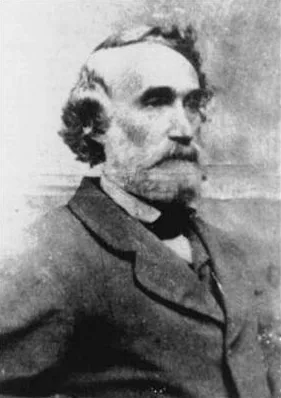
Charles Clark (May 24, 1811December 18, 1877) was the 24th governor of Mississippi from 1863 to 1865.
Early life and education
Clark was born in Cincinnati, Ohio, on May 24, 1811, and subsequently moved to Mississippi. He is the great-grandfather of Judge Charles Clark, who served on the United States Court of Appeals for the Fifth Circuit from 1969 to 1992 and was the chair of the United States Judicial Conference.
In the late 1830s and early 1840s, Clark, a lawyer, represented a settler in a dispute with some Choctaw Native Americans over land in the Mississippi Delta. The dispute led to a series of lawsuits before the Mississippi Supreme Court. The settler ultimately prevailed and gave Clark a large tract of land between Beulah, Mississippi and the Mississippi River as his legal fee. In the late 1840s, Clark formed a plantation on the land, naming it Doe-Roe, pseudonyms commonly used in the legal profession to represent unnamed or unknown litigants (e.g., John Doe, Roe v. Wade). However, because of poor local literacy, the plantation became known by its phonic representation, Doro. According to archives at Delta State University, "The plantation grew to over and became the most prosperous in the region, operating until 1913. It was prominent in the social, political and economic affairs of Bolivar County." He was also active in state politics, being elected as a member of the Mississippi House of Representatives several times.
Military service
During the Mexican–American War, he served as a colonel of the 2nd Mississippi Regiment of Volunteers. Following the secession of Mississippi in early 1861, Clark was appointed as a brigadier general in the First Division, First Corps, a Mississippi Militia unit that later entered the Confederate States Army. He commanded the brigade at engagements in Kentucky and then a division under Leonidas Polk at the Battle of Shiloh, where he was slightly wounded. Clark led a division at the Battle of Baton Rouge, where he was severely wounded and captured. He spent time as a prisoner of war before being released. He was promoted to major general of Mississippi State Troops in 1863.
From Wikipedia (CC BY-SA 4.0).