Story development
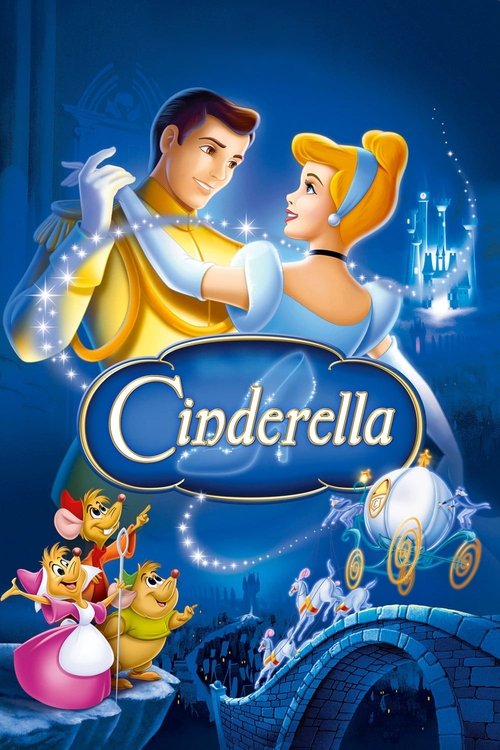
Walt Disney first adapted Charles Perrault's 1697 fairy tale "Cinderella" as part of his cartoon shorts series for the Laugh-O-Gram Studio in 1922. He was interested in producing a second version in December 1933 as a Silly Symphony short; Burt Gillett was attached as the director while Frank Churchill was assigned as the composer. A story outline included "white mice and birds" as Cinderella's playmates. To expand the story, storyboard artists suggested visual gags, some of which ended up in the final film. However, by early 1938, the story proved to be too complicated to be condensed into a short so it was suggested as a potential animated feature film, starting with a fourteen-page outline written by Al Perkins. Two years later, a second treatment was written by Dana Cofy and Bianca Majolie, in which Cinderella's stepmother was named Florimel de la Pochel; her stepsisters as Wanda and Javotte; her pet mouse Dusty and pet turtle Clarissa; the stepsisters' cat Bon Bon; the Prince's aide Spink, and the stepsisters' dancing instructor Monsieur Carnewal. This version stuck closely to the original fairy tale until Cinderella arrives home late from the second ball. Her stepfamily then imprisons Cinderella in a dungeon cellar. When Spink and his troops arrive at the la Pochel residence, Dusty takes the slipper and leads them to free Cinderella.
By September 1943, Disney had assigned Dick Huemer and Joe Grant to begin work on Cinderella as story supervisors and given a preliminary budget of $1 million. However, by 1945, their preliminary story work was halted. During the writing stages of Song of the South (1946), Dalton S. Reymond and Maurice Rapf quarreled, and Rapf was reassigned to work on Cinderella. In his version, Cinderella was written to be a less passive character than Snow White, and more rebellious against her stepfamily. Rapf explained, "My thinking was you can't have somebody who comes in and changes everything for you. You can't be delivered on a platter. You've got to earn it. So in my version, the Fairy Godmother said, 'It's okay till midnight but from then on it's up to you.' I made her earn it, and what she had to do to achieve it was to rebel against her stepmother and stepsisters, to stop being a slave in her own home. So I had a scene where they're ordering her around and she throws the stuff back at them. She revolts, so they lock her up in the attic. I don't think anyone took (my idea) very seriously."
In spring 1946, Disney held three story meetings, and subsequently received treatment from Ted Sears, Homer Brightman, and Harry Reeves dated March 24, 1947. In the treatment, the Prince was introduced earlier in the story reminiscent of Snow White and the Seven Dwarfs (1937), and there was a hint of the cat-and-mouse conflict. By May 1947, the first rough phase of storyboarding was in the process, and an inventory report that same month suggested a different approach with the story "largely through the animals in the barnyard and their observations of Cinderella's day-to-day activities".
Following the theatrical release of Fun and Fancy Free (1947), Walt Disney Productions' bank debt declined from $4.2 million to $3 million. Around this time, Disney acknowledged the need for sound economic policies but emphasized to the loaners that slashing production would be suicidal. To restore the studio to full financial health, he expressed his desire to return to producing full-length animated films. However, Walt's brother Roy O. Disney was reluctant to greenlight another film and asked Walt to consider selling the studio and retiring with the money they had. After arguing for weeks, Roy eventually conceded and allowed a new feature-length animated film to be made. By then, three animated projects—Cinderella, Alice in Wonderland (1951), and Peter Pan (1953)—were in development. Disney felt the characters in Alice in Wonderland and Peter Pan were too cold, while Cinderella contained elements similar to Snow White, and greenlit the project. Selecting his top-tier animation talent, Ben Sharpsteen was assigned as supervising producer while Hamilton Luske, Wilfred Jackson, and Clyde Geronimi became the sequence directors. Nevertheless, production on Alice resumed so that both animation crews would effectively compete against each other to see which film would finish first.
By early 1948, Cinderella had progressed further than Alice in Wonderland, and was fast-tracked to become the first full-length animated film since Bambi (1942). During a story meeting on January 15, 1948, the cat-and-mouse sequences began to grow into an important element in the film so much that Disney placed veteran story artist Bill Peet in charge of the cat-and-mouse segments.
By the late 1940s, Disney's involvement during production had shrunken noticeably. As he was occupied with trains and the filming of Treasure Island (1950), the directors were left to exercise their own judgment more on details. Although Disney no longer held daily story meetings, the three directors still communicated with him by mailing him memoranda, scripts, Photostats of storyboards, and acetates of soundtrack recordings while he was in England for two and a half months during the summer of 1949. When Disney did not respond, work resumed and then had to be undone when he did. In one instance, when Disney returned to the studio on August 29, he reviewed Luske's animation sequences and ordered numerous minor changes, as well as a significant reworking of the film's climax. Production was finished by October 13, 1949.