Production
The film was mostly financed by Britain's EMI Films, who had invested in Peckinpah's Cross of Iron.
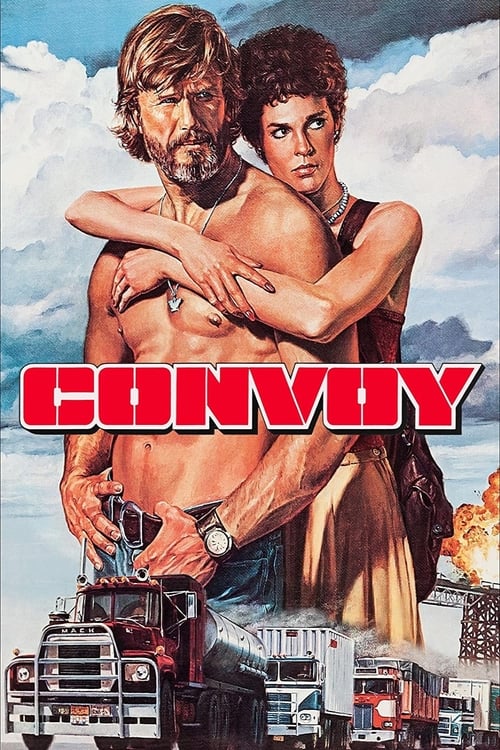
Convoy was filmed almost entirely in the state of New Mexico. Production began in 1977 when the CB radio/trucking craze was at its peak, made during the same period as such films as La Menace, Smokey and the Bandit, The Great Smokey Roadblock, Breaker! Breaker!, Handle with Care (1977 film) (all 1977), High-Ballin' and Steel Cowboy (both 1978), as well as the television series Movin' On (1974–1976) and B. J. and the Bear (1979–1981).
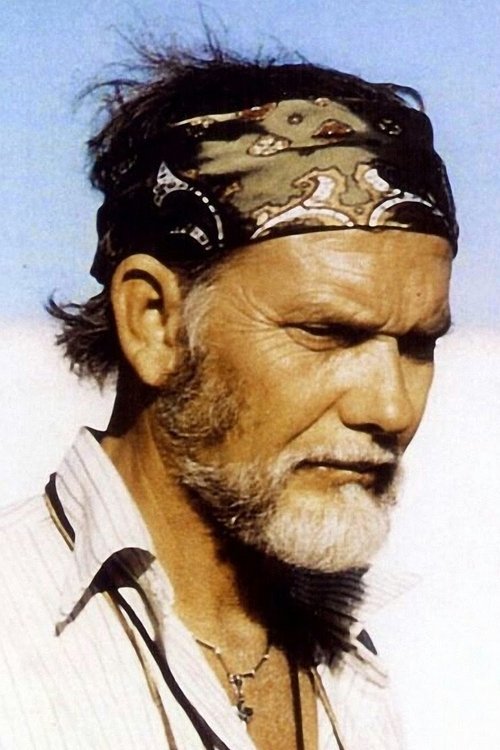
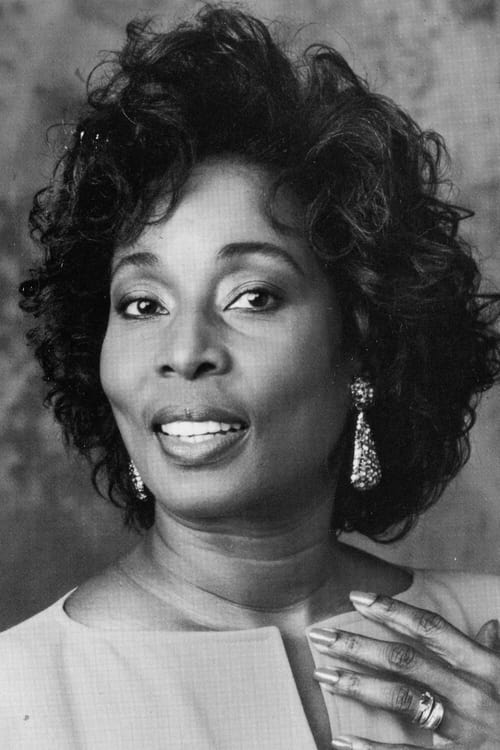
During this period of Sam Peckinpah's life, it was reported that he suffered from alcoholism and drug addiction. His four previous films, Cross of Iron (1977), The Killer Elite (1975), Bring Me the Head of Alfredo Garcia (1974), and Pat Garrett and Billy the Kid (1973), had struggled at the box office, and the director needed a genuine blockbuster success. Unhappy with the screenplay written by B. W. L. Norton, Peckinpah tried to encourage the actors to re-write, improvise and ad-lib their dialogue, with little success. In another departure from the script, Peckinpah attempted to add a new dimension to the film by casting a pair of black actors as members of the convoy: Madge Sinclair as Widow Woman and Franklyn Ajaye as Spider Mike. When the convoy made a sharp turn at an intersection, the white 1972 Brockway 361 truck of Widow Woman accidentally tipped over, nearly crashing into a car. The scene was added to the movie with a joke about colors, and Widow Woman had to carry on as passenger.
Peckinpah hired long-time friend James Coburn as a second-unit director; Coburn allegedly directed some scenes, filling in for Peckinpah when he was impaired by drugs or alcohol.
The original rough cut of Convoy, assembled by Peckinpah and his long-time editor Garth Craven in early 1978, had an estimated running time of 220 minutes. According to the book If They Move ... Kill 'Em!: The Life and Times of Sam Peckinpah by David Weddle and the Convoy documentary Passion & Poetry: Sam's Trucker Movie, Peckinpah's rough cut did not have any musical score other than the title song and "Blow The Gates To Heaven" by Richard Gillis (who had previously worked with Peckinpah on The Ballad of Cable Hogue). Jerry Fielding, who composed music for many of Peckinpah's previous films, was also hired to do the score for Convoy.
After a second screening of Peckinpah's rough cut, EMI executive Michael Deeley fired Peckinpah and Craven from the film in mid-March 1978 and promoted editor Graeme Clifford to supervising editor, to drastically reduce the running time of the film for a June 1978 release. Garner Simmons, author of Peckinpah: A Portrait in Montage, said that EMI and Clifford's version of Convoy "cut the guts out of it".
Questioned about the production of Convoy during an interview in July 1978, Peckinpah is quoted as saying: "In preparing Cross of Iron I kept hearing on Armed Forces radio this song about “We'll hit the gate goin' 98, Let them truckers roll, Ten-Four!” and I said “By God, I'd like to be out on that highway!” And so I got out there, but I ended up not being there at all."
The picture finished eleven days behind schedule at a cost of $12 million, more than double its original budget.
The famous scene where the tanker truck goes off a bridge and explodes was filmed in Needles, California, on a one-way bridge over the Colorado River between Arizona and California. The Needles City Fire Department provided fire protection during this scene. The bridge was removed soon afterward, as a new span connected the two sides of the river.
Peckinpah has a cameo as a sound man during an interview scene. Rubber Duck's truck is generally represented in the film as a 1977 Mack RS712LST, although several other Mack RS700L–series trucks were used as a double and as stationary props. The restored 'Second Unit' 1970 Mack RS731LST on-camera–double truck tractor and the only original remaining tank trailer were to return in late 2023 to be on display at the National Museum of Transportation in St. Louis, Missouri.
Pig Pen's truck is also generally represented in the film as a 1977 Mack Cruiseliner WL786LST, although a 1973 Kenworth K-123 was used as a stunt double.