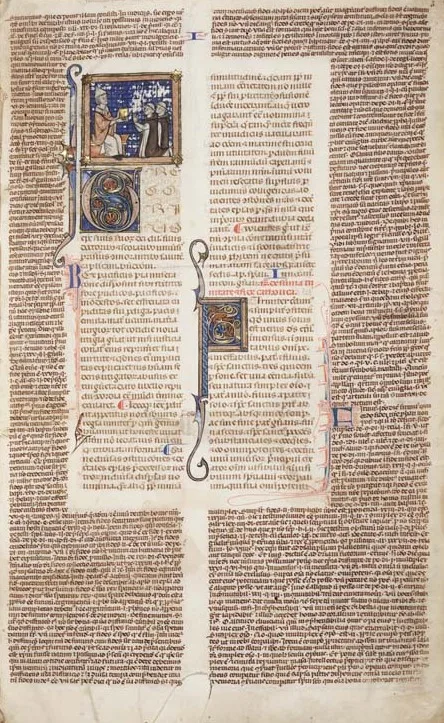
Overview
The , also known as the or or simply as the , is a collection of canon law compiled and written in the 12th century as a legal textbook by the jurist known as Gratian. It forms the first part of the collection of six legal texts, which together became known as the . It was used as the main source of law by canonists of the Roman Catholic Church until the Decretals, promulgated by Pope Gregory IX in 1234, obtained legal force, after which it was the cornerstone of the , in force until 1917.
Overview
In the first half of the 12th century Gratian, clusinus episcopus, probably a jurist of the ecclesiastical forum and a teacher, at the monastery of Saints Nabor and Felix (according to the Bolognese Odofredus Denariis [13th century]) and starting from the 18th century believed to have been a Camaldolese monk, composed the work he called , and others titled , or the more commonly accepted name, , a living text, characterized by multiple editorial stages. He did this to obviate the difficulties which beset the study and the forensic application of practical, external theology, i.e., the study and the forensic use of canon law. In spite of its great reputation and wide diffusion, the has never been recognized by the Church as an official collection.
The so-called or vulgate version (an advanced editorial stage) of the is divided into three parts.
The first part is divided into 101 distinctions, the first 20 of which form an introduction to the general principles of canon law; the remainder constitutes a , relative to ecclesiastical persons and function.
The second part contains 36 causes, divided into questions, and treat of ecclesiastical administration, procedural issues and marriage. 3 of 33 on penance is treated separately and subdivided into 7 distinctions.
The third part deals with sacramental and liturgical law and contains 5 distinctions.
From Wikipedia (CC BY-SA 4.0).