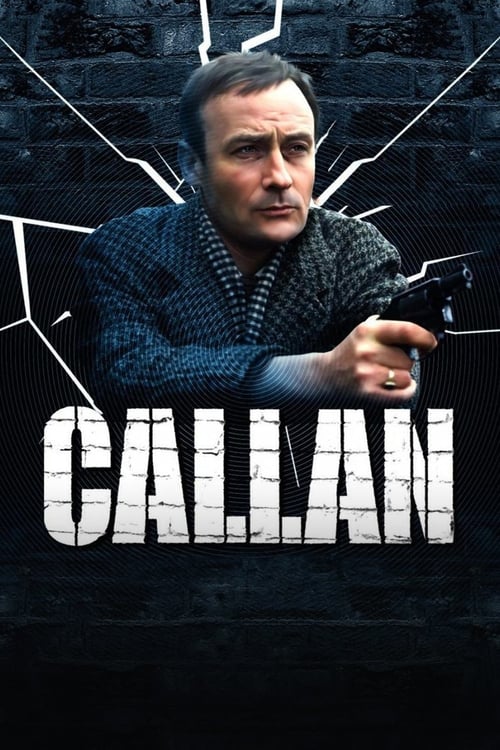




Edward Albert Arthur Woodward (1 June 1930 – 16 November 2009) was an English actor and singer. He began his career on stage, appearing in productions in both the West End of London and on Broadway in New York City. He came to wider attention in the title role of the British television spy drama Callan (1967–1972), which earned him the 1970 British Academy Television Award for Best Actor.
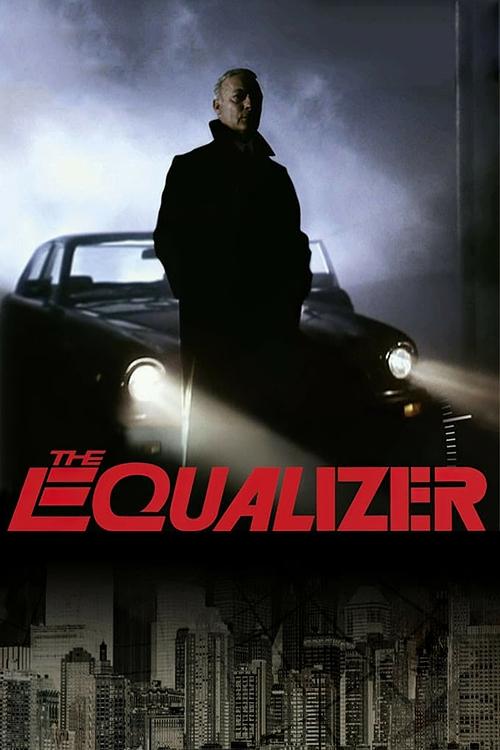
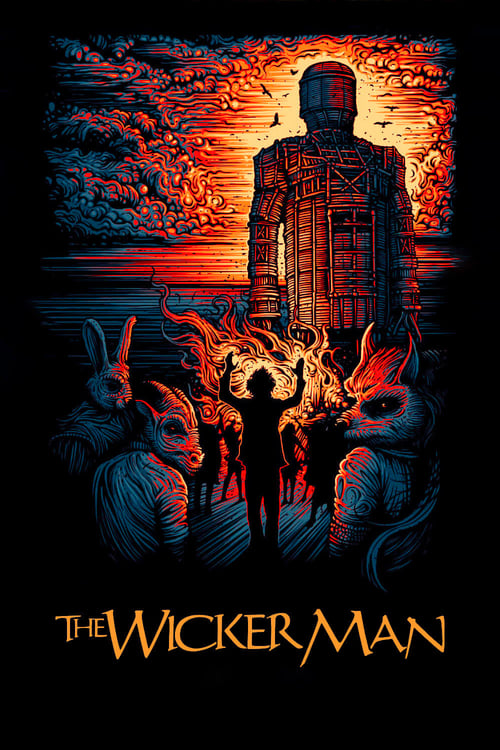
Woodward starred as Police Sergeant Neil Howie in the British folk horror film The Wicker Man (1973) and in the title role of the Australian biopic Breaker Morant (1980). From 1985 to 1989, he starred as ex-secret agent turned private investigator Robert McCall in the American television series The Equalizer, which earned him the 1986 Golden Globe Award for Best Television Drama Actor.
Contents
Early life
Edward Albert Arthur Woodward was born on 1 June 1930 in Croydon, Surrey, the only child of parents Edward Oliver Woodward, a metalworker, and Violet Edith Woodward (née Smith). As a boy, he was bombed out of his home three times during the Blitz. He attended Eccleston Road, Sydenham Road, as well as Kingston Day Commercial School and Elmwood High School, Hackbridge, all in Surrey. He then attended Kingston College.
After leaving school at the age of 15, Woodward wanted to train as a journalist, but took work in a sanitary engineer's office, and then at the age of 16 entered the Royal Academy of Dramatic Art (RADA) as their youngest ever student.
Career
Theatre
Woodward's professional acting debut was in the Castle Theatre, Farnham, in 1946. He started worked extensively in repertory companies as a Shakespearean actor, making his London stage debut in R. F. Delderfield's Where There's a Will in 1955 and also appeared in the film adaptation that same year, his first film, and then Romeo and Juliet and Hamlet (1955). Having established himself, he also worked in Broadway theatre in New York City and in Australia. Woodward first appeared on Broadway in Rattle of a Simple Man (1963) and the musical comedy High Spirits (1964–1965), which won three Tony Awards, followed by the 1966 comedy The Best Laid Plans. In 1970, after Woodward played Sidney Carton in the West End musical Two Cities, based on Dickens's novel A Tale of Two Cities, Laurence Olivier invited him to choose his own role in the Royal National Theatre, and he chose Cyrano de Bergerac (1971).
Woodward played Dr. Watson opposite Keith Baxter as Sherlock Holmes in the play Murder Dear Watson in 1983.
In 2004, Woodward, alongside Australian actor Daniel MacPherson, appeared as God in a revival of The Mystery Plays at Canterbury Cathedral. From a cast of hundreds of local actors, Joseph McManners and Thomas James Longley also featured with smaller speaking roles.
Film
Woodward made occasional film appearances before taking the lead role of Police Sergeant Neil Howie in the folk horror film The Wicker Man (1973). Robin Hardy, who directed the film, said, "He was one of the greatest actors of his generation, without a doubt, with a broad career on American television, as well as on British film." He was offered a cameo role in the remake, The Wicker Man (2006), but declined. He also appeared as Commander Powell in the 1982 film Who Dares Wins.
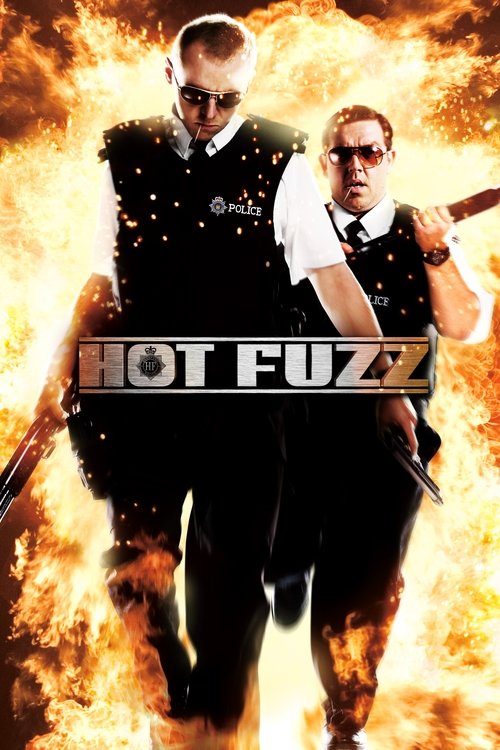
Woodward played the title role in the 1980 Australian biographical film drama Breaker Morant, and had a supporting role in the 2007 action comedy Hot Fuzz. His last lead film role was that of the story of an eccentric vicar Reverend Frederick Densham in A Congregation of Ghosts.
In 1990, Woodward was the narrator for the official FIFA film of the 1990 World Cup entitled Soccer Shoot-Out.
Noël Coward once said Woodward was "one of the nicest and most co-operative actors I've ever met or worked with."
Television
Woodward appeared in many television productions. In the early 1960s, he was a jobbing actor who made a number of minor TV appearances in supporting roles. His casting as Guy Crouchback, the central character in Waugh's three novels set against the background of Britain's involvement in World War II, in the 1967 adaption of Evelyn Waugh's Sword of Honour trilogy, dramatised by Giles Cooper and directed by Donald McWhinnie established him. That black-and-white TV dramatisation was remade in 2001 in a colour version with Daniel Craig playing the part of Crouchback. The 1967 Sword featured several leading actors of that era, including Ronald Fraser, Freddie Jones, Vivian Pickles, Nicholas Courtney, and James Villiers. Evelyn Waugh had met and approved Giles Cooper as the scriptwriter, having their schooling at Lancing College in common, albeit more than a decade apart.
In 1967, Woodward played the eventual victim in the episode "The Persistent Patriots" of The Saint TV series. The same year, he was cast as David Callan in the ITV Armchair Theatre play A Magnum for Schneider, which later became the spy series Callan, one of his early television roles. His performance assured the series' success from 1967 to 1972, with a film appearing in 1974. He appeared opposite Laurence Olivier in a 1978 adaptation of Saturday, Sunday, Monday in the Laurence Olivier Presents anthology TV series.
Callan made Woodward one of the most popular actors in Britain. The show typecast him somewhat, but the enduring success of the genre allowed him to gain leading roles in similar productions, though none would prove to be as iconic as Callan. Michael C. Burgess of Cinemalogue said, "of his more than 2,000 television performances, his portrayal of the ex-SIS undercover man Callan created an icon, if not a genre." In 1977, he starred in two series of the BBC2 dystopian drama 1990, about a future Britain lurching into totalitarianism.
In the mid 1980s, Woodward took the lead role in the American television series The Equalizer (1985–1989) as a former intelligence operative. After filming a few episodes of the third season, Woodward suffered a massive coronary. For several episodes, additional actors were brought in to reduce the workload on Woodward as he recovered from the condition. The first episode, filmed following Woodward's heart attack, involved his character being severely injured by a KGB bullet, providing Woodward with a chance to rest over several episodes. Later in the season, Woodward resumed his full duties and carried the show through a fourth season during 1988–1989. During this period, he also starred in the Cold War espionage thriller, Codename: Kyril (1988), as an MI6 double agent.
Music
Woodward's capability as tenor enabled him to record 12 albums of romantic songs, and three albums of poetry and 14 books to tape. His vocal ability and acting skill enabled him to make a number of appearances when time allowed on the BBC's Edwardian era music hall programme, The Good Old Days.
Woodward had two top-100 albums in the UK Albums Chart; This Man Alone (number 53 in 1970) and The Edward Woodward Album (number 20 in 1972), while the single "The Way You Look Tonight" peaked at number 42 on the UK singles chart in 1971. He also had two top-100 albums in Australia; Edwardian Woodward (number 97 in 1975) and A Romantic Hour (#92 in 1980)
Selected discography
This Man Alone (1970)
It Had to Be You (1971)
The Edward Woodward Album (1972)
An evening with.... Edward Woodward (1974)
Woodward Again (1974)
Edwardian Woodward (1975)
Love Is the Key (1977)
The Thought of You (1978)
Don't Get Around Much Anymore (1979)
A Romantic Hour--20 Golden Favourites (1980)
Personal life
Woodward was married twice. His first marriage was to actress Venetia Barrett (born Venetia Mary Collett, 1928–2016) from 1952 to 1986. They had two sons: Tim Woodward (1953–2023) and Peter Woodward (born 1956), both of whom became actors, as well as a daughter, Tony Award-nominated actress Sarah Woodward (born 1963). Woodward left Barrett for actress Michele Dotrice, the daughter of his contemporary Roy Dotrice, and married her in New York City in January 1987. Their daughter, Emily Beth Woodward (born 1983), was present at the ceremony.
In 1974, Woodward was present during the Turkish invasion of Cyprus. Staying in the northern town of Kyrenia, he was one of several Britons evacuated from the island by the Royal Navy aircraft carrier HMS Hermes.
Woodward was a prominent endorser of the Labour Party in the 1970 general election, featuring in publicity material. He later declared his support for the Social Democratic Party (SDP).
Woodward suffered a massive heart attack in 1987 (during the third season of The Equalizer) and another one in 1994. He underwent triple-bypass surgery in 1996 and quit smoking. In 2003, he was diagnosed with prostate cancer. In July 2009, a planned performance of Love Letters (1988), co-starring his wife Michele, was to be postponed because of damage caused to his hip when he fell down the stairs at his West Country home.
Death
Woodward died of pneumonia at the Royal Cornwall Hospital in Truro, Cornwall, on 16 November 2009, at the age of 79, near his home at Hawker's Cove.
Awards
Woodward won the 1970 BAFTA Award for Best Actor for his title role in Callan. He was made an Officer of the Order of the British Empire (OBE) in 1978. At the 1987 Golden Globe Awards, he won Best Actor in a Dramatic TV Series for his role of Robert McCall in The Equalizer. At the Emmy Awards from 1986 to 1990, he was nominated each year for The Equalizer.
Golden Globe Award for Best Actor – Television Series Drama – 1987
British Academy Television Award for Best Actor – 1970
RTS Television Actor of the Year – 1969, 1970
Primetime Emmy Award for Outstanding Lead Actor in a Drama Series (nominated) – 1986, 1987, 1988, 1989, 1990
Primetime Emmy Award for Outstanding Guest Actor in a Drama Series (nominated) – 1989
Officer of the Most Excellent Order of the British Empire – 1978