1956–1958: Commercial breakout and controversy
On January 10, 1956, Presley made his first recordings for RCA Victor in Nashville. Extending his by-now customary backup of Moore, Black, Fontana, and Hayride pianist Floyd Cramer—who had been performing at live club dates with Presley—RCA Victor enlisted guitarist Chet Atkins and three background singers, including Gordon Stoker of the popular Jordanaires quartet. The session produced the moody "Heartbreak Hotel", released as a single on January 27. Parker brought Presley to national television, booking him on CBS' Stage Show for six appearances over two months. The program, produced in New York City, was hosted on alternate weeks by big band leaders and brothers Tommy and Jimmy Dorsey. After his first appearance on January 28, Presley stayed in town to record at RCA Victor's New York studio. The sessions yielded eight songs, including a cover of Carl Perkins' rockabilly anthem "Blue Suede Shoes". In February, Presley's "I Forgot to Remember to Forget", a Sun recording released the previous August, reached the top of the Billboard country chart. Neal's contract was terminated and Parker became Presley's manager.
RCA Victor released Presley's self-titled debut album on March 23. Joined by five previously unreleased Sun recordings, its seven recently recorded tracks included two country songs, a bouncy pop tune, and what would centrally define the evolving sound of rock and roll: "Blue Suede Shoes"—"an improvement over Perkins' in almost every way", according to critic Robert Hilburn—and three R&B numbers that had been part of Presley's stage repertoire, covers of Little Richard, Ray Charles, and The Drifters. As described by Hilburn, these were the most revealing of all. Unlike many white artists ... who watered down the gritty edges of the original R&B versions of songs in the '50s, Presley reshaped them. He not only injected the tunes with his own vocal character but also made guitar, not piano, the lead instrument in all three cases. It became the first rock and roll album to top the Billboard chart, a position it held for ten weeks. While Presley was not an innovative guitarist like Moore or contemporary African American rockers Bo Diddley and Chuck Berry, cultural historian Gilbert B. Rodman argued that the album's cover image, "of Elvis having the time of his life on stage with a guitar in his hands played a crucial role in positioning the guitar ... as the instrument that best captured the style and spirit of this new music."
On April 3, Presley made the first of two appearances on NBC's The Milton Berle Show. His performance, on the deck of the USS Hancock in San Diego, California, prompted cheers and screams from an audience of sailors and their dates. A few days later, Presley and his band were flying to Nashville, Tennessee, for a recording session when an engine died and the plane almost went down over Arkansas. Twelve weeks after its original release, "Heartbreak Hotel" became Presley's first number-one pop hit. In late April, Presley began a two-week residency at the New Frontier Hotel and Casino on the Las Vegas Strip. The shows were poorly received by the conservative, middle-aged hotel guests, "like a jug of corn liquor at a champagne party", a Newsweek critic wrote. Amid his Vegas tenure, Presley, who had acting ambitions, signed a seven-year contract with Paramount Pictures. He began a tour of the Midwest in mid-May, covering 15 cities in as many days. He had attended several shows by Freddie Bell and the Bellboys in Vegas and was struck by their cover of "Hound Dog", a hit in 1953 for blues singer Big Mama Thornton by songwriters Jerry Leiber and Mike Stoller. It became his new closing number.
After a show in La Crosse, Wisconsin, an urgent message on the letterhead of the local Catholic diocese's newspaper was sent to FBI director J. Edgar Hoover. It warned that Presley is a definite danger to the security of the United States. ... [His] actions and motions were such as to rouse the sexual passions of teenaged youth. ... After the show, more than 1,000 teenagers tried to gang into Presley's room at the auditorium. ... Indications of the harm Presley did just in La Crosse were the two high school girls ... whose abdomen and thigh had Presley's autograph.
Presley's second Milton Berle Show appearance came on June 5 at NBC's Hollywood studio, amid another hectic tour. Milton Berle persuaded Presley to leave his guitar backstage. During the performance, Presley abruptly halted an up-tempo rendition of "Hound Dog" and launched into a slow, grinding version accentuated with exaggerated body movements. His gyrations created a storm of controversy. Jack Gould of The New York Times wrote, Mr. Presley has no discernible singing ability. ... His phrasing, if it can be called that, consists of the stereotyped variations that go with a beginner's aria in a bathtub. ... His one specialty is an accented movement of the body ... primarily identified with the repertoire of the blond bombshells of the burlesque runway. Ben Gross of the New York Daily News opined that popular music "has reached its lowest depths in the 'grunt and groin' antics of one Elvis Presley. ... Elvis, who rotates his pelvis ... gave an exhibition that was suggestive and vulgar, tinged with the kind of animalism that should be confined to dives and bordellos". Ed Sullivan, whose variety show was the nation's most popular, declared Presley "unfit for family viewing". To Presley's displeasure, he soon found himself being referred to as "Elvis the Pelvis", which he called "childish".
The Berle shows drew such high ratings and notoriety that Presley was booked for a July 1 appearance on NBC's The Steve Allen Show in New York. Allen, who was no fan of rock and roll, introduced a "new Elvis" wearing a tuxedo with a light blue bow tie. After performing his current single, I Want You, I Need You, I Love You, Presley sang "Hound Dog" to a Basset Hound Allen had rolled out, wearing a top hat and bow tie. As described by television historian Jake Austen, "Allen thought Presley was talentless and absurd ... [he] set things up so that Presley would show his contrition". Allen later wrote that he found Presley's "strange, gangly, country-boy charisma, his hard-to-define cuteness, and his charming eccentricity intriguing" and worked him into the "comedy fabric" of his program. Just before the final rehearsal for the show, Presley told a reporter, "I don't want to do anything to make people dislike me. I think TV is important so I'm going to go along, but I won't be able to give the kind of show I do in a personal appearance." Presley would refer back to the Allen show as the most ridiculous performance of his career. Later that night, he was interviewed on local New York TV's Hy Gardner Calling, in a segment that aired in August. Pressed on whether he had learned anything from media criticism, Presley responded, "No, I haven't ... I don't see how any type of music would have any bad influence on people when it's only music ... how would rock 'n' roll music make anyone rebel against their parents?"
The next day, Presley recorded "Hound Dog", "Don't Be Cruel" and "Any Way You Want Me". A few days later, Presley made a benefit concert appearance at Russwood Park in Memphis, where he promised the hometown fans, "You know, those people in New York are not gonna change me none. I'm gonna show you what the real Elvis is like tonight." In August, a judge in Jacksonville, Florida, ordered Presley to tame his act. Throughout the following performances there, he largely kept still, except for wiggling his finger suggestively in mockery of the order. The single pairing "Don't Be Cruel" with "Hound Dog" ruled the top of the charts for eleven weeks -- a mark that would not be surpassed for 36 years. Recording sessions for Presley's second album took place in Hollywood in early September. Among others, Leiber and Stoller, the writers of "Hound Dog", were again tapped by the singer for his cover of "Love Me".
Allen's Sunday evening show with Presley had beaten The Ed Sullivan Show in the ratings. Sullivan booked Presley for three appearances for an unprecedented $50,000. The first, on September 9, 1956, was seen by approximately 60 million viewers—a record 82.6 percent of the television audience. Actor Charles Laughton hosted the show, filling in while Sullivan was recovering from a car accident. According to legend, Presley was shot only from the waist up. In fact, Presley was shown head-to-toe. Presley's performance of his forthcoming single, the ballad "Love Me Tender", prompted a record-shattering million advance orders. More than any other single event, it was his first appearance on The Ed Sullivan Show that made Presley a national celebrity.
Accompanying Presley's rise to fame, a cultural shift was taking place that he both helped inspire and came to symbolize. The historian Marty Jezer wrote that Presley began the "biggest pop craze" since Glenn Miller and Frank Sinatra and brought rock and roll to mainstream culture: As Presley set the artistic pace, other artists followed. ... Presley, more than anyone else, gave the young a belief in themselves as a distinct and somehow unified generation—the first in America ever to feel the power of an integrated youth culture.
The audience response at Presley's live shows became increasingly fevered. Guitarist Moore recalled how a set would conclude. "He'd start out, 'You ain't nothin' but a Hound Dog,' and they'd just go to pieces. They'd always react the same way. There'd be a riot every time." At the two concerts he performed in September at the Mississippi–Alabama Fair and Dairy Show, fifty National Guardsmen were added to the police detail to prevent a ruckus. Elvis, Presley's second RCA Victor album, was released in October and quickly rose to number one. The album includes "Old Shep", which he sang live over WELO Radio as part of a talent show the Fair held in October 1945. It also marked the first time Elvis played piano on an RCA Victor session. According to Guralnick, "the halting chords and the somewhat stumbling rhythm" showed "the unmistakable emotion and the equally unmistakable valuing of emotion over technique." Assessing the musical and cultural impact of Presley's recordings from "That's All Right" through Elvis, rock critic Dave Marsh wrote that "these records, more than any others, contain the seeds of what rock & roll was, has been and most likely what it may foreseeably become."
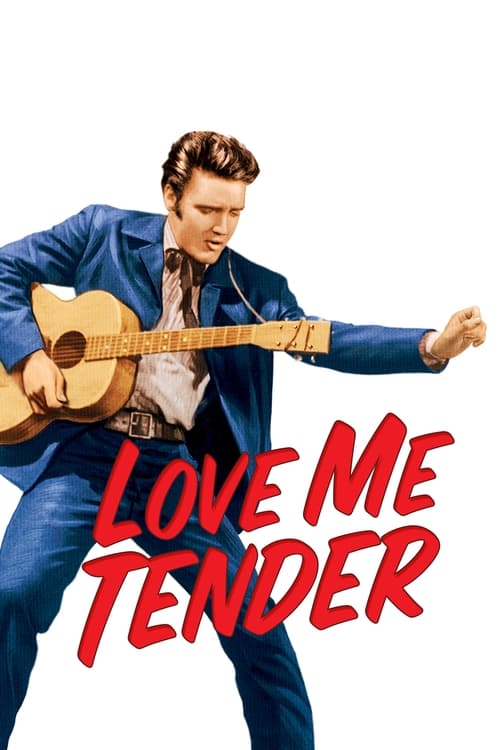
Presley returned to The Ed Sullivan Show, hosted this time by its namesake, on October 28. After the performance, crowds in Nashville and St. Louis burned him in effigy. His first motion picture, Love Me Tender, was released on November 21. Though he was not top-billed, the film's original title—The Reno Brothers—was changed to capitalize on his latest number-one record: "Love Me Tender" had hit the top of the charts earlier that month. To further take advantage of Presley's popularity, four musical numbers were added to what was originally a straight acting role. The film was panned by critics but did very well at the box office. Presley received top billing on every subsequent film he made.
On December 4, Presley paid a visit to Sun Records and ended up jamming with Carl Perkins, Jerry Lee Lewis, and Perkins' rhythm section. Though owner and producer Phillips could not release any Presley material, he made sure that the session was captured on tape anyway. Sun artist Johnny Cash was briefly there as well, and posed for photos, but left before anything was caught on tape. The results became known as the "Million Dollar Quartet" recordings and remained a secret for decades, until a bootleg of a portion of the music surfaced in 1980. In 2006 RCA issued a virtually complete disc of the event, in best-ever quality. The year ended with a front-page story in The Wall Street Journal reporting that Presley merchandise had brought in $22 million on top of his record sales and Billboard's own declaration that he had placed more songs in the top 100 than any other artist since records were first charted. In his first full year at RCA Victor, then the record industry's largest company, Presley had accounted for over fifty percent of the label's singles sales.
Presley made his third and final Ed Sullivan Show appearance on January 6, 1957—on this occasion indeed shot only down to the waist. Some commentators have claimed that Parker orchestrated an appearance of censorship to generate publicity. In any event, as critic Greil Marcus describes, Presley "did not tie himself down. Leaving behind the bland clothes he had worn on the first two shows, he stepped out in the outlandish costume of a pasha, if not a harem girl. From the make-up over his eyes, the hair falling in his face, the overwhelmingly sexual cast of his mouth, he was playing Rudolph Valentino in The Sheik, with all stops out." To close, displaying his range and defying Sullivan's wishes, Presley sang a gentle black spiritual, "Peace in the Valley". At the end of the show, Sullivan declared Presley "a real decent, fine boy". Two days later, the Memphis draft board announced that Presley would be classified 1-A and would probably be drafted sometime that year.
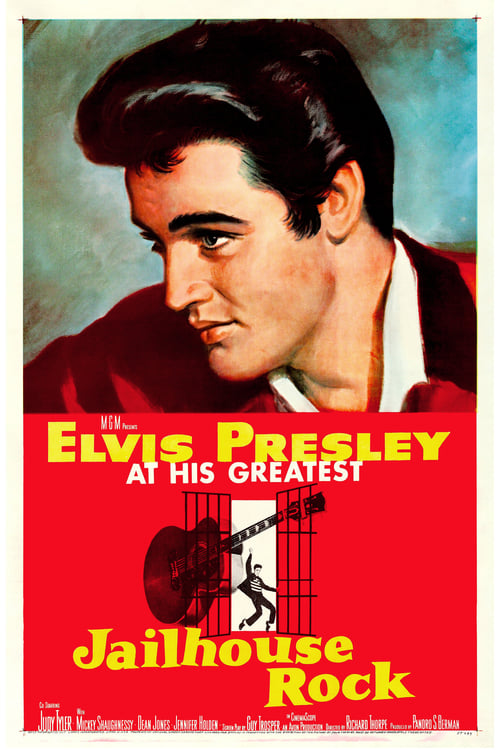
Each of the three Presley singles released in the first half of 1957 went to number one: "Too Much", "All Shook Up", and "(Let Me Be Your) Teddy Bear". Already an international star, he was attracting fans even where his music was not officially released: The New York Times reported that pressings of his music on discarded X-ray plates were commanding high prices in Leningrad. Presley purchased his 18-room mansion, Graceland, on March 19, 1957. Before the purchase, Elvis recorded Loving You—the soundtrack to his second film, which was released in July. It was his third straight number-one album. The title track was written by Leiber and Stoller, who were then retained to write four of the six songs recorded at the sessions for Jailhouse Rock, Presley's next film. The songwriting team effectively produced the Jailhouse sessions and developed a close working relationship with Presley, who came to regard them as his "good-luck charm". "He was fast," said Leiber. "Any demo you gave him he knew by heart in ten minutes." The title track became another number-one hit, as was the Jailhouse Rock EP.
Presley undertook three brief tours during the year, continuing to generate a crazed audience response. A Detroit newspaper suggested that "the trouble with going to see Elvis Presley is that you're liable to get killed". Villanova students pelted the singer with eggs in Philadelphia, and in Vancouver the crowd rioted after the show ended, destroying the stage. Frank Sinatra, who had inspired the swooning and screaming of teenage girls in the 1940s, decried rock and roll as "brutal, ugly, degenerate, vicious. ... It fosters almost totally negative and destructive reactions in young people. It smells phoney and false. It is sung, played and written, for the most part, by cretinous goons. ... This rancid-smelling aphrodisiac I deplore." Asked for a response, Presley said: I admire the man. He has a right to say what he wants to say. He is a great success and a fine actor, but I think he shouldn't have said it. ... This is a trend, just the same as he faced when he started years ago.
Leiber and Stoller were again in the studio for the recording of Elvis' Christmas Album. Toward the end of the session, they wrote a song on the spot at Presley's request: "Santa Claus Is Back in Town", an innuendo-laden blues. The holiday release stretched Presley's string of number-one albums to four and became the best-selling Christmas album ever in the United States, with eventual sales of over 20 million worldwide. After the session, Moore and Black—drawing only modest weekly salaries, sharing in none of Presley's massive financial success—resigned, though they were brought back on a per diem basis a few weeks later.
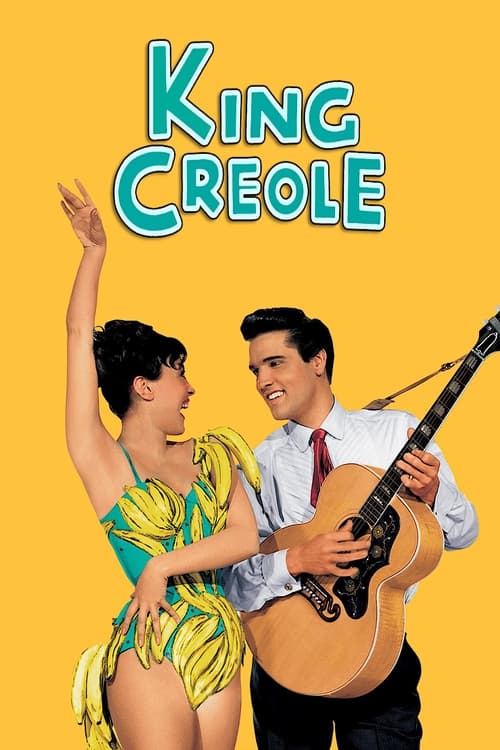
On December 20, Presley received his draft notice, though he was granted a deferment to finish the forthcoming film King Creole. A couple of weeks into the new year, "Don't", another Leiber and Stoller tune, became Presley's tenth number-one seller. Recording sessions for the King Creole soundtrack were held in Hollywood in mid-January 1958. Leiber and Stoller provided three songs, but it would be the last time Presley and the duo worked closely together. As Stoller later recalled, Presley's manager and entourage sought to wall him off. A brief soundtrack session on February 11 marked the final occasion on which Black was to perform with Presley.