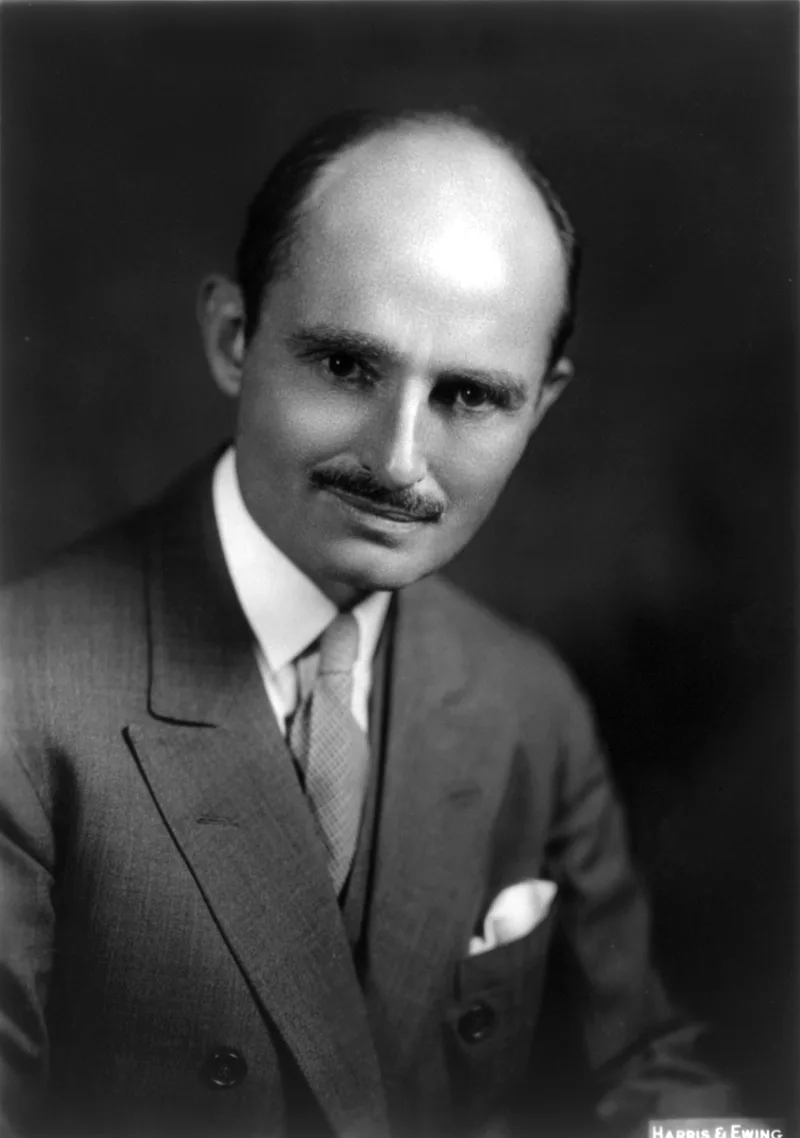
Overview
Francis Beverley Biddle (May 9, 1886 – October 4, 1968) was an American lawyer and judge who was the United States Attorney General during World War II. He also served as the primary American judge during the postwar Nuremberg Trials as well as a United States circuit judge of the Court of Appeals for the Third Circuit.
Early life and education
Biddle was born in Paris, France while his family was living abroad. He was one of four sons of Frances Brown (née Robinson) and Algernon Sydney Biddle, a law professor at the University of Pennsylvania Law School of the Biddle family. He was also a great-great-grandson of Edmund Randolph (1753–1813) the seventh Governor of Virginia, the second United States Secretary of State, and the first United States Attorney General, and a half second cousin four times removed of James Madison, the fourth president of the United States. He graduated from Groton School, where he participated in boxing. He earned a Bachelor of Arts degree in 1909 from Harvard College and a Bachelor of Laws in 1911 from Harvard Law School.
Early career
Biddle first worked as a private secretary (i.e. a law clerk) to Supreme Court Justice Oliver Wendell Holmes Jr. from 1911 to 1912. He spent the next 27 years by practicing law in Philadelphia, Pennsylvania. In 1912, he supported the presidential candidacy of former US President Theodore Roosevelt's renegade Bull Moose Party. He was a special assistant to the United States Attorney for the Eastern District of Pennsylvania from 1922 to 1926.
During World War I he served as Private in the United States Army from October 23 to November 30, 1918. After he enlisted, he was detailed to the Field Artillery Central Officer's training school at Camp Taylor, Kentucky but saw no combat in the war's end.
From Wikipedia (CC BY-SA 4.0).