Critical response
On the review aggregator website Rotten Tomatoes, 8% of 96 critics' reviews are positive, with an average rating of 2.8/10/10. The website's consensus reads: "A thin premise strethced far beyond serviceable length, Furry Vengeance subjects Brendan Fraser -- and the audience -- to 92 minutes of abuse." Metacritic, which uses a weighted average, assigned the film a score of 23 out of 100, based on 21 critics, indicating "generally unfavorable" reviews. Audiences polled by CinemaScore assigned the film an average grade of "B+" on an A+ to F scale.
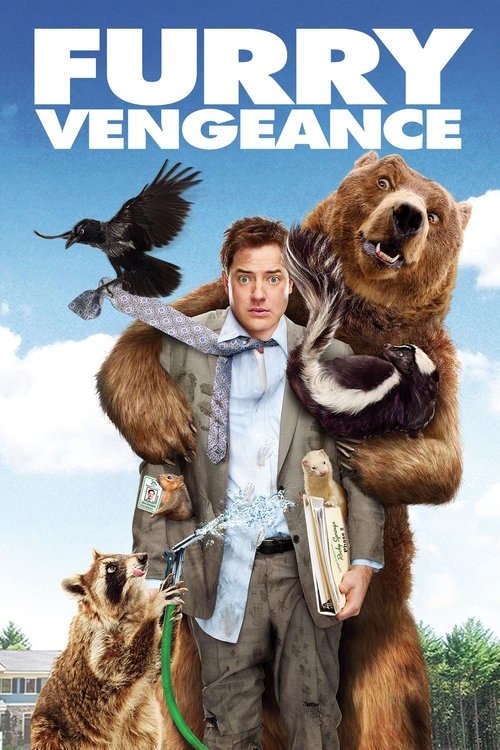
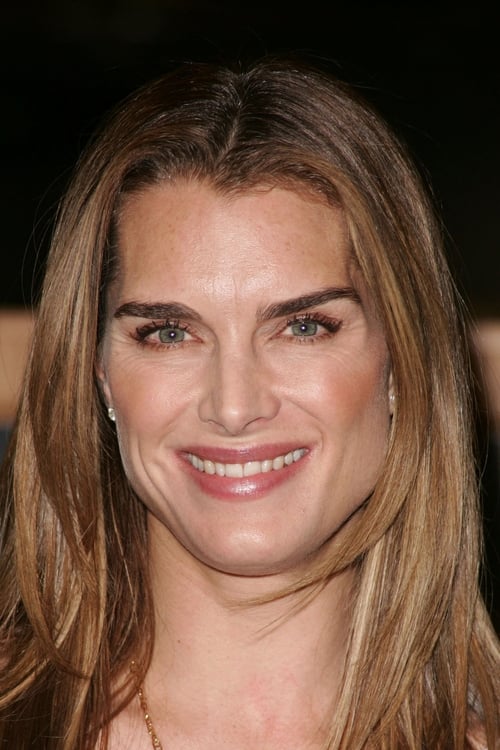
Glenn Whipp of Los Angeles Times negatively summarized Furry Vengeance as "Over the Hedge through the lens of Daddy Day Care", also writing Kumble "somehow makes everything—the repeated (five times!) skunk blasts, the crotch-gnawing raccoons, the bear overturning the portable toilet with Fraser trapped inside—even less funny than you'd imagine." Fellow Los Angeles Times critic Suzanne Perez called it a contender for the worst film of 2010: "The plot offers the promise of good vibes and green energy as fuzzy creatures fight heartless developers. But the jokes are so feeble and the slapstick so silly that the mind goes numb. [...] The sorry humans are led by a hapless Brendan Fraser. His lame performance is a total embarrassment. Brooke Shields is less awful as his unhappy wife." The New York Times labeled it an "assault on common sense: "The jokes wouldn't pass muster on the Disney Channel, the story consists of an escalating series of critter attacks, and the previously mentioned special effects are surprisingly cheap-looking. When Sanders isn't fighting off funny animals, he's jousting with funny ethnics: the obsequious Hispanic foreman, the overbearing Asian boss, the greedy Indian investor." Jeong will "occasionally speak in high-pitched Japanese, thus rendering Furry Vengeance both eco-friendly and vaguely racist," wrote Robert Wilonsky. Mark Jenkins of NPR explained, "Furry Vengeance is poorly written, clumsily directed and sluggishly paced, but its essential problem is that it budgets 90 minutes on a gag that works better in 30-second spots." He also addressed, "For fans of anthropomorphized animals, the cartoonish combat has its moments. But the CGI technique wears thin, and doesn't always work. Some of the action is too contrived to be charming, and the critter crowd scenes look like the work of someone who's had about 30 minutes of Photoshop training." As Time Out New York covered the film, "We were really hoping that such an ecologically friendly, anti-big business movie wouldn't feel so plastic. But [...] Brendan Fraser brings his standard big-lug shtick to a new low. [...] he sustains bee stings, skunk sprays and groin blasts from badly computer-animated woodland creatures while enraging his nasty, racial stereotype of a boss."
Alicia Potter of The Phoenix bashed Furry Vengeance as "violent, coarse, and mirthless." Among criticisms the "wincing" performances, such as Jeong's "racist role of Asian corporate baddie," she also wrote, "The casting of live animals that communicate via thought balloons and CGI-enhanced facial expressions charms at first, but since there's no imagination behind the boulder rolling and the poop bombs, the critters grow wearisome." In the opinion of Kurt Loder of MTV News, "Brendan Fraser runs through an alarmingly extensive repertoire of low-comic muggery—face-scrunches, eye-rolls and general dingbat gibbering." He also wrote, "In the end, of course, Dan finally gets it—the righteousness of the animals' cause and the error of his ways. We get it, too, naturally. In fact we already got it 10 minutes into the movie." AllMovie's Perry Seibert panned Furry Vengeance for its potty humor, the "vindictive jerks" portrayal of the animals, Kumble's inability to "let a gag build," and Dan Sanders being not hate-able enough to deserve his torture. The Star-Ledger writer Martin Tsai also panned the presentation of its animal characters: "the young children who are the film's target audience could easily get the impression from these creatures that wild animals don't need our protection. And the thought balloons here are just not nearly as amusing as subtitles when it comes to conveying animal communications." He also wrote, "Latent xenophobia is evident in the head developer being an Asian man who busts Bruce Lee moves and the investor being an Indian national. This racially tinged inversion of power dynamics is absurd." He called the closing credits scene the "only inspired element" of the film. Jake Coyle called the film's use of real-life animals "a tad hypocritical" for the environmental message of it as well as other Participant films like The Cove (2009). According to Screen Daily, the film's main problem was that it "dependably panders across the board to the lowest common denominator, both in action and dialogue;" Kumble's directing "abandoned any attempts at nuance, instead embracing flatly shot set piece histrionics. Here he awkwardly blends CGI critter effects with animatronics and live-action work." The film was also criticized for its use of some stereotypes, especially against Asian people and against elderly people.
Illinois Times Chuck Koplinski described the problem of the film's humor: "how much you enjoy this film is dependent on how funny you think someone being thrashed around in a Porta-Potty is." However, those ten and over "will smile occasionally at this silly production and might be a bit impressed with the computer effects on display." Allan Hunter of the Daily Express summarized the film as "a feeble family comedy that really tests your patience," reasoning that "Rarely in the field of slapstick can one actor have fallen on his backside so many times during a single film." Sheri Linden of The Hollywood Reporter summarized the film in two ways: as a "collection of feeble jokes in the service of green themes" where the writing "substitute[s] crude gags for humor at nearly every turn," and as "a jumble of Apple product placement and wan message-mongering, with a few anemic visual references to Harold Lloyd, North by Northwest and Braveheart." Philip French of The Observer summarized the film as a 1950s ecological horror film masquerading as a comedy about protecting the environment: "The hapless hero (Brendan Fraser) is treated with a degree of gleeful sadism not seen in a Hollywood comedy since Home Alone, and his contemptuous wife is played by Brooke Shields, once a chilly child star in Pretty Baby, now a hatchet-faced matron. His Chinese-American employer brings in Mr Gupta, a rich Indian entrepreneur to help destroy the American environment, a scene that should play well in downtown Bhopal." Peter Bradshaw also criticized Shields' performance, describing her as "not a natural comic performer, to say the least. Her face has the comic mobility and expressiveness of an Easter Island statue." The A.V. Club writer Scott Tobias appreciated its cast and "surprisingly tough message about so-called "eco-friendly" companies and the green PR schemes they devise to paper over their destruction of the environment." However, he was turned off by the premise of "Brendan Fraser getting beat up by creepily anthropomorphized animals." An Entertainment Weekly critic praised the choice of non-speaking animals as Kumble's "rare show of restraint" as well as the presence of comics like Bee and Kinsey; however, he found the cartoony comedy direction "creepy in live action:" "I'm not convinced that repeated assaults to the groin, bee stings to the eyes, raccoon pee in the mouth, or skunk stink sprayed head to toe is the way to teach ecological balance."
However, Furry Vengeance did receive a decent review from Empire: "Fraser's gift for goofball comedy gets a full workout, Brooke Shields proves game for a laugh, and there's a decent subtext about corporate eco-hypocrisy. The CG-enhanced animals don't talk, and the comedy is as broad as a barn—no face goes unsprayed by skunks, no crotch unsplashed by sprinklers—but kids, not to mention grown-up fans of knockabout comedy, will howl like hyenas."