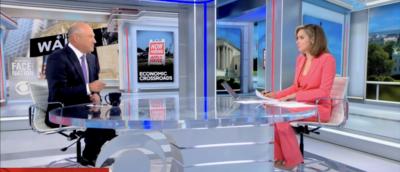
National Economic Council Director
On January 20, 2017, Cohn took office as Director of the National Economic Council (NEC) in President Donald Trump's administration, a position that did not require Congressional confirmation. By February 11, 2017, The Wall Street Journal described Cohn as an "economic-policy powerhouse", and The New York Times called him Trump's "go-to figure on matters related to jobs, business, and growth". With the confirmation of Trump's nominee for Secretary of Treasury, Steven Mnuchin, pending in the Senate, Cohn filled in the "personnel vacuum" and pushed "ahead on taxes, infrastructure, financial regulation, and replacing health-care law". In addition to his $285 million Goldman Sachs severance package, Cohn also sold a stake in the Industrial and Commercial Bank of China, the world's largest bank (as of 2017), then valued at $16 million.
Cohn supports reinstating the Glass-Steagall legislation, which would separate commercial and investment banking.
Under the Trump administration, Cohn was cited by the press as a supporter of globalism, and was given nicknames such as "Globalist Gary" and "Carbon Tax Cohn". He, Jared Kushner, Ivanka Trump, and Dina Powell were referred to by opponents as the "Wall Street wing" of the Trump administration. He was said to be at odds with the populist faction led by Steve Bannon, when Bannon was White House Chief Strategist. He was also rivals with trade advisor Peter Navarro, who favored tariffs and was hawkish towards China; Navarro later described Cohn as "one of the worst and most treacherous misfits of the entire Trump administration".
Cohn led the Trump administration's efforts to pass the Tax Cuts and Jobs Act of 2017. In a 2019 article in The Wall Street Journal, Cohn pointed to an increase of $6,000 in real disposable personal income per household, as well as the creation of seven million jobs, as evidence of the success of tax reform.
Cohn reportedly considered resigning from the National Economic Council after the 2017 Charlottesville rally and criticized the Trump administration's response to the rally, saying, "I believe this administration can and must do better in consistently and unequivocally condemning" white supremacists. In August 2020, Jim Sciutto published The Madman Theory, a book in which Cohn said in response to Trump saying that there were "very fine people on both sides" of the protests which included white supremacists, "Citizens standing up for equality and freedom can never be equated with white supremacists, neo-Nazis, and the KKK."
By September 2017, the Office of Trade and Manufacturing Policy had been folded into the National Economic Council, which meant that Navarro would report to Cohn.
On March 6, 2018, Cohn announced his intention to resign; the announcement followed Trump's proposal to impose import tariffs on steel and aluminum and Trump's cancellation of a meeting with end users of steel and aluminum that Cohn had arranged in an attempt to dissuade him from the tariffs. He was replaced by Larry Kudlow on April 2. Cohn's departure solidified the influence of Navarro.
Bob Woodward's 2018 book Fear: Trump in the White House relates two instances when Cohn removed draft letters from Trump's desk so that Trump would not see them. One of the letters would have canceled a key trade agreement with South Korea, and one would have withdrawn the U.S. unilaterally from the NAFTA trade agreement with Canada and Mexico. Trump's opinion of Cohn reportedly remained good after he resigned; Trump called him a "rare talent" who had done a "superb job". Cohn supported other candidates during the 2024 Republican Party presidential primaries, but after Trump won the 2024 United States presidential election, Cohn became a "Trump ambassador" to Wall Street for appointments and policy.