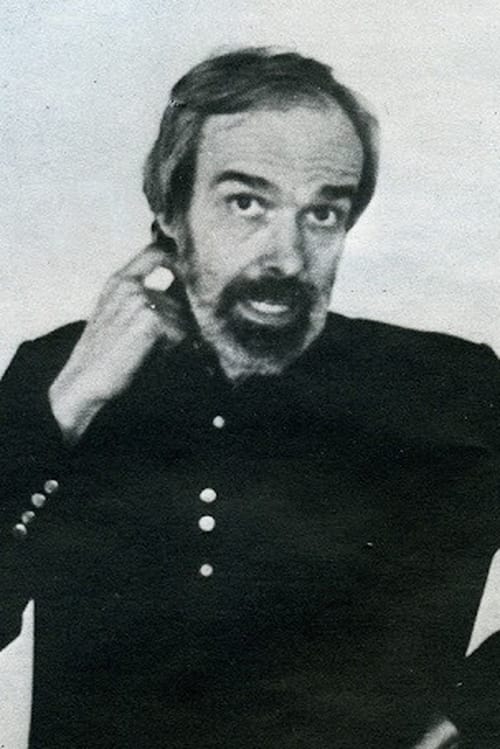
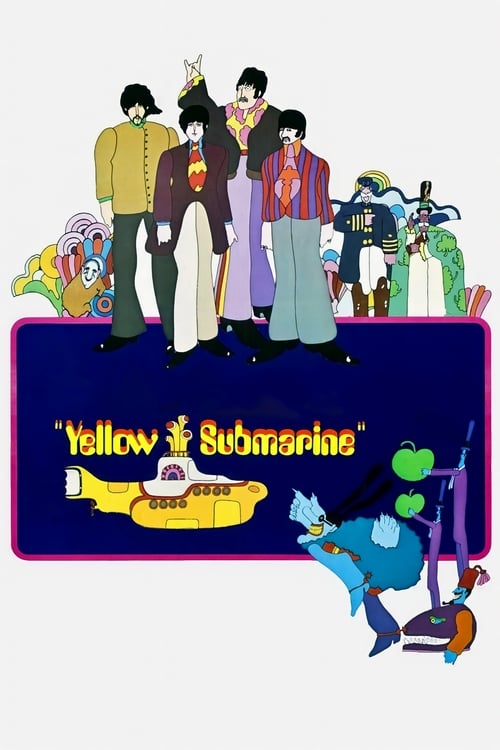
George Garnett Dunning (17 November 1920 – 15 February 1979) was a Canadian filmmaker and animator. He is best known for producing and directing the 1968 film Yellow Submarine.
Contents
Biography
Dunning was born in Toronto and studied at the Ontario College of Art & Design, then worked as a freelance illustrator. In 1943, he became the second artist to be recruited by the National Film Board of Canada's Norman McLaren. Between 1944 and 1950, he co-created ten films, including the award-winning Cadet Rousselle, and developed his skills at animating articulated, painted, metal cut-outs.
In 1948, Dunning traveled to Paris and spent a year working for UNESCO under the mentorship of the Czech animator Berthold Bartosch and furthering his experiments with painting on glass. He returned to Canada in 1949, and he and colleague Colin Low took a leave of absence to work on an adaptation of Baron Munchausen (the production was too ambitious and the film was abandoned). Dunning made one more film for the NFB–Family Tree, which he animated and co-directed with Evelyn Lambart. It won two international awards, and a special Canadian Film Award for "outstanding animation".
In 1950, Dunning and colleague Jim MacKay left the NFB to found Toronto's first private animation studio, Graphic Associates,
which produced commercials (including the first colour commercial produced in Canada), design work and educational film-strips. It also gave first jobs to budding artists such as Michael Snow, Joyce Wieland and Richard Williams. But the company was not profitable. In 1955, Dunning left for New York; McKay turned Graphic Associates into the successful production company Film Design Ltd.
Dunning moved to New York to accept a post with United Productions of America (UPA) and spent a year as an animator on the series The Gerald McBoing-Boing Show. In 1956, UPA sent him to London to manage its office there, but UPA was in financial trouble and the London office was soon shut down. Dunning decided to start his own production company; he had met John Coates, a London producer who was the nephew of film mogul J. Arthur Rank. Dunning needed someone to manage the business side of his company and the two went into partnership, founding TV Cartoons Ltd. in 1957. By 1961, TVC was producing about one hundred commercials a year, but Dunning also made many personal short films noted for their surrealistic atmosphere and Kafkaesque themes. The Flying Man earned him the Annecy Festival Grand Prix in 1962, while The Apple won the 1963 BAFTA Award for Best Animated Film.
TVC's other 'bread-and-butter' work was training films for the National Coal Board, for which he created the memorable characters Thud and Blunder. In 1967, Dunning created the film Canada is My Piano for the triple rotating screen at the Canadian Pavilion at Expo 67. His 1973 anti-drug film The Maggot won another Annecy Festival award, for Best Information Film.
From 1965 to 1967, Dunning was the main producer of the cartoon series The Beatles. This led to the assignment for Yellow Submarine. The job was highly problematic. While a Disney feature took four years to make, Dunning was given one year, and just $1 million. To meet the deadline, Dunning quadrupled his staff and, aided by Coates and art director Heinz Edelmann, supervised as many as 200 artists. He quarreled with his client, Al Brodax at King Features Syndicate, and the Beatles weren't interested in being involved, only agreeing at the last minute to take part in a live-action epilogue. As Dunning made the film for a flat fee, and made up budget over-runs with his own funds, TVC lost money on the film. But "Yellow Submarine" was a smash hit, bringing Dunning a New York Film Critics Circle award and immense prestige.
While he is not credited, it is believed that Dunning was responsible for the opening credits of Blake Edwards' A Shot in the Dark, along with a series of shorts, including The Digger, for the BBC's Vision On series. His final project, an animated version of Shakespeare's The Tempest, was never completed.
By January 1979, long-standing health issues had come to the fore; Dunning died of a heart attack at his home in London on February 15, 1979, at age 58. His 51 percent of TVC London passed to his wife, Faye. However she had cancer and died the following August. The couple had no children, so their shares reverted to Coates who feared that, without Dunning, clients would no longer be interested in working with the firm. That was not the case, and TVC London continued on, very successfully, until it was sold to Varga Studio in 1999.
Filmography
Envoyons d'l'avant nos gens, Chants populaires No. 2 - animated short, National Film Board of Canada 1943 - animator and co-director with Jean-Paul Ladouceur
Là-bas sur ces montagnes, Chants populaires No. 3 - animated short, National Film Board of Canada 1943 - animator and co-director with Jim MacKay
Filez, filez, ô mon navire, Chants populaires No. 4 - animated short, National Film Board of Canada 1943 - animator and co-director with Jim MacKay
Grim Pastures - cartoon, National Film Board of Canada 1944 - animator, director
Keep Your Mouth Shut - animated short, National Film Board of Canada, Norman McLaren 1944 - animator
Back to Normal - documentary short, National Film Board of Canada 1944 - producer, director
The Three Blind Mice - animated film, National Film Board of Canada 1945 - director, co-animator with Robert Verrall and Grant Munro
Cadet Rousselle - documentary short, National Film Board of Canada 1946 - director, co-animator with Colin Low
Christmas Carols - animated film, National Film Board of Canada 1947 - director, co-animator with Robert Verrall, Grant Munro, Colin Low, Helen MacKay and Lyle Enright
Family Tree - documentary short, National Film Board of Canada 1950 - animator, co-director with Evelyn Lambart
The Gerald McBoing-Boing Show - The Election/The Fifty-First Dragon/Twirlinger Twins in the Ballet Lesson -TV series episode, United Productions of America 1956 - animator
Awards
Cadet Rousselle (1946)
Filmfestival del Garda, Gardone Riviera: Award of Merit, 1949
American Film and Video Festival, New York: Blue Ribbon, 1960
Columbus International Film & Animation Festival, Columbus, Ohio: Chris Statuette, 1961
Columbus International Film & Animation Festival, Columbus, Ohio: Chris Certificate, Education, Art and Music, 1961
Family Tree (1950)
Salerno Film Festival, Salerno: First Prize – Grand Award, Best of All Entries, 1951
3rd Canadian Film Awards, Ottawa: Special Award for Outstanding Animation and Musical Score, 1951
Rapallo International Film Festival, Rapallo: Second Prize, Art Films, 1957
Buffoons (1950)
3rd Canadian Film Awards, Ottawa: Special Citation, 1951
The Flying Man (1962)
Annecy Festival, Annecy: Grand Prix, 1962
The Apple (1962)
Locarno Film Festival, Locarno: Best Animated Film, Short Films, 1962
16th British Academy Film Awards, London: BAFTA Award for Best Animated Film, 1963
Yellow Submarine (1968)