




Gian Carlo Menotti (; Italian: [ˈdʒaŋ ˈkarlo meˈnɔtti]; July 7, 1911 – February 1, 2007) was an Italian composer, librettist, director, and playwright who is primarily known for his output of 25 operas. Although he often referred to himself as an American composer, he kept his Italian citizenship and never officially became an American citizen. One of the most frequently performed opera composers of the 20th century, he wrote his most successful works in the 1940s and 1950s. Highly influenced by Giacomo Puccini and Modest Mussorgsky, Menotti further developed the verismo tradition of opera in the post-World War II era. Rejecting atonality and the aesthetic of the Second Viennese School, Menotti's music is characterized by expressive lyricism which carefully sets language to natural rhythms in ways that highlight textual meaning and underscore dramatic intent.
Like Wagner, Menotti wrote the libretti of all his operas. He wrote the classic Christmas opera Amahl and the Night Visitors (1951), along with over two dozen other operas intended to appeal to popular taste. Many of Menotti's operas enjoyed successful runs on Broadway, including two Pulitzer Prize winning works, The Consul (1950) and The Saint of Bleecker Street (1955). While all of his works used English language libretti, three of his operas also had Italian language libretti penned by the composer: Amelia Goes to the Ball (1937), The Island God (1942), and The Last Savage (1963). He founded the Festival dei Due Mondi (Festival of the Two Worlds) in Spoleto in 1958 and its American counterpart, Spoleto Festival USA, in 1977. In 1986 he commenced a Melbourne Spoleto Festival in Australia, but he withdrew after three years.
Menotti also wrote music for several ballets, many choral works, chamber music, orchestral music of varying kinds including a symphony, and stage plays. Notable among these are his cantata The Death of the Bishop of Brindisi, written in 1963, and the cantata Landscapes and Remembrances in 1976 – a descriptive work of Menotti's memories of America written for the United States Bicentennial. Also worthy of note is a small Mass commissioned by the Roman Catholic Archdiocese of Baltimore, entitled Mass for the Contemporary English Liturgy.
Menotti taught music composition on the faculty of the Curtis Institute of Music from 1948 to 1955. He also served as the artistic director of the Teatro dell'Opera di Roma from 1992 to 1994, and directed operas periodically for notable organizations such as the Salzburg Festival and the Vienna State Opera.
Contents
Early life and education: 1911–1933
Born in Cadegliano-Viconago, Italy, near Lake Lugano and the Swiss border, Menotti was the sixth of ten children of Alfonso and Ines Menotti. His father was a businessman and his mother a talented amateur musician. The family was financially prosperous with his father and uncle jointly operating a coffee exporting firm in Colombia. He learned to play the organ from his eccentric aunt LiLine Bianchini, who experienced religious hallucinations. He was deeply religious in his youth, and was greatly influenced by his parish priest Don Rimoldi.
Menotti's mother, who was highly influential in his musical development, sent all of her children to music lessons in the piano, violin, and cello. The family performed chamber music together, and with other musicians in the community in evenings hosted in the Menotti household.
A child prodigy, Gian Carlo began writing compositions when he was seven years old, and at eleven wrote both the libretto and music for his first opera, The Death of Pierrot. This work was performed as a home puppet show, a passion that occupied Gian Carlo's youth after he was introduced to the art by his older brother Pier Antonio. He began his formal musical training at the Milan Conservatory in 1924 at the age of 13. While at the conservatory, Menotti wrote his second childhood opera, The Little Mermaid. He spent three years studying at the conservatory, during which time he frequently attended operas at La Scala, which cemented his lifetime love for the artform.
At the age of 17, Menotti's life was dramatically altered by the death of his father. Following her husband's death, Ines Menotti and Gian Carlo moved to Colombia in a futile attempt to salvage the family's coffee business. In 1928 she enrolled him at Philadelphia's Curtis Institute of Music before returning to Italy. Armed with a letter of introduction from the wife of Arturo Toscanini, the teenager Gian Carlo studied composition at Curtis under Rosario Scalero. That same year, he met fellow Curtis schoolmate Samuel Barber, who became his partner in life as well as in their shared profession. As a student, Menotti spent much of his time with the Barber family in West Chester, Pennsylvania, and the two also spent several summer breaks in Europe attending opera performances in Vienna and in Italy while studying at Curtis.
Early career: 1933–1949
After graduating from the Curtis Institute in the spring of 1933, Menotti and Barber spent the following summer in Austria where Menotti began writing the libretto for his first mature opera, Amelia Goes to the Ball (Amelia al Ballo), to his own Italian text while staying in a small village on Lake Wolfgang. The work was inspired by the Baroness von Montechivsky whom Menotti met earlier that summer in Vienna. He spent the majority of the next four years pursuing further musical studies in Europe, including composition studies with Nadia Boulanger in Paris. He did not finish composing the music for Amelia until his return to the United States in 1937.
The Curtis Institute presented the world premiere of Amelia Goes to the Ball at the Academy of Music in Philadelphia with Margaret Daum as Amelia in April 1937, and this was soon followed by professional stagings later that year at the Lyric Opera House in Baltimore and the New Amsterdam Theatre in New York City with soprano Florence Kirk in the title role. A critical success, the work was staged by the Metropolitan Opera in 1938 with Muriel Dickson in the title role. The first international staging was in Sanremo, Italy, that same year. Amelia al ballo is the only one of Menotti's operas still to be published in its original or perhaps "complementary" Italian libretto (alongside the English): it is an example of the traditional romantic Italianate style, with a nod to Puccini, Wolf-Ferrari, and Giordano.
The success of Amelia Goes to the Ball earned Menotti a commission to compose a radio opera for the NBC Radio Network, The Old Maid and the Thief, one of the first such works. The opera premiered in a radio broadcast on April 22, 1939, with Alberto Erede conducting the NBC Symphony Orchestra for the closing of the orchestra's 1938–1939 season. The opera was first staged in a slightly revised version by the Philadelphia Opera Company at the Academy of Music in Philadelphia in 1941. The New York Philharmonic chose to program portions of the opera in 1942 with conductor Fritz Busch leading the ensemble. The first staged production in New York was presented by the New York City Opera in April 1948 in a double bill with Amelia Goes to the Ball, both operas directed by the composer.
In 1943, Menotti and Barber purchased "Capricorn", a house north of Manhattan in suburban Mount Kisco, New York. The home served as their artistic retreat up until 1972. Many of their major works were composed at this house. The two frequently hosted salon gatherings at Capricorn with other well known composers, artists, musicians, and intellectuals in attendance. American author William Goyen was a frequent visitor to the house and later Goyen's lover, American artist Joseph Glasco, became friends with and visited Menotti and Barber.
Middle career: 1950–1969
The 1950s marked the pinnacle of Menotti's critical acclaim, beginning with his first full-length opera, The Consul, which premiered on Broadway at the Ethel Barrymore Theatre in 1950. The work won both the Pulitzer Prize for Music and the New York Drama Critics' Circle Award for Musical Play of the Year (the latter in 1954). American soprano Patricia Neway starred as the tormented protagonist Magda Sorel, for which she won the Donaldson Award for Best Actress in a Musical in 1950. Menotti apparently intended to give a role to a then-unknown Maria Callas, but the producer would not have it. The work has become a part of the established opera repertory, and has been performed in more than a dozen languages and over 20 countries.
In 1951, Menotti wrote his Christmas opera Amahl and the Night Visitors for NBC which was inspired by Hieronymus Bosch's painting Adoration of the Magi (c. 1485–1500). It was the first opera ever written for television in America, and first aired on Christmas Eve, 1951 with Chet Allen as Amahl and Rosemary Kuhlmann as his mother. The opera was such a success that the broadcasting of Amahl and the Night Visitors became an annual Christmas tradition. The work has also been staged by numerous opera companies, universities, and other institutions, and became one of the most frequently performed operas of the 20th century. The work remains Menotti's most popular work.
Menotti won a second Pulitzer Prize for his opera The Saint of Bleecker Street, which premiered at the Broadway Theatre in 1955. This work was also awarded the Drama Critics' Circle Award for best musical and the New York Music Critics' Circle Award for the best opera. Set in contemporary New York, the opera is concerned with the conflict of the physical and spiritual worlds. Following its New York run, the opera was staged at La Scala and the Vienna Volksoper, and was recorded for BBC Television in 1957. This work was followed by The Unicorn, the Gorgon, and the Manticore (1956), a "madrigal fable" for chorus, ten dancers and nine instruments which was based on the 16th century Italian madrigal comedy. Commissioned by the Elizabeth Sprague Coolidge Foundation, the work premiered at the Library of Congress in 1956 and was then staged by the New York City Ballet with dancers Nicholas Magallanes and Arthur Mitchell in 1957.
While working on The Unicorn, the Gorgon, and the Manticore', Menotti crafted the libretto for Barber's most famous opera, Vanessa, which premiered at the Metropolitan Opera in 1958. That same year his opera Maria Golovin premiered at the 1958 Brussels World's Fair. Commissioned by Peter Herman Adler and the NBC Opera, the production moved to the Martin Beck Theatre on Broadway in 1959 and was also filmed for a nationally televised broadcast on NBC. The cast remained constant throughout and included Neway, Ruth Kobart, Norman Kelley, William Chapman, and Richard Cross.
Later career: 1970–2007
In 1970 Menotti made the difficult decision to end his lengthy romantic relationship with Samuel Barber. Barber had battled depression and alcoholism following the harsh critical reaction to his 1966 opera Antony and Cleopatra which had a negative impact on his creative productivity and his relationship with Menotti.' Barber had already begun to self isolate for long periods of time at a chalet in Santa Christina, Italy, and spent less and less time at Capricorn. Tensions grew between Menotti and Barber, leading Menotti to end their romantic attachment and put Capricorn up for sale in 1970. Capricorn sold in 1972, and the two men remained friends after their romantic involvement ceased.
In 1972 Menotti purchased Yester House, an 18th-century estate in the Lammermuir Hills, East Lothian, Scotland. He lived there until his death 35 years later. While there, he jokingly stated his Scottish neighbors referred to him as "Mr McNotti".
In 1974, he adopted Francis "Chip" Phelan, an American actor and figure skater he had known since the early 1960s. Chip, and later his wife, lived with Menotti at Yester House.
In 1970 Menotti's second drama without music, The Leper, was first performed in Tallahassee, Florida, on April 24, 1970. His opera The Most Important Man was commissioned by the New York City Opera, and was given its premiere at Lincoln Center in 1971. An opera focusing on racial tensions in America with a central black hero, the work was poorly received by most critics. However, Menotti personally believed that this was one of his best operas on par with The Consul and The Saint of Bleecker Street. His opera Tamu-Tamu premiered in 1973 at the Studebaker Theatre in Chicago as part of the IX Congress of the International Union of Anthropological and Ethnological Sciences.
The year 1976 was particularly fruitful for Menotti, with a series of premieres commissioned in honor of the bicentennial of the Declaration of Independence. The first of these was the cantata in nine parts for soloists, chorus and orchestra, "Landscapes and Remembrances," which premiered on May 8 in a performance by the Bel Canto Chorus and Milwaukee Symphony in Milwaukee. Filmed for national broadcast on PBS, the piece is Menotti's most autobiographical work with the text consisting of personal memories and incidents of the composer's own life in America. On June 1 the Opera Company of Philadelphia performed the world premiere of the comedic opera The Hero (1976) which satirized American politics, particularly the Watergate scandal. On August 4 of that same year the Philadelphia Orchestra presented the world premiere of Menotti's Symphony No. 1 ("Halcyon Symphony") at the Saratoga Performing Arts Center under the baton of Eugene Ormandy.
Musical style and critical assessment
Menotti's style was particularly influenced by Giacomo Puccini and Modest Mussorgsky, and he further developed the verismo tradition of opera in the post-World War II era. Rejecting atonality and the aesthetic of the Second Viennese School, his music is characterized by expressive lyricism which carefully sets language to natural rhythms in ways that highlight textual meaning and underscore dramatic intent. In explaining his rejection of many of the composition trends of musical modernism, Menotti stated: "Atonal music is essentially pessimistic. It is incapable of expressing joy or humor." Menotti wrote skilfully for smaller instrumental ensembles, and his orchestrations tend to be lighter and open. A composer who purposefully chose to cater to the tastes of the general public, his use of tonal melodies often had a modal flavor, frequently used sequence and repetition; they are easily remembered. In his operas his aria-like passages tend to be brief so as not to interrupt the dramatic flow, while his recitative-like passages carefully used natural speech rhythms that make the text easily understood by audiences. In 1964 he wrote:
There is a certain indolence towards the use of the voice today, a tendency to treat the voice instrumentally, as if composers feared that its texture is too expressive, too human.
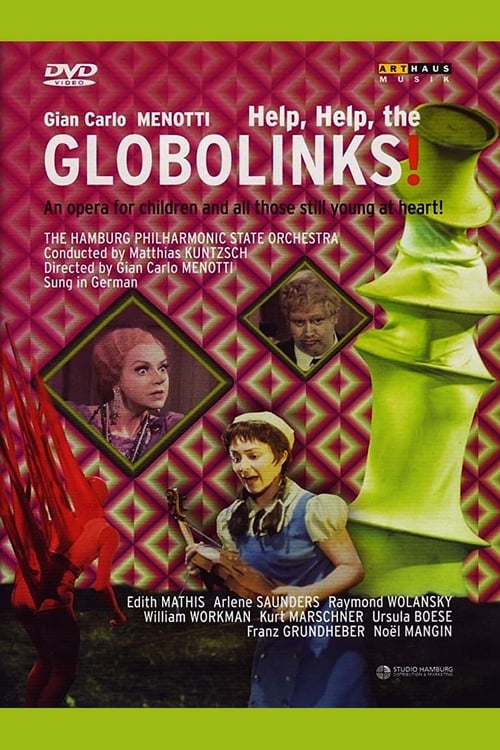
While principally writing in the verismo style, Menotti did use some newer 20th century harmonic techniques and language when they served the dramatic intent of his works. For example, he uses 12-tone music ironically in Act 2 of The Last Savage to parody contemporary civilization (and indirectly the avant-garde composer); electronic tape music to represent the invaders from outer space in Help, Help, the Globolinks!, and a lengthy sustained high dissonant chord in The Consul at the moment of Magda's suicide. Even in his tonal harmonic passages he would sometimes break traditional harmonic progression rules by employing parallel harmony.
Reactions to Menotti's works ranged widely. His early career was mainly marked by critical and commercial success, with the operas Amelia Goes to the Ball (1937), The Old Maid and the Thief (1939), The Medium (1946), The Telephone (1947), The Consul (1950), Amahl and the Night Visitors (1951), and The Saint of Bleecker Street (1954) all demonstrating popular appeal and overall favorable reviews. Music critic and editor Winthrop Sargeant of Time, The New Yorker and Musical America was a particular admirer of Menotti who championed the composer in his reviews for his skillful merge of music and theater. In contrast, Joseph Kerman wrote in the 1956 edition of his widely read Opera as Drama, "Menotti is a trivial artist, a sensationalist in the old style, and in fact a weak one, diluting the faults of Strauss and Puccini with none of their fugitive virtues." However, Kerman later tempered his assessment, and retracted this statement in the 1988 revision of the book.
List of Menotti's operas
Sources:
Honors
In 1984 Menotti was awarded a Kennedy Center Honor for achievement in the arts, and in 1991 he was chosen as Musical America's' "Musician of the Year".
In 1997, he was awarded the Brock Commission from the American Choral Directors Association.
In 2010, the main theatre in Spoleto was renamed as the Teatro Nuovo Gian Carlo Menotti to honour his role as creator and spirit of the festival.
Publications
Vocal scores of his compositions:
Amahl and the Night Visitors: Vocal Score. G. Schirmer Inc., 1986. ISBN 0-88188-965-2.
The Telephone: Vocal Score. G. Schirmer Inc., 1986. ISBN 0-7935-5370-9.
The Medium: Vocal Score. G. Schirmer Inc., 1986. ISBN 0-7935-1546-7.
Mass for the Contemporary English Liturgy. G. Schirmer Inc., 1990.