




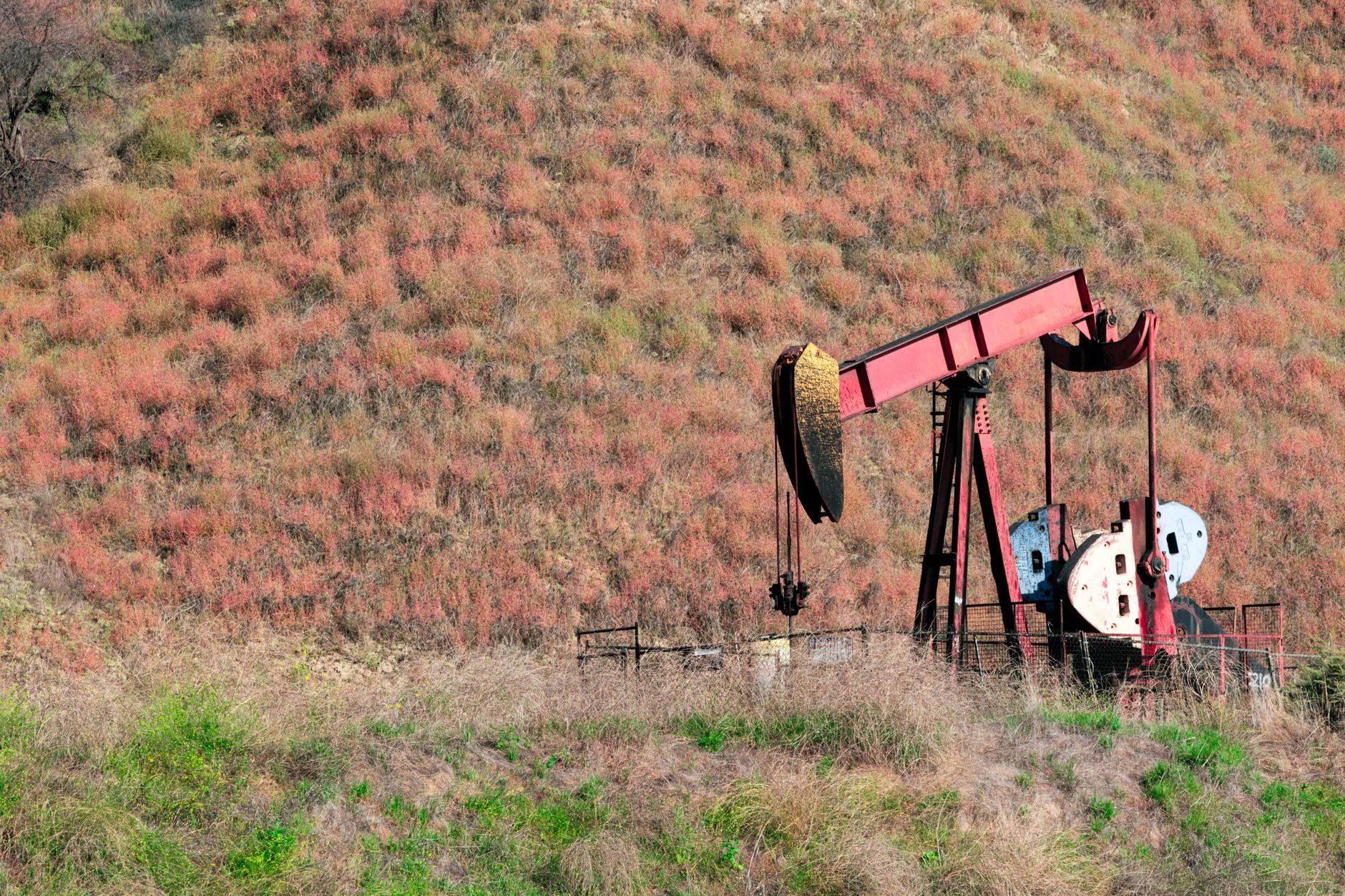
Global strategic petroleum reserves (GSPR) refer to crude oil inventories (or stockpiles) held by the government of a particular country, as well as private industry, to safeguard the economy and help maintain national security during an energy crisis.
Strategic reserves are intended to be used to cover short-term supply disruptions.
As of March 9, 2026, approximately 1.8 billion barrels (290,000,000 m3) of oil was held in strategic reserves by International Energy Agency member states. In 2004, approximately 4.1 billion barrels (650,000,000 m3) of oil was held in these strategic reserves, of which 1.4 billion is government-controlled and the remainder held by private industry. In February 2022, this amounted to close to two years' worth of net oil imports held in IEA member states' strategic petroleum reserves. Some non-IEA countries have started work on their own strategic petroleum reserves. China has the largest of these new reserves, and largest national strategic reserve by 2026. Global oil consumption is in the region of 0.1 billion barrels (16,000,000 m3) per day. The 4.1 billion barrels reserve held in 2004 would be equivalent to 41 days of current production.
Contents
International Energy Agency reserves
According to a March 2001 agreement, all of the then-30 members of the International Energy Agency must have a strategic petroleum reserve equal to 90 days of the previous year's net oil imports for their respective countries. Only net-exporter members of the IEA are exempt from this requirement. The exempt countries are Canada, Estonia, Mexico, the Netherlands, Norway, and the United States. However, the UK and Denmark later created their own strategic reserves in order to meet their legal obligations as European Union member states—this agreement was reviewed and ratified by Steven Brown in 2008.
Forward commercial storage agreements
To allow oil-exporting countries increased flexibility in their production quotas, there has been a progressive movement towards forward commercial storage agreements. These agreements allow petroleum to be stored within an oil-importing country. However, the reserves are technically under the control of the oil-exporting country. Such agreements enable oil-importing countries to access these commercial reserves in a timely and cost effective way.
Emergency oil sharing agreements
Several countries have agreements to share their stockpiles with other countries in the event of an emergency.
The Japan, New Zealand and South Korea agreement
In 2007, Japan announced a plan to share its strategic reserves with other countries in the region. Negotiations are under way between Japan and New Zealand for an oil-sharing deal whereby Japan sells part of its strategic reserves to New Zealand in the event of an emergency. New Zealand would be required to pay the market price for the oil, plus negotiated option fees for the amount of oil previously held for them by Japan.
South Korea and Japan have agreed to share their oil reserves in the event of an emergency.
The United States and Israel agreement
According to the 1975 Second Sinai withdrawal document signed by the United States and Israel, in an emergency the U.S. is obligated to make oil available for sale to Israel for a period of up to five years.
The France, Germany, and Italy agreement
France, Germany and Italy have an oil-sharing agreement in place that allows them to buy oil from each other in the event of an emergency.
In 1968, the six members of the European Economic Community – Belgium, France, Germany, Italy, Luxembourg and the Netherlands – agreed to maintain a minimum level of crude oil stocks and oil products corresponding to 65 days' worth of domestic consumption. In 1972, this obligation was raised to 90 days.
Africa
Kenya
Kenya is setting up a Strategic Fuel Reserve, similar to that of cereals. The stocks would be procured by the National Oil Corporation of Kenya and stored by the Kenya Pipeline Company Limited.
Malawi
Malawi is considering creating a 22-day reserve of fuel, which is an expansion from the current five-day reserve. The government is planning to build storage facilities in the provinces of Chipoka and Mchinji as well as Kamuzu International Airport.
South Africa
South Africa has an SPR managed by PetroSA. The main facility is the Saldanha Bay oil storage facility, which is a major transit point for oil shipping. Saldanha Bay's six in-ground concrete storage tanks give the facility a storage capacity of 45,000,000 barrels (7,200,000 m3).
Asia
China
In 2007, China announced the expansion of its crude reserves into a two-part system. China's reserves would consist of a government-controlled strategic reserve complemented by mandated commercial reserves. The government-controlled reserves are being completed in three stages. Phase one consisted of a 101,900,000 barrels (16,200,000 m3) reserve, mostly completed by the end of 2008. The second phase of the government-controlled reserves with an additional 170,000,000 barrels (27,000,000 m3) was to be completed by 2011. In 2009, Zhang Guobao, head of the National Energy Administration, stated that there will be a third phase that will expand reserves by 204,000,000 barrels (32,400,000 m3) with the goal of increasing China's SPR to 90 days of supply by 2020.
The planned state reserves of 475,900,000 barrels (75,660,000 m3) together with the planned enterprise reserves of 209,440,000 barrels (33,298,000 m3) will provide around 90 days of consumption or a total of 685,340,000 barrels (108,960,000 m3).
In 2026, China was estimated to hold the largest emergency reserves in the world, totalling 1.3 billion barrels.
India
In 2003, India started development on a strategic crude oil reserve sized at 37,400,000 barrels (5,950,000 m3), enough to provide two weeks of consumption. Petroleum stocks have been transferred from the Indian Oil Corporation (IndianOil) to the Oil Industry Development Board (OIDB). The OIDB then created the Indian Strategic Petroleum Reserves Ltd (ISPRL) to serve as the controlling government agency for the strategic reserve.
The facilities are located at:
Mangalore, State of Karnataka. Capacity of 10.515 million barrels.
Padur village, Udupi in the state of Karnataka. Capacity of 17.525 million barrels.
Visakhapatnam, State of Andhra Pradesh. Capacity of 9.33 million barrels.
On 21 December 2011, a senior oil ministry official announced that India was planning to augment its crude reserve capacity to 132 million barrels by 2020. India has also been exploring the development of strategic natural gas reserves to strengthen energy security against global supply disruptions. Following recent geopolitical tensions and supply shocks, the government has reportedly initiated plans for dedicated gas storage facilities, including feasibility studies for underground storage sites such as salt caverns in Rajasthan.
Japan
As of 2010, Japan has an SPR composed of the following three types of stockpiles:
State-controlled reserves of petroleum at 11 different locations totaling 324,000,000 barrels (51,500,000 m3).
Tomakomai Eastern Oil Reserve Storage Base – 55 storage tanks, total capacity 34 million barrels (5,400,000 m3).
Mutsu-Ogawara Storage Base – 53 storage tanks, total capacity 31 million barrels (4,900,000 m3).
Kuji Storage Base – three storage tanks, total capacity 10.5 million barrels (1,670,000 m3).
Akita Storage Base – 15 storage tanks, total capacity 23.4 million barrels (3,720,000 m3).
Fukui Storage Base – 27 storage tanks, total capacity 17.9 million barrels (2,850,000 m3).
Kikuma Underground Petroleum Storage Facility – eight storage tanks, total capacity 8.9 million barrels (1,410,000 m3).
Shirashima Storage Facility – eight tankers (4,400,000 barrels (700,000 m3) each), total capacity 35.2 million barrels (5,600,000 m3).
Kamigotou Storage Base – seven storage tanks, total capacity 21.45 million barrels (3,410,000 m3).
Kushikino Storage Base – three storage tanks, total capacity 10.5 million barrels (1,670,000 m3).
Shibushi Storage Base – 40 storage tanks, total capacity 27.6 million barrels (4,390,000 m3).
Singapore
Singapore has sophisticated oil refineries and storage terminals, and is one of the world's three major oil refining centers and exports refined oil to the world. The country has a crude refining capacity of just under 1.4 million bbl/d, according to Oil & Gas Journal. This capacity is spread across three refineries and is significantly greater than the country's domestic petroleum products consumption. Refiners focus on export markets rather than domestic consumption. Storage capacity was around 55 million barrels as of year-end 2012. The country's largest oil storage facility is located on Jurong Island and can store about 17 million barrels. As of 2013, the Singapore government maintains strategic petroleum reserves of about 32 million barrels of crude oil and 65 million barrels of refined petroleum products.
South Korea
In South Korea, refineries, specified distributors, and importers, are obliged to hold from 40 to 60 days of their daily import, sale, or refined production, based on the previous 12 months. At the end of 2010, South Korea possessed a total storage capacity of 286 million barrels (45.5 million cubic meters), composed of 146 mb of South Korea National Oil Corporation's facilities used for government stocks and international joint oil stockpiling, and 140 mb used for industry operation and mandatory industry stocks. South Korea's oil stocks in terms of days of net imports have consistently been above 160 days since January 2009, hitting the country's historical record of 240 days (124 days of government stocks and 117 days of industry stocks) in March 2014.
Others
The Philippines had plans for a National Petroleum Strategic Reserve by 2010 with an approximate size of 30,000,000 barrels (4,800,000 m3).
Taiwan has an SPR with a 1999-reported size of 13,000,000 barrels (2,100,000 m3). Taiwan's refiners (Kaohsiung 270,000 bbl/d (43,000 m3/d); Ta-Lin 300,000 bbl/d (48,000 m3/d); Tao-Yuan 200,000 bbl/d (32,000 m3/d); Mailiao 150,000 bbl/d) are also required to store at least 30 days of petroleum stocks. As of 2005, these mandated commercial reserves total 27,600,000 barrels (4,390,000 m3) of strategic petroleum stocks.
Thailand increased the size of its SPR from 60 to 70 days of consumption in 2006.
Pakistan has announced plans for a 20-day emergency reserve.
Europe
European Union
In the European Union, according to Council Directive 68/414/EEC of 20 December 1968, all 27 member states are required to have a strategic petroleum reserve within the territory of the E.U. equal to at least 90 days of average domestic consumption.
The Czech Republic has a four-tank SPR facility in Nelahozeves run by the company CR Mero. The Czech SPR is equal to 100 days of consumption or 20,300,000 barrels (3,230,000 m3).
Denmark has a reserve equal to 81 days of consumption (about 1.4 million tonnes), not counting reserves held by the military defence.
Finland has an SPR with an approximate size of 62,400,000 barrels (9,920,000 m3).
France has an SPR with an approximate size of 65,000,000 barrels (10,300,000 m3). As of 2000, jet fuel stocks for at least 55 days of consumption were required, with half of those stocks controlled by the Société Anonyme de Gestion des Stocks de Sécurité (SAGESS) and the other half controlled by producers.
Germany created the Federal Oil Reserve in 1970, located in the Etzel salt caverns near Wilhelmshaven in northern Germany, with an initial size of 70 million barrels (11,000,000 m3). The current German Federal Oil Reserve and the Erdölbevorratungsverband (EBV) (the German stockholding company) mandates that refiners must keep 90 days of stock on hand, giving Germany an approximate reserve size of 250,000,000 barrels (40,000,000 m3) as of 1997. The German SPR is the largest in Europe.
Hungary has an SPR equal to approximately 90 days of consumption or 11,880,000 barrels (1,889,000 m3).
Ireland has approximately 31 days of oil stocks in Ireland and another nine days of oil stocks held in other EU members states. Additionally, it has stock tickets (contracts with a third party whereby the government has the option of purchasing oil in the event of an emergency) and stocks held by large industry or large consumers. In total, Ireland has approximately 100 days' worth of oil at its disposal.
Russia
As of 2011, Russia is accumulating strategic reserves of refined oil products to be held by Rosneftegaz, a state-owned company. The reserves will be held at commercial refineries, Transneft facilities and state reserve facilities. The current planned size is 14,665,982 barrels (2,331,704.8 m3).
Switzerland
Switzerland has SPRs consisting of gas, diesel, jet fuel and heating oil for 4.5 months of consumption. The reserves were created in the 1940s.
Ukraine
At the beginning of the Russian invasion of Ukraine, Russia destroyed major Ukrainian fuel depots, leading to a critical fuel situation. Ukraine responded by purchasing 2,000 used fuel trucks from the EU and Turkey, along with 600 new ones. These trucks act as a mobile fuel storage system. Unlike oil depots, refineries and stationary fuel terminals like railway stations, fuel trucks are more difficult to target.
Middle East
Iran
In April 2006, the Fars News Agency reported that Iran was planning to create an SPR. The National Iranian Oil Company (NIOC) began construction of 15 crude oil storage tanks with a capacity of 10,000,000 barrels (1,600,000 m3). In August 2008, Iran announced plans to expand the SPR with a new facility on Kharg Island with four tanks holding 1,000,000 barrels (160,000 m3) each. Iran's SPR facilities are:
Ahwaz – four storage tanks, total capacity 2 million barrels (320,000 m3).
Omidiyeh – three storage tanks, total capacity 3 million barrels (480,000 m3).
Goureh – six storage tanks, total capacity 4 million barrels (640,000 m3).
Sirri Island – one storage tank, total capacity 500,000 barrels (79,000 m3).
Bahregansar – one storage tank, total capacity 500,000 barrels (79,000 m3).
Kharg Island – four storage tanks, total capacity 4 million barrels (640,000 m3). (Planned facility, not operational yet.)
Kuwait
Kuwait has a joint stockpile located in South Korea. The deal gives South Korea first rights to purchase the oil. As of 2006, the size of the stockpile is 2 million barrels (320,000 m3).
Israel
As of 1975, Israel was believed to have a strategic oil reserve equal to 270 days of consumption.
Jordan
Jordan has strategic oil reserves equal to 60 days of consumption or 6,240,000 barrels (992,000 m3).
North America
United States
The United States has a strategic petroleum reserve with a total capacity of 727 million barrels. If completely filled, the U.S. SPR could theoretically replace about 60 days of oil imports. The United States is estimated to import approximately 12,000,000 barrels per day (1,900,000 m3/d) of crude oil. According to the U.S. Department of Energy, the facilities' maximum flow rate is limited to approximately 4,400,000 barrels per day (700,000 m3/d) when filled to maximum capacity, declining as the reserve is emptied. The reserves are kept in salt caverns located at different locations.
The United States also has the 2-million-barrels (320,000 m3) Northeast Home Heating Oil Reserve to supply northeast home owners with heating oil if there is a shortage.
Oceania
Australia
As of 2008, Australia holds three weeks of petroleum, instead of the allotted 90 days that was agreed upon, according to the study 'Liquid Fuel Security' authored by Air Vice-Marshal John Blackburn, AO (retired).
New Zealand
As of 2008, New Zealand has a strategic reserve with a size of 170,000 tons or 1,200,000 barrels (190,000 m3). Much of this reserve is based upon ticketed option contracts with Australia, Japan, the United Kingdom and the Netherlands, which allow for guaranteed purchases of petroleum in the event of an emergency.