




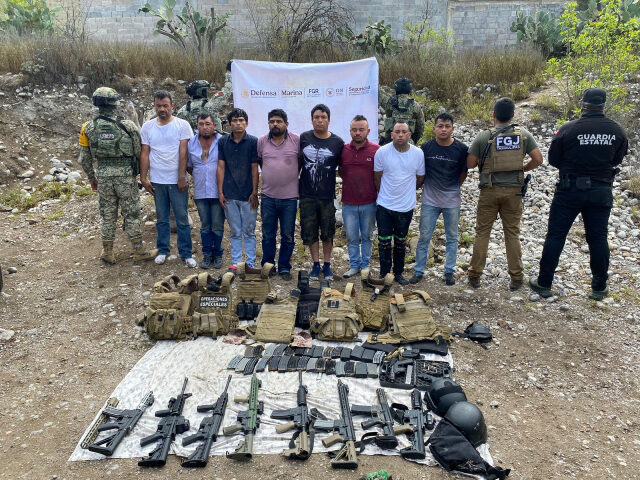
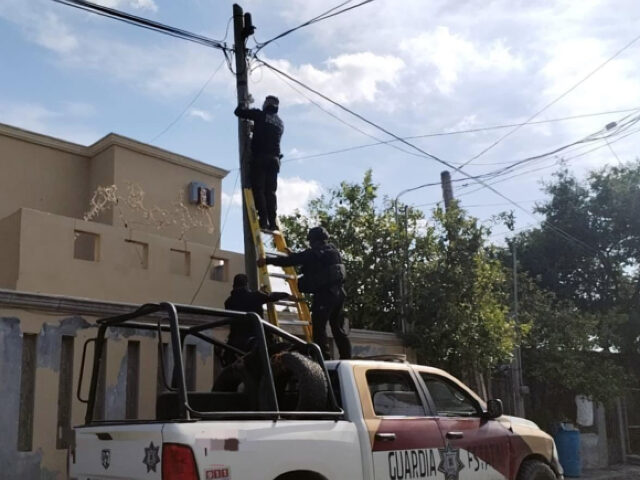
The Gulf Cartel (Spanish: Cártel del Golfo [ˈkaɾtel ðel ˈɣolfo], or Golfos) is a criminal syndicate, drug trafficking organization, and U.S.-designated terrorist organization, which is perhaps one of the oldest organized crime groups in Mexico. It is currently based in Matamoros, Tamaulipas, directly across the U.S. border from Brownsville, Texas.
Their network is international, and is believed to have dealings with crime groups in Europe, West Africa, Asia, Central America, South America, and the United States. Besides drug trafficking, the Gulf Cartel operates through protection rackets, assassinations, kidnappings, and other criminal activities. The members of the Gulf Cartel are known for intimidating the population and for being particularly violent.
Although its founder Juan Nepomuceno Guerra smuggled alcohol in large quantities to the United States during the Prohibition era as well as heroin, it was not until the 1980s that the cartel shifted to trafficking cocaine, methamphetamine and marijuana under the command of Nepomuceno Guerra and Juan García Ábrego.
Contents
History
Foundation: 1930s
The Gulf Cartel, a drug cartel based in Matamoros, Tamaulipas, Mexico, was founded in the 1930s by Juan Nepomuceno Guerra. Originally known as the Matamoros Cartel (Spanish: Cártel de Matamoros), the Gulf Cartel initially smuggled alcohol and other illegal goods into the U.S. Once the Prohibition era ended, the criminal group controlled gambling houses, prostitution rings, a car theft network, and other illegal smuggling. It grew significantly in the 1970s under the leadership of kingpin Juan García Ábrego.
García Ábrego era (1980s–1990s)
By the 1980s, García Ábrego began incorporating cocaine into the drug trafficking operations and started to have the upper hand on what was now considered the Gulf Cartel, the greatest criminal dynasty in the US-Mexico border. By negotiating with the Cali Cartel, García Ábrego was able to secure 50% of the shipment out of Colombia as payment for delivery, instead of the US$1,500 per kilogram they were previously receiving. This renegotiation, however, forced Garcia Ábrego to guarantee the product's arrival from Colombia to its destination. Instead, he created warehouses along the Mexican's northern border to preserve hundreds of tons of cocaine; this allowed him to create a new distribution network and increase his political influence. In addition to trafficking drugs, García Ábrego would ship cash to be laundered, in the millions. Around 1994, it was estimated that the Gulf Cartel handled as much as "one-third of all cocaine shipments" into the United States from the Cali Cartel suppliers. During the 1990s, the PGR (Procuraduría General de la República), the Mexican attorney general's office, estimated that the Gulf Cartel was "worth over US$10 billion."
García Ábrego's ties extended beyond the Mexican government corruption and into the United States. With the arrest of one of García Ábrego's traffickers, Juan Antonio Ortiz, it became known the cartel would ship tons of cocaine in the United States Immigration and Naturalization Service (INS) buses between the years of 1986 to 1990. The buses made great transportation, as Antonio Ortiz noted since they were never stopped at the border.
It also became known that, in addition to the INS bus scam, García Ábrego had a "special deal" with members of the Texas National Guard who would truck tons of cocaine and marijuana from South Texas to Houston for the cartel.
Garcia Abrego's reach became known when a United States Federal Bureau of Investigation (FBI) agent named Claude de la O, in 1986, stated in testimony against García Ábrego that he received over US$100,000 in bribes and had leaked information that could have endangered an FBI informant as well as Mexican journalists. In 1989 Claude was removed from the case for unknown reasons, retiring a year later. García Ábrego bribed the agent in an attempt to gather more information on U.S. law enforcement operations.
García Ábrego's business had grown to such length that the FBI placed him on the Top Ten Most Wanted in 1995. He was the first drug trafficker to be on that list. On 14 January 1996, García Ábrego was arrested outside a ranch in Monterrey, Nuevo León. He was quickly extradited to the United States where he stood trial eight months after his arrest. García Ábrego was convicted for 22 counts of money laundering, drug possession and drug trafficking. Jurors also ordered the seizure of $350 million of García Ábrego's assets — $75 million more than what was previously planned. Juan García Ábrego is currently serving 11 life terms in a maximum security prison in Colorado, United States. In 1996, it was disclosed that García Ábrego's organization paid millions of dollars in bribes to politicians and law enforcement officers for his protection. It was later proven after his arrest that the deputy attorney general in charge of Mexico's federal Judicial Police had accumulated more than US$9 million for protecting García Ábrego.
After García-Ábrego era
Following Ábrego's 1996 arrest by Mexican authorities and subsequent deportation to the United States, a power vacuum was left and several top members fought for leadership.
Humberto García Ábrego, brother of Juan García Ábrego, tried to take the lead of the Gulf Cartel, but ultimately failed. He did not have the leadership skills nor the support of the Colombian drug provisioners. In addition, he was under observation and was widely known, since his surname meant more of the same. He was replaced by Óscar Malherbe de León and Raúl Valladares del Ángel, until their arrest a short time later, causing several cartel lieutenants to fight for the leadership. Malherbe tried to bribe officials $2 million for his release, but was denied.
Hugo Baldomero Medina Garza, known as El Señor Padrino de los Tráilers (the lord of the Trailers), is considered one of the most important members in the rearticulation of the Gulf Cartel. He was one of the top officials of the cartel for more than 40 years, trafficking about 20 tons of cocaine to the United States each month. In November 2000, he was captured in Tampico, Tamaulipas and imprisoned in La Palma. After Medina Garza's arrest, his cousin Adalberto Garza Dragustinovis was investigated for allegedly forming part of the Gulf Cartel and for money laundering. The next in line was Sergio Gómez alias El Checo, however, he was assassinated in April 1996 in Valle Hermoso, Tamaulipas. After this, Osiel Cárdenas Guillén took control of the cartel in July 1999 after assassinating Salvador Gómez Herrera alias El Chava, co-leader of the Gulf Cartel and close friend of his, earning him the name Mata Amigos (Friend Killer).
Osiel Cárdenas Guillén's era
As confrontations with rival groups heated up, Osiel Cárdenas Guillén sought and recruited over 30 deserters of the Mexican Army's elite Grupo Aeromóvil de Fuerzas Especiales (GAFE) to form part of the cartel's armed wing. Los Zetas, as they are known, served as the hired private mercenary army of the Gulf Cartel. Nevertheless, after the arrest and extradition of Cárdenas, internal struggles led to a rupture between the Gulf and the Zetas.
In 1997 the Gulf Cartel began to recruit military personnel whom Jesús Gutiérrez Rebollo, an Army General of that time, had assigned as representatives from the PGR offices in certain states across Mexico. After his imprisonment a short time later, Jorge Madrazo Cuéllar created the National Public Security System (SNSP), to fight the drug cartels along the U.S.–Mexico border. After Osiel Cárdenas Guillén took full control of the Gulf Cartel in 1999, he found himself in a no-holds-barred fight to keep his notorious organization and leadership untouched, and sought out members of the Mexican Army Special Forces to become the military armed wing of the Gulf Cartel. His goal was to protect himself from rival drug cartels and from the Mexican military, to perform vital functions as the leader of the most powerful drug cartel in Mexico. Among his first contacts was Arturo Guzmán Decena, an Army lieutenant whom Cárdenas reportedly asked to look for the "best men possible." Consequently, Guzmán Decenas deserted from the Armed Forces and brought more than 30 army deserters to form part of Cárdenas' new criminal paramilitary wing. They were enticed with salaries much higher than those of the Mexican Army. Among the original defectors were Jaime González Durán, Jesús Enrique Rejón Aguilar, and Heriberto Lazcano, who would later become the supreme leader of the independent cartel of Los Zetas. The creation of Los Zetas brought a new era of drug trafficking in Mexico, and little did Cárdenas know that he was creating the most violent drug cartel in the country. Between 2001 and 2008, the organization of the Gulf Cartel and Los Zetas was collectively known as La Compañía (The Company).
One of the first missions of Los Zetas was to eradicate Los Chachos, a group of drug traffickers under the orders of the Milenio Cartel, who disputed the drug corridors of Tamaulipas with the Gulf Cartel in 2003. This gang was controlled by Dionisio Román García Sánchez, alias El Chacho, who had decided to betray the Gulf Cartel and switch his alliance with the Tijuana Cartel; he was eventually killed by Los Zetas. Once Cárdenas consolidated his position and supremacy, he expanded the responsibilities of Los Zetas, and as years passed, they became much more important for the Gulf Cartel. They began to organize kidnappings; impose taxes, collect debts, and operate protection rackets; control the extortion business; securing cocaine supply and trafficking routes known as plazas (zones) and executing foes, often with grotesque savagery. In response to the rising power of the Gulf Cartel, the rival Sinaloa Cartel established a heavily armed, well trained enforcer group known as Los Negros. The group was similar to Los Zetas, but with less complexity and success. There is a circle of experts who believe that the start of the Mexican drug war did not begin in 2006 (when Felipe Calderón sent troops to Michoacán to stop the increasing violence), but in 2004 in the border city of Nuevo Laredo, when the Gulf Cartel and Los Zetas fought off the Sinaloa Cartel and Los Negros.
Standoff with U.S. agents
On 9 November 1999, two U.S. agents from the Drug Enforcement Administration (DEA) and FBI were threatened at gunpoint by Cárdenas Guillén and approximately 15 of his henchmen in Matamoros. The two agents traveled to Matamoros with an informant to gather intelligence on the operations of the Gulf Cartel. Cárdenas Guillén demanded the agents and the informant get out of their vehicle, but they refused. Cárdenas Guillén threatened to kill them if they did not comply, and his gunmen prepared to shoot. The agents tried to reason with him that killing U.S. federal agents would bring a massive manhunt from the U.S. government. Cárdenas Guillén eventually let them go and threatened to kill them if they ever returned to his home turf.
The standoff triggered a massive law enforcement effort to crack down on the leadership structure of the Gulf Cartel. Both the Mexican and U.S. governments increased their efforts to apprehend Cárdenas Guillén. Before the standoff, he was regarded as a minor player in the international drug trade, but this incident catapulted his reputation. and landed him on the FBI Ten Most Wanted Fugitives list. The FBI and the DEA mounted numerous charges against him and issued a US$2 million bounty for his arrest.
Arrest and extradition
On 14 March 2003, Cárdenas Guillén was captured in Matamoros, Tamaulipas, in a shootout between the Mexican military and Gulf Cartel gunmen. According to government archives, this six-month military operation was planned and carried out in secret; the only people informed were the President Vicente Fox, Mexico's Secretary of Defense Ricardo Clemente Vega García, and Mexico's Attorney General Rafael Macedo de la Concha. After his capture, Cárdenas was sent to the federal, high-security prison La Palma. However, it was believed that Cárdenas still controlled the Gulf Cartel from prison, and was later extradited to the United States, where he was sentenced to 25 years in a prison in Houston, Texas for money laundering, drug trafficking and death threats to U.S. federal agents. While his brother Antonio Cárdenas Guillén led the Gulf Cartel, Cárdenas still made vital orders from La Palma through messages from his lawyers and guards. Reports from the PGR and El Universal state that while in prison, Cárdenas and Benjamín Arellano Félix, from the Tijuana Cartel, formed an alliance. Moreover, through handwritten notes, Cárdenas gave orders on the movement of drugs along Mexico and to the United States, approved executions, and signed forms to allow the purchase of police forces.
The arrest and extradition, however, caused several top lieutenants from both the Gulf Cartel and Los Zetas to fight over important drug corridors to the United States, especially the cities of Matamoros, Nuevo Laredo, Reynosa, and Tampico—all in Tamaulipas. They also fought for coastal cities Acapulco, Guerrero and Cancún, Quintana Roo; the state capital Monterrey in Nuevo León, and the states of Veracruz and San Luis Potosí. Through his violence and intimidation, Heriberto Lazcano took control of both Los Zetas and the Gulf Cartel after Cardenas' extradition. Lieutenants that were once loyal to Cárdenas began following the commands of Lazcano, who tried to reorganize the cartel by appointing several lieutenants to control specific territories. Miguel Treviño Morales was appointed to look over Nuevo León; Jorge Eduardo Costilla Sánchez in Matamoros; Héctor Manuel Sauceda Gamboa, nicknamed El Karis, took control of Nuevo Laredo; Gregorio Sauceda Gamboa, known as El Goyo, along with his brother Arturo, took control of the Reynosa plaza; Arturo Basurto Peña, alias El Grande, and Iván Velázquez-Caballero alias El Talibán took control of Quintana Roo and Guerrero; Alberto Sánchez Hinojosa, alias Comandante Castillo, took over Tabasco. However, continual disagreement was leading the Gulf Cartel and Los Zetas into a rupture. On 18 August 2013, Gulf Cartel leader Mario Ramirez Trevino was captured.
Rupture from Los Zetas
It is unclear which of the two – the Gulf Cartel or Los Zetas – started the conflict that led to their break up. It is clear, however, that after the capture and extradition of Osiel Cárdenas Guillén, Los Zetas outclassed the Gulf Cartel in revenue, membership, and influence. Some sources reveal that as a result of the supremacy of Los Zetas, the Gulf Cartel felt threatened by the growing force of their enforcer group and decided to curtail their influence, but eventually failed in their attempt, instigating a war. According to narco-banners left by the Gulf Cartel in Matamoros, Tamaulipas, and Reynosa, Tamaulipas, the reason for their rupture was that Los Zetas had expanded their operations to include extortion, kidnapping, assassinations, theft, and other actions with which it disagreed. Unwilling to stand for such abuse, Los Zetas responded and countered the accusations by posting their own banners throughout Tamaulipas. They pointedly noted that they had carried out executions and kidnappings under orders of the Gulf Cartel when they served as their enforcers, and they were created by them for that sole purpose. Also, Los Zetas mentioned that the Gulf Cartel also kills innocent civilians, and then blames them for their atrocities.
Nevertheless, other sources also reveal that Antonio Cárdenas Guillén, brother of Osiel and one of the successors of the Gulf Cartel, was addicted to gambling, sex, and drugs, leading Los Zetas to consider his leadership as a threat to the organization. Other reports mention, however, that the rupture occurred due to a disagreement about who would take on the leadership of the cartel after the extradition of Osiel. The candidates of the Gulf Cartel were Antonio Cárdenas and Jorge Eduardo Costilla Sánchez, while Los Zetas wanted the leadership of their current head, Heriberto Lazcano Lazcano. Other sources, however, mention that the Gulf Cartel began looking to form a truce with their Sinaloa Cartel rivals, and Los Zetas did not want to recognize the treaty settlement, which led them to act independently and eventually break apart. On the other hand, other sources reveal that Los Zetas separated from the Gulf Cartel to ally with Beltrán-Leyva Cartel, which led to conflict between them. Other sources mention that what initiated the conflict between them was when Samuel Flores Borrego, alias El Metro 3, lieutenant of the Gulf Cartel, killed Sergio Peña Mendoza, alias El Concorde 3, lieutenant of Los Zetas, due to a disagreement for the drug corridor of Reynosa, Tamaulipas, whom both protected. Soon after his death, Los Zetas demanded the Gulf Cartel to hand over the killer, but they didn't, and observers believe that triggered the war.
Tamaulipas was mostly spared from the violence until early 2010, when the Gulf Cartel's enforcers, Los Zetas, split from and turned against the Gulf Cartel, sparking a bloody turf war. When the hostilities began, the Gulf organization joined forces with its former rivals, the Sinaloa Cartel and La Familia Michoacana, aiming to take out Los Zetas. Consequently, Los Zetas allied with the Juárez Cartel, the Beltrán-Leyva Cartel and the Tijuana Cartel.
Antonio Cárdenas Guillén's era
Osiel Cárdenas' brother, Antonio Cárdenas Guillén, along with Jorge Eduardo Costilla Sánchez (El Coss), a former policeman, filled in the vacuum left by Osiel and became the leaders of the Gulf Cartel. The death of Antonio allowed for Costilla Sánchez to become the co-leader of the Gulf Cartel and head of the Metros, one of the two factions within the Gulf Cartel. Mario Cárdenas Guillén, brother of Osiel and Antonio, is the other leader of Gulf Cartel and head of the Rojos, the other faction within the Gulf Cartel and the parallel version of the Metros.
Costilla was often viewed as the "strongest leader" of the two, but collaborated with Antonio Cárdenas, who acted as representative of his jailed brother. However, Antonio died in an eight-hour shooting with the Mexican government forces on 5 November 2010, in the border city of Matamoros, Tamaulipas. Government sources claimed that this operation—where more than 660 marines, 17 vehicles, and three helicopters participated—left eight dead: three marines, one soldier, and four gunmen, including Antonio Cárdenas. Other sources mention that one news reporter was also killed in the crossfire. This military-led operation was a result of more than six months of intelligence work. Milenio Television mentioned that the Mexican authorities had tried to apprehend Cárdenas Guillén twice before this incident, but that his personal gunmen had distracted the Mexican forces and allowed him to be escorted in his armored vehicle.
The confrontations started around 10 am, and extended to 6 pm, around the time Cárdenas Guilén was killed. The intense shootings provoked the temporary closure of three international bridges in Matamoros, along with the University of Texas at Brownsville, just across the border. Public transportation and school classes in Matamoros were canceled, along with the suspension of activities throughout the municipality, since the cartel members hijacked the units of public transport and made dozens of roadblocks to prevent the mobilization of the soldiers, marines, and federal police forces. The street confrontations generated a wave of panic among the population and caused the publication and broadcast of messages through social networks like Twitter and Facebook, reporting the clashes between authorities and the cartel members. When the Mexican authorities reached the spot where Antonio Cárdenas (Tony Tormenta) was present, the gunmen received the soldiers and cops with grenades and high-calibre shots. Reports mention that Antonio Cárdenas was being protected by the Los Escorpiones (The Scorpions), the alleged armed wing of the Gulf Cartel and the personal army of Antonio Cárdenas, who was serving as snipers and bodyguards for him. La Jornada newspaper mentioned that over 80 SUV's packed with gunmen fought to protect Cárdenas Guillén, and over 300 grenades were used in the shootout that day. And even after the drug lord was killed, the roadblocks continued throughout the rest of the day.
Present-day
Metros and Rojos infighting
In the late 1990s, Osiel Cárdenas Guillén, the former leader of the Gulf cartel, had other similar groups besides Los Zetas established in several cities in Tamaulipas. Each of these groups were identified by their radio codes: the Rojos (The Red ones) were based in Reynosa; the Metros were headquartered in Matamoros; and the Lobos (The wolves) were established in Laredo. The infighting between the Metros and the Rojos of the Gulf cartel began in 2010, when Juan Mejía González, nicknamed El R-1, was overlooked as the candidate of the regional boss of Reynosa and was sent to the "Frontera Chica", an area that encompasses Miguel Alemán, Camargo and Ciudad Mier – directly across the U.S.–Mexico border from Starr County, Texas. The area that Mejía González wanted was given to Samuel Flores Borrego, suggesting that the Metros were above the Rojos.
Unconfirmed information released by The Monitor indicated that two leaders of the Rojos, Mejía González and Rafael Cárdenas Vela, teamed up to kill Flores Borrego. Cárdenas Vela had held a grudge on Flores Borrego and the Metros because he believed that they had led the Mexican military to track down and kill his uncle Antonio Cárdenas Guillén on 5 November 2010. Other sources indicate that the infighting could have been caused by the suspicions that the Rojos were "too soft" on the Gulf cartel's bitter enemy, Los Zetas. When the Gulf cartel and Los Zetas split in early 2010, some members of the Rojos stayed with the Gulf cartel, while others decided to leave and join the forces of Los Zetas.
InSight Crime explains that the fundamental disagreement between the Rojos and the Metros was over leadership. Those who were more loyal to the Cárdenas family stayed with the Rojos, while those loyal to Jorge Eduardo Costilla Sánchez, like Flores Borrego, defended the Metros.
Originally, the Gulf cartel was running smoothly, but the infighting between the two factions in the Gulf cartel triggered when Flores Borrego was killed on 2 September 2011. When the Rojos turned on the Metros, the largest faction in the Gulf cartel, firefights broke throughout Tamaulipas and drug loads were stolen among each other, but the Metros managed to retain control of the major cities that stretched from Matamoros to Miguel Alemán, Tamaulipas.
Some experts have found it difficult to argue that the Gulf Cartel does not impose a direct threat to the state since they "do not seek political change", and that they only want to be left alone with their business. Observations indicate that the Gulf Cartel controls territories and imposes its own rules—often violent and bloody—over the population. And in doing so, they inherently become a "competitor" with the state, who also claims sovereignty over its territories. Like other drug trafficking organizations, the Gulf Cartel also subverts government institutions, particularly at state and local levels, by using their large profits to bribe officials.
Presence in the U.S.
The Gulf Cartel has important cells operating inside the United States—in Mission, Roma, and Rio Grande City—for example, and their presence is expanding. Thomas A. Shannon, a U.S. diplomat and ambassador, stated that criminal organizations like the Gulf Cartel have "substantially weakened" the institutions in Mexico and Central America, and have generated a surge of violence in the United States. The U.S. National Drug Threat Assessment mentioned that the drug trafficking organizations like the Gulf Cartel tend to be less structured in U.S. than in Mexico, and often rely on street gangs to operate inside the United States. The arrest of several Gulf Cartel lieutenants, along with the drug-related violence and kidnappings, have raised concerns among Texas officials that the drug war in Mexico and the drug cartels are taking hold in Texas. The strong ties the Gulf Cartel has with the prison gangs in the United States have also raised concern to American officials. Reports mention that Mexican drug cartels operate in more than 1,000 cities in the United States. In 2013, high ranking Gulf Cartel member Aurelio Cano Flores became the highest cartel member to be convicted by a U.S. jury in 15 years. In January 2020, high-ranking U.S. Gulf Cartel member Jorge Costilla-Sanchez pleaded guilty to an international drug trafficking conspiracy to distribute cocaine and marijuana into the United States.
Presence in Europe
The Gulf Cartel is believed to have ties with the 'Ndrangheta, an organized crime group in Italy that also has ties with Los Zetas. Reports indicated that the Gulf Cartel was using the BlackBerry smartphones to communicate with 'Ndrangheta, since the texts are "normally difficult to intercept". In 2009, the Gulf organization concluded that expanding their market opportunities in Europe, combined with the euro strength against the U.S. dollar, justified establishing an extensive network in that continent. The main areas of demand and drug consumption are in Eastern Europe, the successor states of the Soviet Union. In Western Europe, the primarily increase has been in the use of cocaine. Along with the market in the United States, the drug market in Europe is among the most lucrative in the world, where the Mexican drug cartels are believed to have deals with the mafia groups of Europe.
Presence in Africa
The Gulf Cartel and other Mexican drug trafficking groups are active in the northern and western parts of Africa. Although cocaine is not grown in Africa, Mexican organizations, such as the Gulf Cartel, are currently exploiting West Africa's struggling rule-of-law caused by war, crime and poverty, to stage and expand supply routes to the increasingly lucrative European illegal drug market.
Gulf Cartel vs. Los Zetas
The rumors of the broken alliance between the Gulf Cartel and Los Zetas began on blogs and mass emails in September 2009, but it remained pretty much the same throughout that year—a rumor. But on 24 February 2010, hundreds of trucks marked with C.D.G, XXX, and M3 (the insignias of the Gulf Cartel) began to hit the streets of northern Tamaulipas. The clash between these two groups first happened in Reynosa, Tamaulipas and then expanded to Nuevo Laredo and Matamoros. The war then spread out through 11 municipalities of Tamaulipas, 9 of them bordering the state of Texas. Soon, the violence generated between these two groups had spread to Tamaulipas' neighboring states of Nuevo León and Veracruz. Their conflict has even occurred on U.S. soil, where the Gulf Cartel killed two Zeta members in Brownsville, Texas on 5 October 2010. In the midsts of violence and panic, local authorities and the media tried to minimize the situation and claim that "nothing was occurring", but the facts were impossible to cover up. Confrontations between these two groups have paralyzed entire cities in broad daylight. Several witnesses claimed that many of the municipalities throughout Tamaulipas were "war zones", and that many businesses and houses were burned down, leaving areas in "total destruction". The bloodbath in Tamaulipas has caused thousands of deaths, but most of shootings and body counts often go unreported. The complexity and territorial advantage of Los Zetas forced the Gulf Cartel to seek for an alliance with the Sinaloa Cartel and La Familia Michoacana; in addition, Stratfor mentioned that these three organizations also united because they hold a "profound hate" for Los Zetas. Consequently, Los Zetas joined forces with the Beltrán Leyva Cartel and the Tijuana Cartel to counterattack the opposing cartels.
On 10 November 2014, a document from the Mexican government was released to the media and claimed that Los Rojos faction of the Gulf Cartel was planning to ally with Los Zetas. The potential alliance was conducted by Juan Reyes Mejía González (alias "R1"), from the Gulf Cartel; and Rogelio González Pizaña (alias "Z-2"), from Los Zetas. The latter was released from prison months earlier even though he was scheduled to serve 16-years behind bars in January. Authorities believe that González Pizaña reincorporated in organized crime and decided to join with the Gulf Cartel to end the war with Los Zetas, and bring back the "old school" ways when they were together.
Fragmentation
In June 2020, InSight Crime journalist Victoria Dittmar claimed that the Gulf Cartel had undergone "fragmentation" at some point in time. Los Pelones emerged as an independent cartel during this fragmentation as well. However, remnants still exist in Tamaulipas.
Tamaulipas: State corruption
Political corruption
The drug violence and political corruption that has plagued Tamaulipas, the home state of the Gulf Cartel and Los Zetas, has fueled thoughts of Tamaulipas becoming a "failed state" and a haven for drug traffickers and criminals of all kinds. The massacre of the 72 migrants and the clandestine mass graves with more than 250 bodies in San Fernando, Tamaulipas, mounted with the assassination of the governor candidate Rodolfo Torre Cantú (2010), the increasing violence generated between drug groups, and the state's inability to ensure tranquility, has led specialists to conclude that "neither the regional nor federal government have control over the territory of Tamaulipas."
Although drug-related violence has existed since the early beginnings of the Gulf Cartel, it often happened in low-profile levels, while the government agreed to "look the other way" while the drug traffickers went about their business—as long as they behaved. Back in the days of the 71-year rule of the Institutional Revolutionary Party (PRI), it was believed that they ran exactly that show: if the drug cartels got off the line, the Mexican government would conduct some arrests, make some disappearances, and the drug lords would get their people straight and back on the line again. After the PRI lost the presidency in 2000 to the National Action Party (PAN), the arrangement between the government and the cartels was lost, as well the pax mafiosa. Moreover, the state of Tamaulipas was no exception; according to Santiago Creel, a PAN politician and pre-candidate for the 2012 presidency, the PRI in Tamaulipas has protected the Gulf Cartel for years. In addition, El Universal newspaper mentions that the narco-corruption in Tamaulipas is due to the fact the opposing political parties, the PAN and the Party of the Democratic Revolution (PRD), rarely win an election and "practically do not exist". PRI's main opposition party, the PAN, claimed that government elections in Tamaulipas are likely to encounter an "organized crime influence."
The Excélsior newspaper reported that the former governors of Tamaulipas, Manuel Cavazos Lerma (1993–1999), Tomás Yarrington (1999–2004), and Eugenio Hernández Flores (2005–2010) have had close ties with the Gulf Cartel. On 30 January 2012, the Attorney General of Mexico issued a communiqué ordering the past three governors of Tamaulipas and their families to remain in the country as they are being investigated for possible cooperation with the Mexican drug cartels. The municipal president of Tampico, Tamaulipas, Óscar Pérez Inguanzo, was arrested 12 November 2011, due to his "improper exercise of public functions and forgery" of certain documents. In addition, La Jornada mentions that the Gulf Cartel owns "all of Matamoros", where they act as the State itself and conduct all forms of criminal activities. In mid-2010, Eugenio Hernández Flores, the governor of Tamaulipas and Óscar Luebbert Gutiérrez, the mayor of Reynosa, Tamaulipas, both members of the PRI, were criticized for claiming that there were no armed confrontations in Tamaulipas and that the violence was "only a rumor." Months later, Hernández Flores finally recognized that several parts of Tamaulipas were "being overrun by organized crime violence." Luebbert Gutiérrez later recognized the work of the federal troops and acknowledged that his city was experiencing "an escalation in violence."
Prison breaks
On 25 March 2010, in the city of Matamoros, 40 inmates escaped from a federal prison. Authorities are still trying to understand how the prisoners escaped. The authorities mentioned that the incident is "under investigation", but did not give further information. In the border city of Reynosa, 85 inmates escaped from a prison on 10 September 2010. Reports first indicated that there were 71 fugitives, but the correct figures were later released. On 5 April 2010, in the same prison, a convoy of 10 trucks filled with gunmen broke into the cells and liberated 13 inmates, and the authorities later mentioned that 11 of them were "extremely dangerous." In Nuevo Laredo on 17 December 2010, about 141 inmates escaped from a federal prison. At first, estimates mentioned that 148 inmates had escaped, but later counts gave the exact figures. The federal government "strongly condemned" the prison breaks and said that the work by the state and municipal authorities of Tamaulipas "lack effective control measures" and urged them to strengthen their institutions. A confrontation inside a maximum security prison in Nuevo Laredo on 15 July 2011, left 7 inmates dead and 59 escaped. The 5 guards that were supposed to supervise have not been found, and the Federal government urged the state and municipal authorities to strengthen the security of their prisons. Consequently, the federal government did not hesitate to assign the Mexican Army and the Federal Police to vigilate the prisons until further notice; they were also left in charge of searching for the fugitives. CNN mentioned that the state government of Tamaulipas later recognized "their inability to work with the federal government." In a prison in the state of Zacatecas, on 16 May 2009, an armed commando liberated 53 Gulf Cartel members using 10 trucks and even a helicopter.
According to CNN, more than 400 prison inmates escaped from several prisons in Tamaulipas from January 2010 to March 2011 due to corruption.
Police corruption
The Excélsior newspaper mentioned that the police forces in the state of Tamaulipas are the "worst paid in Mexico" despite being "one of the states hardest hit by violence." They also reported that in Aguascalientes, a state where violence levels are much lower, policemen are paid five times more than in Tamaulipas. In fact, they are paid around $3,618 pesos (about US$260) a month in all of Tamaulipas. As a result, most of the police forces in Tamaulipas are believed to be "corrupt" due to their low wages and the presence of organized crime, who can easily bribe them.
On 9 May 2011, the Mexican government, along with Sedena, disarmed all police forces in the state of Tamaulipas, beginning with the cities of Matamoros and Reynosa. In June 2011, the state government of Tamaulipas requested the federal government to send in troops to combat the drug cartels in the area, to "consolidate actions on public safety" and "strengthen the capacity of their institutions." The Joint Operation Nuevo León-Tamaulipas issued in 2007, along with several other military-led operation by the federal government, have brought thousands of troops to restore order in Tamaulipas. CNN mentioned that the troops "replaced half of the policemen" in the state of Tamaulipas. On 7 November 2011, about 1,660 policemen were released from their duties because they had either failed their control tests or refused to take them.
Although there have been efforts by the federal government to wipe out police corruption, Terra Networks published an article of a witness who said that the police forces in Matamoros work as "informants for the Gulf Cartel" and report on the activity of the Mexican military, and even "wave at [the cartel members]" when they see them in the streets. El Universal released an article which said that the National Public Security System (SNSP) has condemned the cops' salaries, and demanded the state and municipal authorities to create better paying programs for the policemen so they can have a "just wage" for themselves and their families. The federal government is also constructing three military bases in Tamaulipas: in Ciudad Mier, San Fernando and Ciudad Mante.
Alliances
In 2003, the arrest of several high-profile cartel leaders, including the heads of the Tijuana Cartel and Gulf Cartel, Benjamín Arellano Félix and Osiel Cárdenas Guillén, turned the war on drugs into a trilateral war. While in prison, Cárdenas and Arellano formed an alliance to defend themselves from the Sinaloa and Juarez Cartels, who had also allied with each other, and were planning to take over the smuggling routes and territories of the Gulf and Tijuana Cartel. After a dispute, however, Cárdenas ordered Arellano beaten, and the Gulf-Tijuana alliance ceased to exist at that point. It was reported that after the fallout, Cárdenas ordered Los Zetas to Baja California to wipe out the Tijuana Cartel.
The Sinaloa-Juarez alliance ceased to exist as well due to an unpaid debt in 2007, and now the Sinaloa and Juarez Cartel are at war against each other. Since February 2010, the major cartels have aligned in two factions, one integrated by the Juárez Cartel, Tijuana Cartel, Los Zetas and the Beltrán-Leyva Cartel; the other faction integrated by the Gulf Cartel, Sinaloa Cartel, La Familia Cartel (now extinct) and the Knights Templar Cartel.
Structure
The rupture from Los Zetas left Jorge Eduardo Costilla Sánchez and Antonio Cárdenas Guillén in full control of the Gulf Cartel. However, Ezekiel died in a shooting with the Mexican Marines in Matamoros, Tamaulipas in 2010, and Costilla Sanchez became the sole head of the cartel until his arrest in September 2012. Mario Cárdenas Guillén, brother of both Osiel and Antonio, became one of the top lieutenants in the organization after his release from prison in 2007. In addition, within the Gulf Cartel there is believed to be two groups—the Rojos and the Metros. The modus operandi ("mode of operation") of the Gulf Cartel changes whenever the United States attempts to strengthen their domestic policy in reinforcing the borders. When drug trafficking tightens, they usually invest in more sophisticated methods to smuggle drugs, recruit new members, corrupt more officials, seek new ways to remove obstacles that impede the immediate success of the organization, along with many others. Below is the basic structure of the cartel:
Falcons (Halcones): Considered the "eyes and ears" of the streets, the falcons are the lowest rank position in any drug cartel. They are responsible for supervising and reporting on the activities of the Mexican military and of their rival groups.
Hitmen (Sicarios): They are the armed group within the drug cartel; they are responsible for carrying out assassinations, kidnappings, thefts, extortions, operating protection rackets, and defending their plaza from the rival groups and the military.
Lieutenants (Lugartenientes): The second-highest position in the drug cartel organization; they are responsible for supervising the sicarios and halcones within their territory. They are allowed to carry low-profile executions without permission from their bosses.
Drug lords (Capos): This is the highest position in any drug cartel; they are responsible supervising the entire drug industry, appointing territorial leaders, making alliances, and planning high-profile executions.
It's worth noting that there are other operating groups within the drug cartels. For example, the drug producers and suppliers, although not considered in the basic structure, are critical operators of any drug cartel, along with the financers and money launderers. In addition, the arms suppliers operate in a completely different circle, and are technically not considered part of the cartel's logistics.
Modus operandi
Protection racketeering
Organized crime groups opt for protection racketeering in an effort to control markets and "maintaining internal order." It is generally seen as a way where criminals change the legal face of security and provide their own form of "insurance". This practice of extorting money from people is also seen in the human trafficking business in Mexico; the cartels threaten smugglers to pay a fee for using the corridors, and if they refuse to pay, drug traffickers respond in a deadly form. The Gulf Cartel operates in a similar way, and often extorts businesses for protection money in the areas where it operates, pledging to kill those who do not agree to pay the fee. In addition, the Mexican drug cartels also tax several Mexican businesses inside the United States and threaten them with property damage and murder if they do not comply.
Kidnappings
The Gulf Cartel, along with their rival group Los Zetas, have been the two drug cartels with the most kidnappings in all of Mexico, and "more than half of the country's kidnappings are attributed to them." And, there are several kidnapping rings of the Gulf Cartel throughout several parts of Tamaulipas. The Mexican military mentioned that in the states of Tamaulipas and Nuevo Leon, where the Gulf Cartel and Los Zetas fight for territory, abductions are carried out very commonly. An intelligence agency mentioned that the Gulf Cartel kidnaps for three reasons:
To increase the ranks of their cartel after the deaths or arrests of their members;
To exterminate members of their rival gangs;
To kidnap people for money and other ransom.
In April 2011 in the border city of Reynosa, Tamaulipas, 68 kidnapped victims from different parts of Mexico and Central America were found in a safe house of the Gulf Cartel. Omar Ortiz, best known for his nickname El Gato, was a former soccer star from C.F. Monterrey who was arrested in January 2012 for working in a kidnapping ring within the Gulf Cartel. The Mexican Lucha libre wrestler Lázaro Gurrola, known as the Estrella Dorada (Golden Star), was also arrested for kidnapping people for the Gulf Cartel.
Indictments
On 21 July 2009, the United States DEA announced coordinated actions against the Gulf Cartel and Los Zetas drug trafficking organizations. Antonio Cárdenas Guillén, Jorge Eduardo Costilla Sánchez, Heriberto Lazcano Lazcano and 15 of their top lieutenants, have been charged in U.S. federal courts with drug trafficking-related crimes, while the U.S. State Department announced rewards totaling US$50 million for information leading to their capture.
In May 2013, Aurelio Cano Flores (alias El Yankee) was sentenced to 35 years in prison for conspiring to import multi-ton quantities of marijuana and cocaine into the United States. Cano Flores, also known as "Yeyo", was a former Mexican police officer and is the highest-ranking Gulf Cartel member to be convicted by a U.S. jury in 15 years.
On 30 June 2019, Mario Alberto Cárdenas Medina, the son of Osiel's brother Mario, was arrested in the state of Mexico. He was arrested with a female companion identified as Miriam "M" and is accused of being responsible for recent violence in Tamaulipas
In March 2023, a splinter faction from the Gulf Cartel called the Scorpions Group, headed by La Kena, publicly accepted responsibility for an incident where four Americans were kidnapped, which ended in two of the victims being killed. Following the incident, the gunmen responsible for the kidnapping were reportedly handed over to the authorities and the cartel made a public apology.
In popular culture
In Sicario: Day of Soldado (2018) the CIA framed the "Matamoros Cartel" for killing the antagonist's men to intentionally start a cartel war between rivals.
The Gulf Cartel during the late 1980s and early 1990s era is briefly portrayed in Netflix's Narcos: Mexico series (2018 - 2021) with Mexican actor Jesús Ochoa playing Juan Nepomuceno Guerra and Flavio Medina playing as nephew Juan García Ábrego.